Side-release Buckle
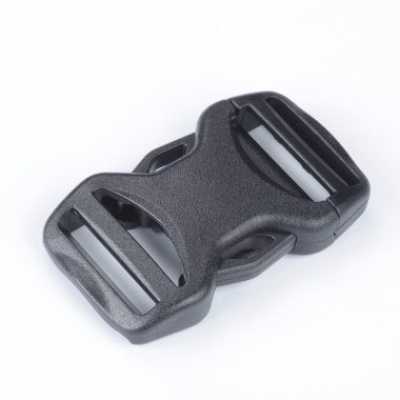
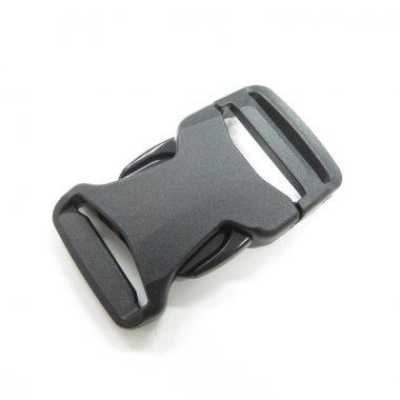
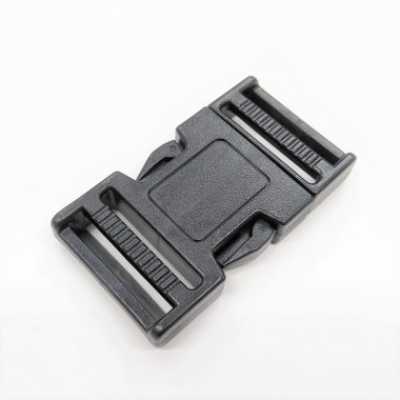
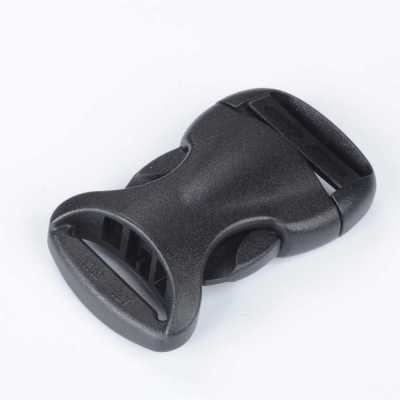
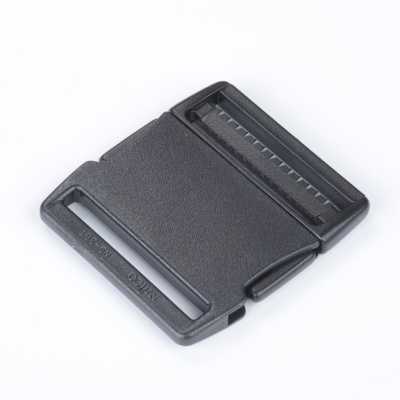
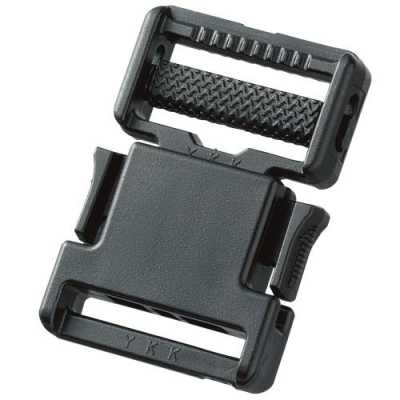
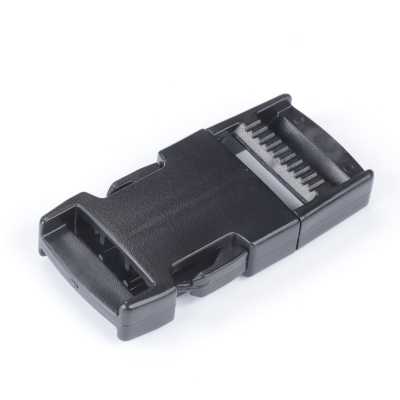
A side-release buckle is a detachable buckle mainly used on tape or belts, which locks by inserting the male and female sides together and is released by pressing the release tabs on both sides.
Contents7 sections
Definition and Overview
A side release buckle is a buckle that locks when the tabs on the left and right of the male part are inserted into the female part, and can be released by pressing both sides of the female part. It is relatively easy to operate with one hand and is used in combination with parts that adjust length.
Materials and Structure
Most are made of resin such as polyacetal, polypropylene, or nylon. Resin versions are lightweight and resistant to rust, but their impact resistance, weather resistance, and resistance to cracking in low temperatures vary depending on the type of resin and molding conditions.
The basic structure is a pair of a male part and a female part, with a frame through which tape is threaded. Some types also include an adjustment mechanism similar to a slide adjuster on one or both sides. Because the shape of the tabs and release section differs by product, parts of different types are generally not combined.
How Sizes Are Indicated
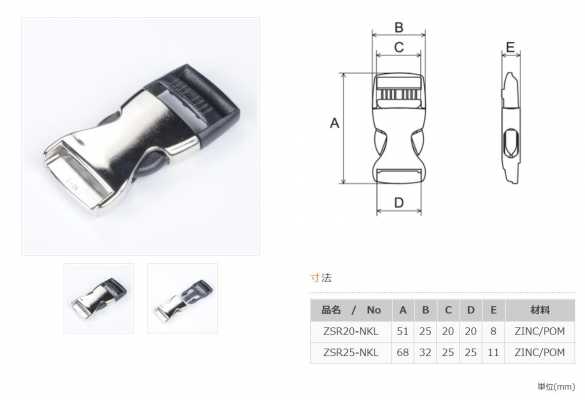
Sizes are mainly indicated by the inner dimension of the frame through which the tape passes, in other words, the compatible tape width. The basic rule is to match the finished width of the tape used with the inner dimension of the buckle's tape passage. The outer dimensions and thickness also affect the product's appearance and ease of threading.
Even with the same compatible tape width, ease of threading varies depending on whether there is an adjustment section that passes the tape in a double layer, the thickness of the tape, and the stiffness of the weave. Before mass production, thread the actual tape to be used and check slip during pulling and the ease of attachment and release.
- Confirm whether the stated size refers to the inner dimension of the tape passage rather than the outer dimensions.
- Thick or brushed tape may be difficult to thread even if the width matches.
Main Applications
Used for bag openings and closures, shoulder straps, belts, outdoor goods, sports equipment, uniforms, and kids' products. It is characterized by quick attachment and removal and by being easier to make lightweight than metal prong buckles.
In apparel, it is used for waist belts, sleeve and hem adjusters, and around hoods. When used close to the skin, thickness, sharp edges, and shapes that make it hard to pinch fingers or fabric during operation should also be checked.
Selection and Precautions
The holding force required for the application should be evaluated not only by the buckle alone but by the combination of the tape, sewn section, and slide adjuster. For applications involving continuous load or safety, it is important to confirm test results under the expected load and the usage conditions, and not judge them by the same standards as parts for appearance.
Resin versions generally do not rust, but performance and color tone may change due to ultraviolet light, heat, low temperatures, chemicals, repeated bending, or impact. When using metal parts together, also check for rust, plating discoloration, and nickel-related specifications.
For products requiring needle detector compatibility, manage not only the buckle body but also any built-in metal, the matching hardware, and broken needles that may be introduced during the sewing process. Even for resin products, do not assume needle detector compatibility by default; check the specifications of the product being adopted.
- Compatibility with the width, thickness, and stiffness of the tape used
- Balance between required strength and ease of operation when releasing
- Possibility of deterioration, discoloration, or damage depending on the usage environment
- Presence or absence of metal parts and compatibility with the needle detection process
Differences from Similar Terms
Slide adjusters and loop adjusters are types of rings mainly used to adjust and secure tape length, and do not have a one-touch attachment and removal mechanism on their own. A side release buckle handles attachment and removal, and types with an adjustment mechanism also serve as length adjusters.
D rings, circular rings, and rectangle rings are ring-shaped metal fittings or resin parts used to connect or thread tape or cord. A prong buckle usually refers to a buckle that fastens into belt holes with a pin, and its fixing method differs from that of a side release buckle, which is released by pressing both sides.
Frequently Asked Questions
Where should I measure a side release buckle size?
Basically, check the inner dimension of the frame through which the tape passes. This is because it often indicates the compatible tape width. However, when the tape is thick or is threaded back through an adjustment section, do not judge by width alone; thread the actual tape and check operability and holding performance.
Are side release buckles compatible with needle detectors?
Buckles made only of resin may be less likely to trigger metal detection, but needle detector compatibility cannot be judged uniformly. Check the presence or absence of built-in parts and combined hardware, the settings of the needle detector, and the management standards for each product, and perform a pass-through test if necessary.
- Search products for "side-release buckle"
- Products with material "Nylon"
- Products with material "ABS Resin"
- Products with material "Polypropylene"
- Products with material "Polyacetal"
- Products for style "For Sports"
- Products for style "Outdoor"
- Products for style "For Uniforms/Workwear"
- Products for style "For Kids"
- Products for style "For Bags"
- Browse Buckles And Rings products