Slide Adjuster
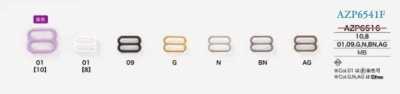
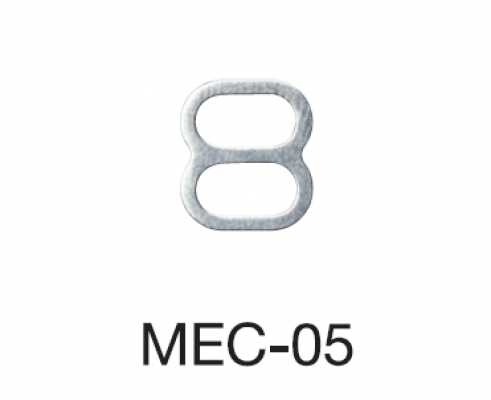
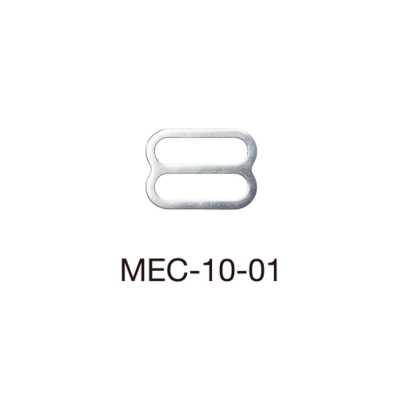
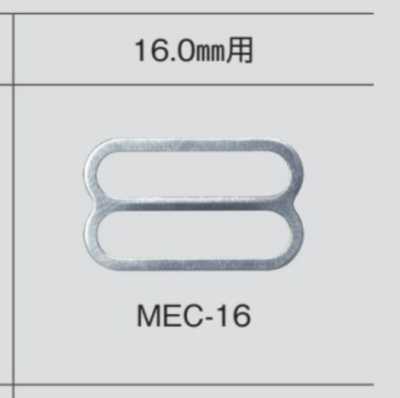
A slide adjuster is a rectangular ring with a central bar, used to thread tape or a belt through, fold it back, and adjust and hold the length by friction.
Contents6 sections
Definition and Overview
A slide adjuster is an accessory for length adjustment, made up of a frame and a center bar. By threading the tape through the frame and center bar in the prescribed order and folding it back, it uses frictional holding power to adjust the length of belts and straps without steps.
Other names include moving ring, slide adjuster, and kokikan. Kokikan often refers to a slide adjuster, but since it may also be distinguished by shape or application, confirm the specifications with drawings or a sample when ordering.
Materials and Structure
For metal types, iron, brass, zinc die-cast, aluminum, stainless steel, and others are used, and the surface may be plated or painted. Resin types include polyacetal and polypropylene, and are used in products that emphasize lightness and water resistance.
The common shape is rectangular, consisting of an outer frame and a single center bar. The thickness of the bar that the tape touches, the roundness of the corners, and the thickness of the frame affect ease of threading, resistance to slipping, and load on the tape, so cross-sectional shape is important as well as appearance.
How Sizes Are Shown
The size of a slide adjuster is generally indicated by the inner dimensions through which the tape passes, or by the compatible tape width. For example, select inner dimensions that match the tape width, but since the display method differs by supplier, check the inner width, inner height, center bar thickness, and outer dimensions individually.
If the tape width and inner dimensions are too close, it will be difficult to thread, and handling during sewing will also become poor. Conversely, if there is too much clearance, the tape may tilt during use, or the length may shift due to load or vibration.
- Dimension to check: inner width for threading the tape
- Dimension to check: inner height and center bar thickness
- Dimension to check: outer dimensions, thickness, and corner shape
Main Applications
Used for bag shoulder straps, backpack shoulder straps, waist belts for clothing, and straps for bras. Depending on the application, the required operability and holding performance differ, such as items that are adjusted frequently by hand and items that maintain a set length.
Slide adjusters are used on their own, and are also combined with D rings, rectangle rings, lobster clasps, buckles, and more. A slide adjuster is mainly a part for length adjustment, and its role differs from a buckle, which is intended for opening and closing or attachment and removal, and from a lobster clasp, whose main purpose is connection.
Selection and Precautions
Select based on the load during use, the thickness, weave, and surface slipperiness of the tape, and the frequency of adjustment. For straps that support heavy loads, check the overall strength of the tape, the sewn area, and the connecting hardware as well as the slide adjuster itself, and evaluate shifting and damage with prototypes.
For metal types, be careful of rust, plated surface wear, discoloration, and the effects of sweat and washing. Resin types are lightweight, but confirm whether their resistance to impact in low temperatures, ultraviolet light, and chemicals is suitable for the usage environment. For applications that touch the skin, consideration for metal allergies is also necessary.
For products that undergo needle detection, clearly specify in the specification whether the part is metal or resin, and determine in advance whether needle detector compatibility is required. Since metal accessories will react to needle detectors, establish a method for distinguishing them from mixed-in broken needles and set inspection criteria to match the production process.
Frequently Asked Questions
What is the difference between a slide adjuster and a D ring?
A slide adjuster is a part that threads tape back through a center bar to adjust and hold the length of a strap. A D ring is a D-shaped connecting ring, mainly used for attaching cords or lobster clasps. A D ring alone generally cannot provide stable length adjustment like a slide adjuster.
Should I choose the same size for a slide adjuster as the tape width?
Basically, choose the inner dimensions that match the tape width you use. However, ease of threading and holding force change depending on the tape thickness, edge stiffness, and whether it is brushed or coated. Do not decide by the listed dimensions alone; confirm ease of adjustment and shifting with a prototype using the actual tape.
Can a metal slide adjuster be detected by needle detection?
Metal slide adjusters will react to needle detectors, so inspection conditions must be set on the premise that the product includes metal accessories. Whether mixed-in broken needles can be distinguished depends on the hardware material and size, the performance of the needle detector, and the inspection criteria, so confirm this before mass production.
- Search products for "slide adjuster"
- Products with material "Aluminum"
- Products with material "Brass"
- Products with material "Stainless Steel"
- Products with material "Zinc"
- Products with material "Iron"
- Products with material "Metal"
- Products with material "Polypropylene"
- Products with material "Polyacetal"
- Products for style "For Bags"
- Products for style "Outdoor"
- Products for style "For Sports"
- Products for style "For Uniforms/Workwear"
- Browse Buckles And Rings products