Polyacetal
Polyacetal is a rigid thermoplastic resin also known as POM, and it is used for materials such as buckles, rings, and cord ends, taking advantage of its light weight, wear resistance, and moldability.
Contents5 sections
Definition and Overview
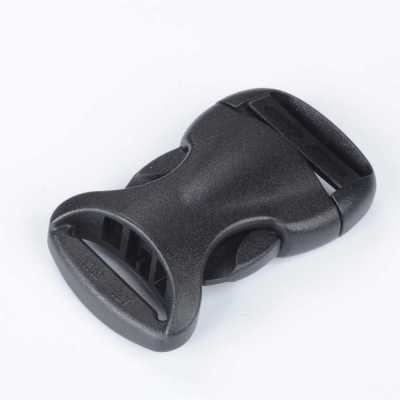
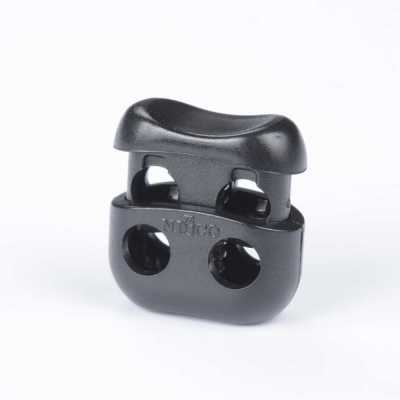
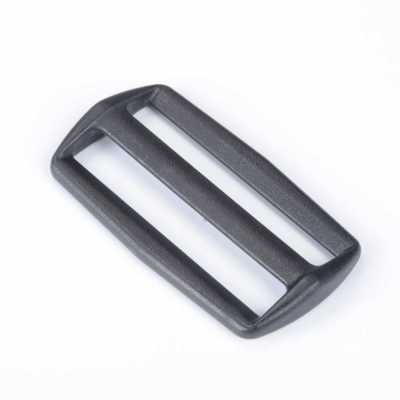
Polyacetal is an engineering plastic generally abbreviated as POM. It is often used for repeatedly moving parts, and in apparel accessories it is molded into buckles for fixing and adjusting tape, slide adjusters, and parts around cords.
Unlike metal buckles and rings, polyacetal does not rust. Also, because it has no magnetism, it is not detected in needle inspection with a metal detector. However, whether needle inspection is required and how it is managed should be confirmed according to the product specifications.
Material Properties and Part Structure
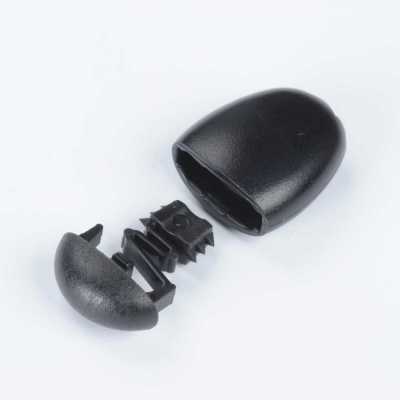
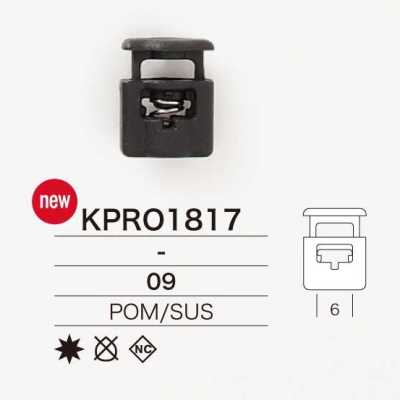
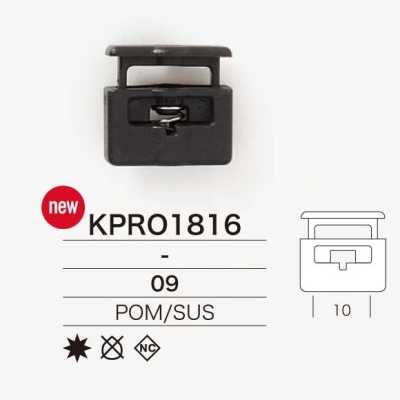
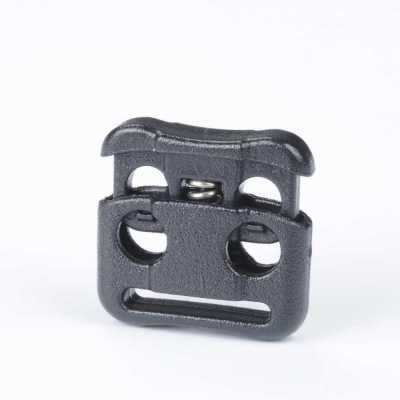
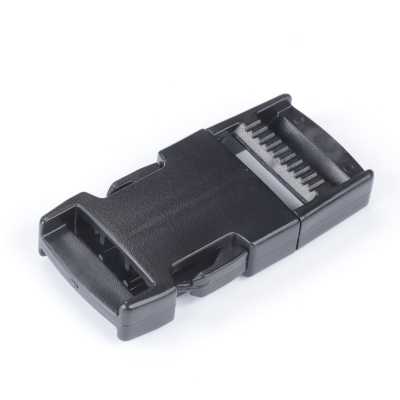
It has hardness and moderate slipperiness, making it suitable for applications that repeatedly feed tape or attach and detach buckles. As molded parts, it is processed into various shapes such as the main body and prong of a side-release buckle, rectangle rings, slide adjusters, cord stoppers, and cord ends.
Its light weight is an advantage in garment and bag accessories. On the other hand, the strength of a part cannot be judged by the material name alone. Performance changes depending on molding conditions such as shape, wall thickness, and gate position, as well as the tape it is paired with and the load during use.
- Compared with metal, it is lighter and does not develop red rust or corrosion.
- Many products are colored during molding, and their appearance and changes over time differ from metal with a surface finish.
- In high-temperature environments, under strong impact, or when in contact with chemicals, suitability for the usage conditions must be confirmed.
How Sizes Are Expressed
The size of buckles and rings is generally indicated by the internal dimensions of the tape passage section or by the corresponding tape width. For example, even when the indication matches the tape width, actual ease of threading varies depending on the thickness of the tape, weave density, and folded edge.
The outer dimensions are the overall size of the product and do not match the tape width. For side-release buckles, in addition to the tape passage width on one side, the outer dimensions of the body, thickness, and prong structure are also checked. In specifications, the internal dimensions and the width of the tape used are listed separately as needed.
- Confirm the finished width of the tape to be threaded and the internal dimensions of the part.
- For slide adjusters that thread the tape twice, allow for the added thickness from overlapping.
- Use a sample with the actual tape to test threading, holding force, and adjustment operation.
Main Applications and Selection
It is used in bags, backpacks, belts, outdoor clothing, sportswear, and similar products for adjusting tape length and for attachment and removal. In cord ends and similar parts, it also serves to cover the end of the cord while reducing fraying and improving appearance and usability.
When selecting, organize the required holding force and usability for each application. In areas where load is continuously applied or in applications related to safety, it is important not to judge by the appearance of the part alone, but to perform tensile tests and confirm repeated use in the finished state including the tape.
Metal parts can more easily provide a substantial feel and rigidity, but they require consideration of rust, plating wear, and needle detector compatibility. Polyacetal is suitable for its light weight and nonmetal characteristics, but it is used selectively with metal or other resins depending on design, load, and usage environment.
Frequently Asked Questions
Can a polyacetal buckle be detected by a metal detector?
Polyacetal itself is nonmetallic and has no magnetism, so it is normally not a material detected by a metal detector. However, if the assembled part contains metal, or if there are inspection standards for each product, confirm it in the finished-product state.
How many millimeters of tape can a polyacetal ring be used with?
In many cases, selection is based on the internal dimensions of the ring's tape passage section or the compatible tape width. However, even with the same width, ease of threading and holding force vary depending on the tape thickness and whether it is folded, so sample confirmation with the tape to be used is necessary.
Does polyacetal rust?
Because polyacetal is not metal, it does not produce red rust like iron. However, dirt adhesion, surface changes due to wear, and changes in appearance or performance due to usage environments such as ultraviolet light and heat can occur, so evaluation should be performed according to the application.