Nylon
Nylon is a synthetic fiber whose main component is polyamide, and it is a material widely used from apparel to bags and industrial materials, taking advantage of its lightness, strength, and abrasion resistance.
Contents6 sections
Definition and Overview
Nylon is a synthetic fiber chemically classified as a polyamide. It is often used as filament yarn (long continuous fibers) and processed into a wide variety of forms, including woven fabrics, knit fabrics, and nonwovens. Depending on yarn thickness, weave or knit structure, and finishing, it can be made into anything from thin, supple textile to durable heavy-weight fabric.
For apparel, it is used alone or blended, woven, or knit with cotton, polyester, polyurethane, and other fibers. By combining it with other fibers, strength, stretch, appearance, and hand feel can be adjusted to suit the intended applications.
Characteristics
Nylon is generally lightweight, relatively strong against pulling and abrasion, and supple. Because it can achieve strength even with fine yarn, it is also used for thin, compact textile. Its texture ranges widely, from smooth, glossy finishes to matte, natural-fiber-like finishes created through processing.
Since it does not have high moisture absorbency, it tends to dry quickly, but its ability to absorb sweat depends on the structure and finishing. It can also generate static electricity through friction. In some cases, functions suited to the application are added by combining treatments such as water repellency, waterproof and breathable finishes, coating, and lamination.
- It is a material that is easy to provide with lightweight strength and abrasion resistance.
- When used as filament, it tends to have a smooth, supple hand feel.
- Heat requires caution, as high-temperature irons and the like may cause deformation or melting.
Main Applications
Thin nylon is used for windbreakers, sportswear, outer shells and linings of down wear, swimwear, and lingerie. Taking advantage of its light weight and quick-drying properties, it is used widely from spring/summer light apparel to layering items.
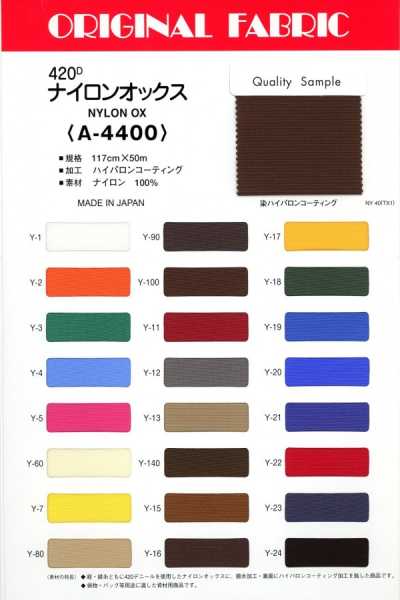
Textile woven tightly or made with thick yarn are suitable for outerwear, outdoor wear, uniforms, bags, pouches, and more. In structures reinforced in a grid pattern, such as ripstop, it is also used for applications where tear resistance is important.
Selection and Handling Notes
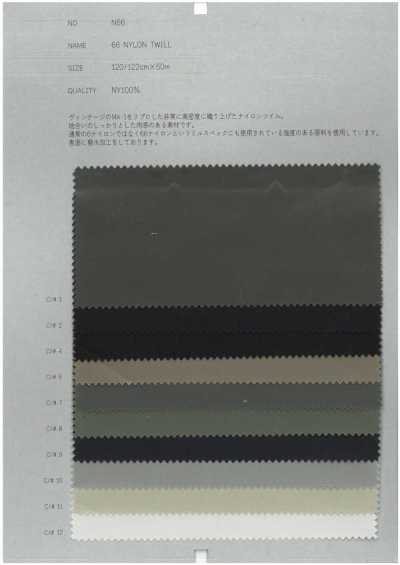
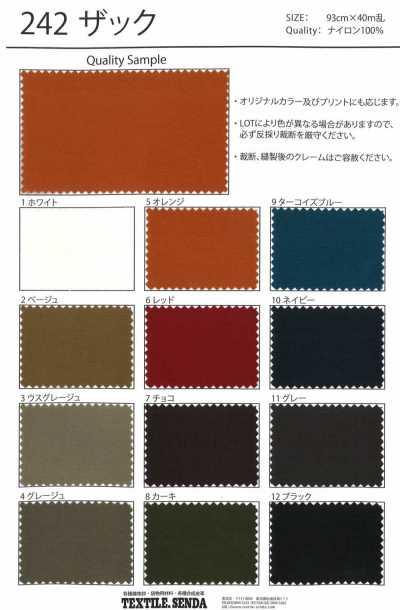
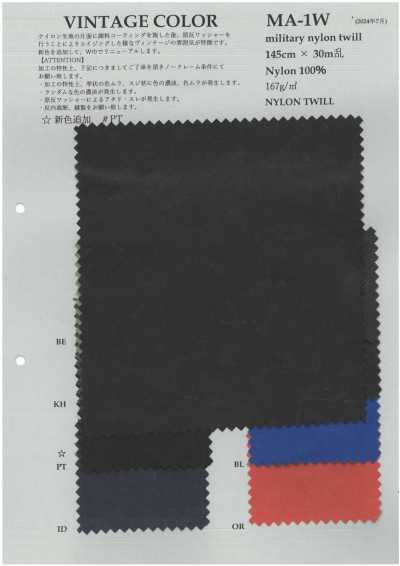
When selecting, check not only the composition but also whether it is woven or knit, yarn thickness, fabric weight, density, and surface finish. Even within nylon, thickness, firmness, elasticity, and durability vary greatly depending on the structure, such as taffeta, oxford, twill, or tricot. It is important to verify the required strength, lightness, and suitable processing for the application through testing or actual samples.
Whether washing or drying is allowed depends on the care tag, including any blended materials and finishing. With high-temperature irons, tumble dryers, or heat bonding, caution is needed to avoid deformation or shine caused by heat. During sewing, the fabric may be slippery or needle holes may stand out, so test the sewing needle, sewing thread, and feed conditions in advance, and also check for seam puckering.
Differences from Similar Terms
Polyester is also a representative synthetic fiber, but it is chemically classified differently from nylon. Generally, nylon is chosen for uses that take advantage of its suppleness and abrasion resistance, while polyester is also widely used for applications requiring shape stability and weather resistance. However, actual performance varies depending on fabric design and processing.
Polyamide is sometimes used as the chemical classification name that includes nylon. In care labels and overseas standards, it may be written as polyamide, so when procuring, confirm both the composition label and the required physical properties. Polyurethane is an elastic fiber that provides stretch, and its main role differs from nylon.
Frequently Asked Questions
Is nylon a waterproof material?
Nylon itself is not a material that guarantees waterproof performance. Performance is improved by making it into high-density woven fabric to reduce water penetration, or by applying water-repellent finishing, coating, or lamination. For waterproof applications, it is necessary to confirm product design, including seam treatment as well as the textile itself.
How do you choose between nylon and polyester?
If light weight, suppleness, and abrasion resistance are priorities, nylon is a candidate. On the other hand, polyester may be more suitable depending on the desired shape stability, weather resistance, dyeability, and cost. Rather than deciding by material name alone, compare fabric swatches that include structure, fabric weight, and processing.