Hole Punch
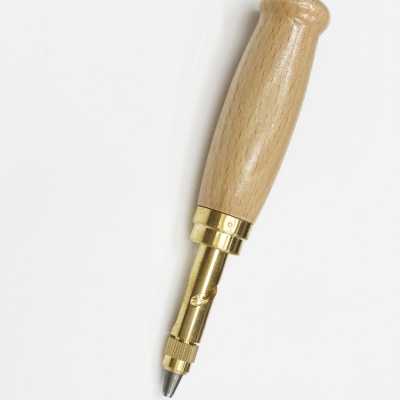
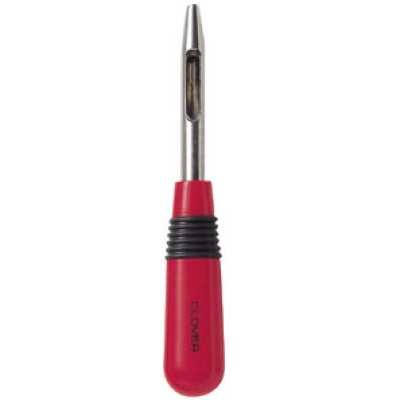
A hole-making ponte is a tool for punching circular holes in fabric, leather, synthetic leather, paper, and similar materials. It is used when making installation holes for eyelets and cap and close posts, as well as holes for threading cords.
Contents6 sections
Definition and Overview
A hole-making ponte is a tool that punches material with a blade at the tip to make circular holes. In apparel accessory attachment, it is used for pilot holes for eyelets, cap and close posts, press fasteners, and similar items. Stabilizing the hole position and diameter leads to a clean finish.
A ponte is generally used by pressing the blade edge against the material. For leather, belts, synthetic leather, core materials, and other thick or hard materials, a striking method is used, but with thin fabrics or stretch fabrics, care is also needed to avoid hole distortion and fraying.
How to Use It
Before processing, mark the exact center of the hole with tailor's chalk or similar. Under the material, place a dedicated rubber mat or cutting mat that is less likely to damage the blade edge and makes punching easier. Striking directly on a hard stand or metal plate may chip or dull the blade edge.
Stand the ponte blade perpendicular to the mark and punch while holding the material so it does not shift. When attaching an eyelet or cap and close post, place the hardware temporarily after punching, confirm that the hardware shaft passes through without difficulty, and then secure it with a setting tool.
- If the hole diameter is too large, the hardware is more likely to wobble or come out.
- If the hole diameter is too small, excessive force is applied to the hardware or material, which can cause cracking or distortion.
- Before production, do a test punch with the same material or scrap.
Types and How to Choose
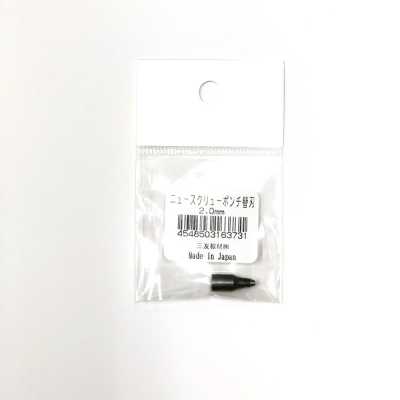
Hole-making pontes include replaceable-blade types, where a single-diameter blade is swapped in and out, rotary types with many diameters, and screw types that cut through by turning a screw. Choose the method that suits the required hole diameter, number of pieces to process, material thickness, and work location.
For eyelets and cap and close posts, confirm the hole diameter suitable for the shaft diameter and attachment specifications of the hardware to be used. For leather and thick synthetic leather, a durable striking type is often used, while a screw type is an option when you want quiet bench-top processing.
Rotary hole-making tools are characterized by the ability to switch among multiple sizes. On the other hand, they may not punch through thick or hard materials sufficiently. Hole diameter accuracy, whether blades can be replaced, and ease of grip are also points to check when selecting one.
Care and Safety Notes
After use, remove punch residue and fiber dust left inside the blade and store it away from moisture. If the blade edge becomes dull, the hole edge is more likely to fray, and more force is required than necessary. If you see reduced sharpness or chipping, consider replacing the blade or having it professionally cared for.
During work, it is important not to place fingers near the blade edge or striking area. Do not hold the material down by hand; fix it with a jig if needed. When using a hammer, work on a stable bench and make sure there are no people or easily damaged items nearby.
Differences from Similar Terms
A scratch awl is a fine-tipped tool used to mark sewing holes or spread fabric apart. It differs from a hole-making ponte, which cuts a material into a round shape, in both how the hole is made and its applications. In woven fabrics that fray easily, the area around the hole may be reinforced with an eyelet or similar item, not just the hole itself.
A setting tool is a tool for attaching hardware such as eyelets, cap and close posts, and hooks. A hole-making ponte is mainly a tool for making pilot holes for hardware to pass through, and for the attachment step itself, a dedicated setting tool or hand press is usually used.
Frequently Asked Questions
How should I choose the hole diameter for a hole-making ponte?
Choose based on the shaft diameter of the eyelet, cap and close post, hook, or similar item to be attached, and the attachment specifications provided by the manufacturer. Use the smallest size that allows the hardware to pass through, and be sure to do a test punch on scrap. The suitable hole diameter also changes depending on material thickness and elasticity.
Will using a hole-making ponte on fabric cause fraying?
Woven fabrics may fray from the edge of a punched hole. Especially with thin fabrics or fabrics with a loose weave, do not finish with punching alone; consider measures such as reinforcing the area around the hole with an eyelet or reinforcing it in the sewing specification. For knits, it is important to test stretch and hole widening.
What is the difference between a screw ponte and a striking ponte?
A screw ponte is a type that turns a handle or screw to push the blade into the material, allowing processing without a hammer. A striking type is a type that is punched out by hitting the ponte with a hammer. Choose based on the hardness of the material, the number of pieces to process, working noise, and the required hole diameter.