Stretch
Stretch refers to the property of textile or a product to stretch in response to pulling force and try to return to its original shape when the force is released, or to a material that has that property.
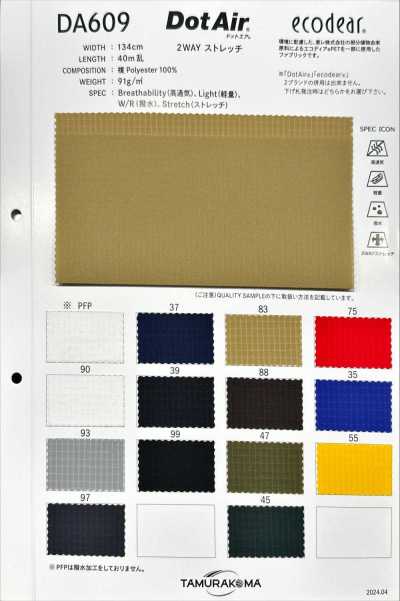
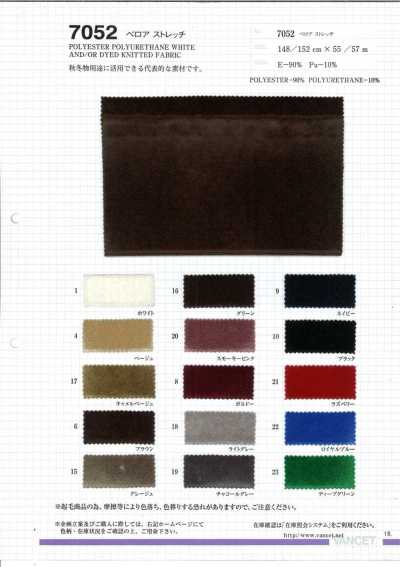
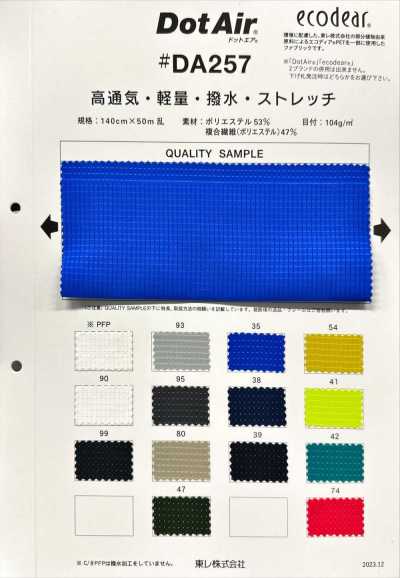
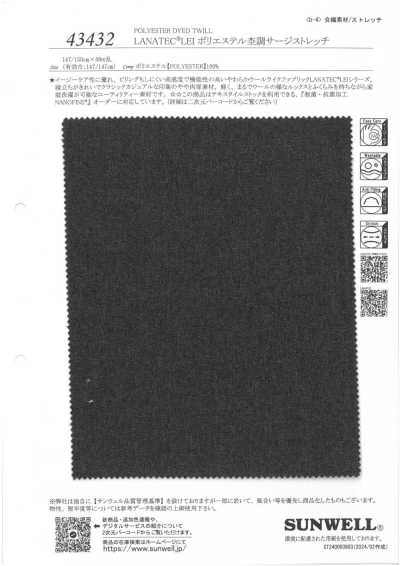
Contents6 sections
Definition and Overview
Stretch is a term that describes the elasticity of a textile and does not refer to a specific fiber name or woven structure. It is obtained through the stretch of the knit structure itself, the structure or bias-direction deformation of woven fabric, or the blending of elastic fibers.
The direction of stretch is an important point to check. Material that stretches in only one direction, either warp or weft, is generally called one-way stretch, while material that stretches in both vertical and horizontal directions is generally called 2-way stretch.
Characteristics
It follows body movement easily and helps reduce tightness during wear. Even at the same thickness, comfort, ease, and silhouette vary depending on whether it has stretch and the direction in which it stretches.
Fabrics blended with elastic fibers such as polyurethane tend to gain stretch and recovery more easily. However, performance cannot be judged by elongation rate alone; recovery after repeated stretching, stretch limit, and changes over time also need to be checked.
- Knit fabric may have elasticity due to its loop structure.
- Woven fabric can be given stretch through the blending of elastic fibers or by structural design.
- Strong elasticity makes a garment follow the body more easily, but it may also lead to seam waviness or loss of shape.
Main Applications
It is used in pants, jackets, skirts, dresses, and similar items to improve comfort in areas that require movement. It is also suitable for slim silhouettes and items that involve frequent bending of the elbows or knees.
In cut-and-sew tops, innerwear, sportswear, swimwear, and similar items, it is used to balance fit and ease of movement. However, the required stretch and recovery vary by application, so confirm them under conditions close to the final product.
Selection and Handling Notes
When selecting a textile, check the direction of stretch, amount of stretch, recovery, thickness, sheerness, and surface texture. In patterns, it is important to specify the stretch direction of the textile and not mistake the grainline. With highly stretchy textiles, using a standard woven pattern as is may make the dimensions feel too large.
During cutting, do not pull the textile forcibly; place it in a natural state. During sewing, adjust the thread, needle, stitch type, and feed so that the seams do not interfere with the textile's stretch. Before sewing, do a test stitch and check for puckering, thread breakage in the seam, and waviness.
Behavior under washing and heat changes depending on the blended fibers and processing. In particular, items containing elastic fibers may change in performance depending on high-temperature drying, ironing, and storage conditions, so check the care label and the handling conditions for the textile.
Differences from Similar Terms
Polyurethane is one of the representative fibers used to add stretch, but it is not synonymous with stretch itself. Even without polyurethane, there are textiles that have stretch thanks to knit structure or woven structure.
2-way stretch generally indicates a property of stretching in both vertical and horizontal directions. However, the notation alone does not tell you the stretch rate, recovery, or which direction stretches more. Test data and physical samples must be checked.
Frequently Asked Questions
Does stretch fabric always contain polyurethane?
Not necessarily. In addition to adding stretch by blending elastic fibers such as polyurethane, stretch may also be achieved by using the loop structure of knits, woven construction, or bias-direction deformation. Check the blend ratio and the stretch direction of the textile separately.
Does 2-way stretch mean it stretches equally in every direction?
2-way stretch generally refers to a fabric that stretches in both vertical and horizontal directions, but the amount of stretch and recovery is not always the same in both directions. It is important to check the warp and weft directions separately according to the garment's movement allowance, the pattern's grainline, and the required fit.
Why do seams wave when sewing stretch fabric?
Waviness occurs when the fabric is stretched during sewing or when thread tension, presser foot pressure, or feed amount does not match the fabric. Sew without pulling the fabric, choose needles and stitches suitable for elasticity, and test the conditions on scrap fabric to make adjustment easier.