Dressmaking Shears
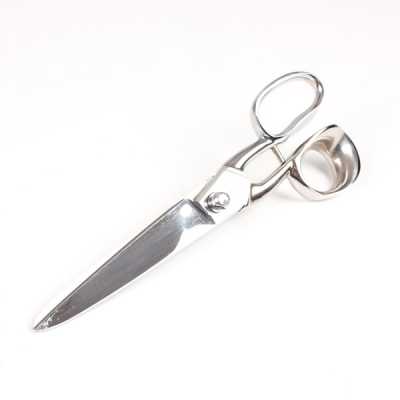
Dressmaking shears are scissors with long blades and easy-grip handles for cutting textile, suitable for straight, stable cutting of fabric.
Contents5 sections
Definition and Overview
Tailoring shears are scissors for cutting garment fabric, interfacing, and similar materials. In general, they have longer blades than paper scissors and a shape that makes it easier to cut fabric. You place your fingers in the large handles and operate them, with the basic approach of cutting continuously along the cutting line.
When cutting, lay the textile flat on the worktable without lifting it, and cut from the tip to the base of the blades. If you cut while lifting the textile, the grain may become distorted or the cutting line may shift, so for accurate cutting along a pattern, a stable placement is important.
How to Use
After securing the pattern to the textile and marking it, start cutting little by little from outside the cutting line. If you cut by making many small snips with only the tips of the blades, the cut edge is more likely to become wavy, so open and close the blades widely within a reasonable range and move in a steady direction.
When cutting thick textiles or layered textiles, do not apply excessive force to the blade tips; divide the work into a number of layers that can be cut. For thin textiles, slippery textiles, and stretchy knits, do not pull the textile, and if necessary use weights or straight pins to keep it from shifting.
- Use tailoring shears only for fabric; do not cut paper, cardboard, or metal items.
- Carry them with the blades closed, and when handing them to someone else, point the handles toward them.
- During work, do not point the blade tips toward your body or fingers, and do not put your hand under the textile.
Types and How to Choose
Tailoring shears differ in blade length, weight, blade shape, and handle comfort. For work that cuts large areas, longer blades are convenient, while for small curves and small parts, a size that is easier to handle is more suitable.
When choosing, check whether they suit your dominant hand, in addition to the thickness of the textiles you mainly handle and the amount of work. Cutting thick textiles or multiple layers requires cutting power and rigidity, but for long periods of work, it is also important that they are not too heavy and that they do not strain the fingers or palm.
Tailoring shears and thread snips have different applications. Thread snips are small tools for cutting thread ends during sewing, while tailoring shears are used for cutting large pieces of textile.
Care and Safety Notes
After use, wipe off any lint or moisture on the blades with a dry soft cloth, then store them with the blades closed. Since leaving moisture or dirt can lead to rust and reduced sharpness, avoid humid places and inspect the moving parts of the blades as needed.
Forcing dull shears to cut can damage the textile or cause your hand to slip. If you notice chips in the blade, poor blade alignment, or a strong loss of sharpness, consider asking a specialist for sharpening or adjustment appropriate to the application.
Frequently Asked Questions
Why should paper not be cut with tailoring shears?
Paper may contain ingredients other than fibers, which can be one cause of reduced sharpness in blades prepared for fabric. If sharpness declines, fabric edges are more likely to fray and thin textiles are more likely to be pulled out of shape, so tailoring shears are managed separately for fabric only.
What size tailoring shears should I choose?
If you often cut large textiles in straight lines, longer blades tend to make the work easier. On the other hand, for apparel accessories and parts with many curves, a size that is easy to handle is more suitable. Choose while also considering hand size, dominant hand, and the thickness of the textiles you handle.
What points should I watch for when cutting thick textiles with tailoring shears?
Do not stack the textile too much; adjust the number of layers to match the shears' cutting capacity. Rather than concentrating force only at the blade tips, it is important to cut stably with the textile placed on the table. If it is difficult to cut, do not make up for it with force; also check the sharpness and condition of the blades.