Thimble
A thimble is a sewing aid worn on the finger used to push a needle forward in hand sewing, protecting the finger and helping achieve stable stitching even through hard materials or layered sections.
Contents6 sections
Definition and Overview
A thimble is a tool worn on the finger that pushes the needle or needle shaft during hand sewing. It reduces puncture injuries and pressure from the needle, and helps transmit a steady force to the needle. It is useful when sewing thick fabrics, seam allowances layered in multiple pieces, or around firm interfacing.
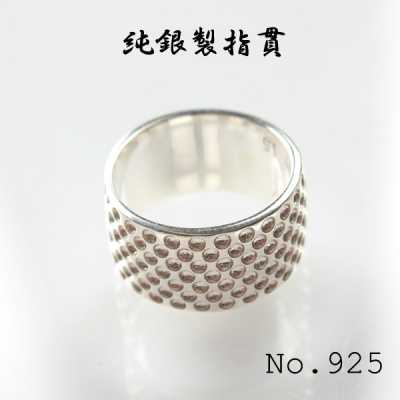
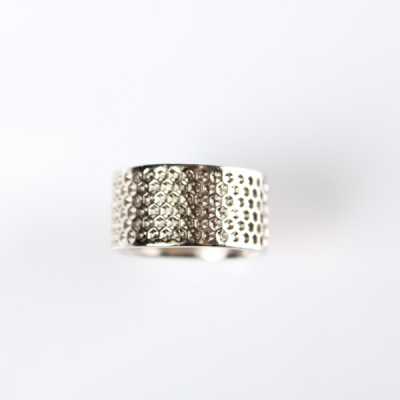
In general tailoring, it is often worn on the middle finger to push the back end of the needle, while in Japanese-style tailoring, ring-shaped types that fit against the underside of the middle finger or near the joint are also used. The suitable shape varies depending on which finger is used and how the needle is pushed.
How to Use It
Secure it comfortably on the finger you will wear it on, so that the point where you push the needle comes into contact with the protective surface of the thimble. Rather than forcing the needle in strongly, moving it little by little in coordination with the hand supporting the fabric helps reduce needle bending and strain on the fingertip.
When using it for the first time, try stitching on a scrap of thin fabric and check where the needle makes contact. If the thimble rotates or slips, review the size and wearing position. It is not a tool for receiving the needle tip; it mainly protects the finger that pushes the needle out.
Types and How to Choose
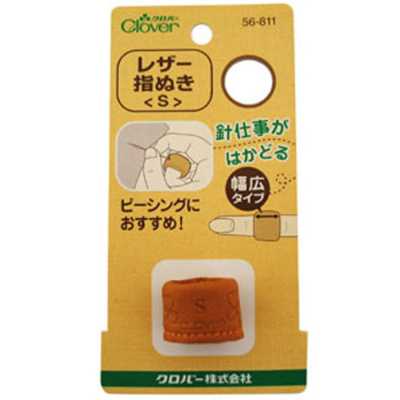
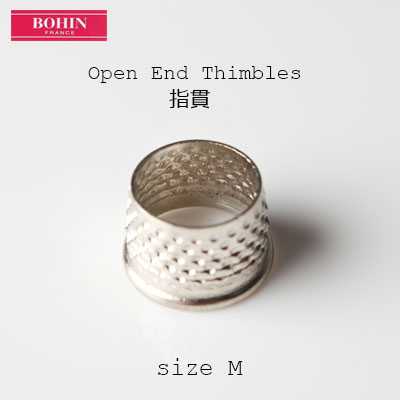
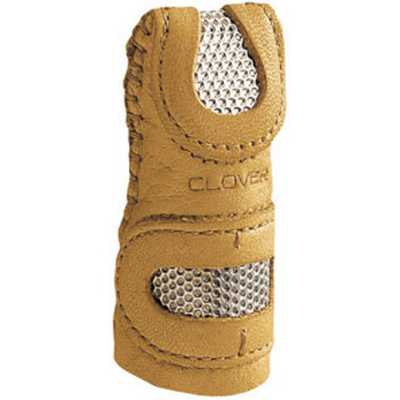
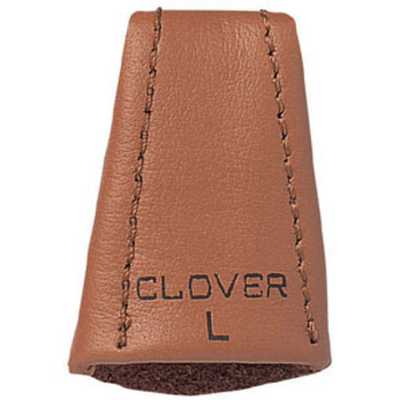
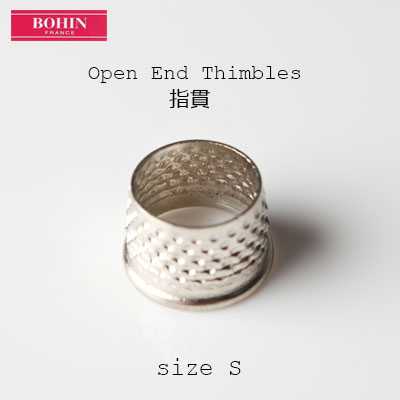
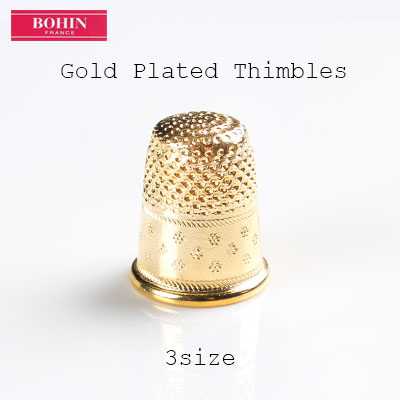
Cap-style thimbles cover a wide area from the fingertip to the pad of the finger and are used for hand sewing in tailoring. Ring-shaped thimbles are worn around the area near the finger joint and are suited to sewing methods in which the position used to push the needle differs from the fingertip, such as Japanese-style tailoring.
Materials include metal, leather, and resin. If you want to push the needle firmly, a hard material is an option; if you value comfort against the finger and how well it conforms, a more flexible material is an option. Check not only the circumference of the finger, but also the position and depth of the surface that presses the needle.
- When sewing thick or hard sections, choose one with a protective surface that makes the needle less likely to slip.
- For long hours of hand sewing, check for a fit that reduces pressure and stuffiness.
- Choose the shape to match your dominant hand, stitching method, and the finger you use.
Care and Safety Precautions
After use, wipe off lint, oil from the skin, and moisture with a soft cloth, then dry it thoroughly before storing. For metal thimbles, watch for discoloration and rust caused by moisture; for leather thimbles, watch for hardening caused by sweat and water. Do not leave it dirty; care for it using a method appropriate to the material.
Even when wearing a thimble, it cannot completely prevent injury from the needle tip. It is important not to place your fingers in the path of the needle tip and not to use bent or damaged needles. Keep your work area well lit, and store needles safely after use.
Differences from Similar Terms
A thimble is a tool that protects the finger pushing the needle, not the sewing needle itself. Also, a straight pin is used to temporarily secure fabric or parts, and a awl is a tool for making holes or shaping corners. Each has a different purpose and a different way of handling the tip.
"Thimble" as a garment decoration or cold-weather item may refer to fingerless gloves. In contrast, a sewing thimble is a craft and sewing tool that assists with hand stitching. When searching or ordering, adding the intended application helps avoid confusion.
FAQ
Which finger do you wear a thimble on?
For hand sewing in tailoring, it is generally worn on the middle finger of the dominant hand to push the back end of the needle. However, depending on how you hold the needle and how you sew, some people use the index finger or another finger. Check the actual point where you push the needle, and wear it on the finger that lets you apply force comfortably.
How do you choose between a metal thimble and a leather thimble?
For uses that require firm force on thick fabric or hard areas, a metal thimble with a hard protective surface may be chosen. Leather thimbles feel softer against the finger and are suited to situations where a familiar, comfortable feel is important. Do not decide based on material alone; also check the size, the position where the needle contacts it, and the working time.
What should you do if the thimble slips off or rotates on your finger?
The size may be too large, or the position where you push the needle may not match the protective surface. Replace it with a size or shape that fits your finger, and adjust the wearing position. It may also slip because of sweat or dirt, so it is important to keep the inside of the thimble and your finger clean and dry before use.