Tape Measure
A tape measure is a sewing measuring tool that uses a flexible strip with markings to measure body dimensions, textile, patterns, and product lengths along curved surfaces.
Contents6 sections
Definition and Overview
A tape measure is a measuring tool with length markings printed on a strip. In garment making, it is used to check body measurements such as bust and waist, various dimensions of a pattern, and the length of textile and products. Because it is flexible, it can measure not only straight lines but also curves such as the body and necklines.
In general, “tape measure” refers to a soft sewing tape, but depending on the workplace it may also refer to measuring tapes in general. A convex tape measure, which winds a rigid metal tape into a case, is suitable for measuring straight lengths, but it is usually not used for body measurements.
How to Use
Place the tape measure naturally along the object being measured and check the starting and ending markings from the front. Pulling too hard or letting it sag causes errors, so it is important to keep steady tension. Stretchy textile should be measured in the condition specified in the specification sheet or pattern.
When measuring a person, stand in a proper posture and wear light clothing or clothing suitable for measuring. Check that the tape measure is parallel to the floor around the torso, and avoid tightening it too much. Measuring the same area multiple times and standardizing the units and measuring positions recorded helps reduce differences between operators.
- For textile length, place the tape measure along the grain line to check it.
- For curved lengths, follow the curve without lifting the tape measure.
- For dimensions on a pattern and actual garment measurements, compare them under the same measuring conditions.
Types and How to Choose
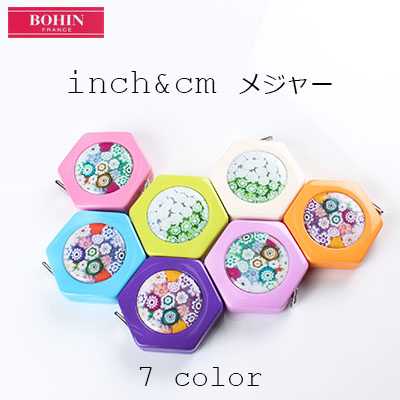
For sewing, a tape-style tape measure that is flexible and not easily bent out of shape is suitable. There are types with different units on each side, types with the same units on both sides, and types that can be stored in a case. Choose according to the main usage scene, such as measuring, pattern making, and inspection.
Check the visibility of the markings and how easy they are to read accurately. It is easier to use one with a clear zero point at the tip and markings that have not faded. If you frequently measure long straight lines, using a ruler or a convex tape measure separately from a sewing tape measure allows measurement suited to the application.
- Body measurement: soft and easy to follow the body
- Pattern making: fine markings that are easy to read
- Carrying: with a storage case or similar, making it easier to prevent dirt and bending
- Production management and inspection: matched to the units and measuring method used at the site
Care and Safety Precautions
After use, wipe off dirt and moisture with a soft cloth, and store it away from direct sunlight and high temperature and humidity. Folds, twists, and strong pulling can cause marking shifts or damage. If the print is worn, the edge is frayed, or cracks are visible, check usability by comparing it with a standard ruler.
Be careful not to work near machinery with it hanging around your neck, or swing it around while moving. With a retractable type, if the tape returns forcefully it may injure your fingers or face. When retracting it, support the tape by hand and make sure there are no people nearby.
Differences from Similar Terms
A ruler is suitable for rigid, straight measurement, while a tape measure is suitable for flexible measurement of curved surfaces and long distances. A wheel is a tool for transferring pattern lines and marks onto textile, and is not a tool for measuring length. Chalk is also used for marking, but it may be used after measuring with a tape measure to determine positions.
A pattern refers to a template or design drawing for cutting clothing, and a tape measure is a tool used to create and verify it. A specification sheet may define finished dimensions and measuring points, and when using a tape measure, you must follow the measuring method stated in the specification sheet.
Frequently Asked Questions
What are the tips for measuring accurately with a tape measure?
The basics are to avoid twisting the tape measure, let it follow the area being measured naturally, and not tighten it or let it sag. Check that the torso is parallel to the floor, and also match the body posture and the thickness of the clothing. Record the measuring point and condition, and repeat the measurement under the same conditions.
How do you use a sewing tape measure and a convex tape measure differently?
A sewing tape measure is soft, so it is suitable for measuring the body and curves, and for checking curved sections of textile. A convex tape measure is rigid and is a tool that makes it easier to measure straight distances such as worktables and materials. For body circumferences and necklines, use a sewing tape measure.