Needle Threader
A needle threader is a tool that helps thread hand sewing needles and some machine needles by passing a thin wire or hook-shaped tip through the needle eye and pulling the sewing thread through.
Contents5 sections
Definition and Overview
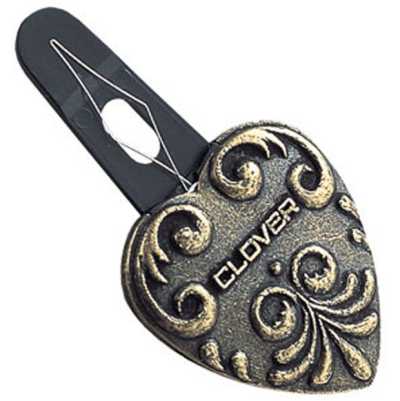
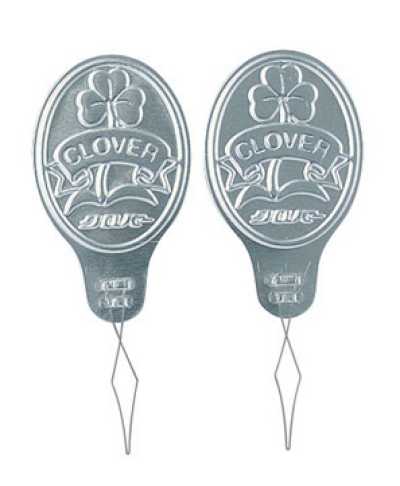
A needle threader is a helper tool used when it is difficult to pass sewing thread directly through the eye of a needle. A typical type has a thin metal plate with a small wire loop attached; you pass the wire through the needle eye, hook the thread onto it, and then pull the wire back out with the thread.
It is used for hand sewing, mending, button sewing, embroidery, and similar tasks. It can help thread small, hard-to-see needle eyes, but it may not be usable depending on the size of the eye, the type of needle, and the thickness of the thread.
Basic Usage
First, pass the tip of the wire or hook through the needle eye. Next, hook the end of the thread onto the loop or hook, fold the thread back slightly, and slowly pull the needle threader back out of the needle eye. Pull the threaded thread through to the needed length before use.
If the thread end is frayed, it is harder to hook onto the wire and harder to pass through the needle eye. Cut the thread end at an angle to neaten it, and if necessary, lightly twist it back into shape with your fingertips to make it easier to handle.
- Hold the needle in a stable place and keep the needle point away from your fingers.
- When pulling the threader, do not pull the thread hard; move it along the direction of the needle eye.
- After threading, store the needle safely in a pincushion or similar holder.
Types and How to Choose
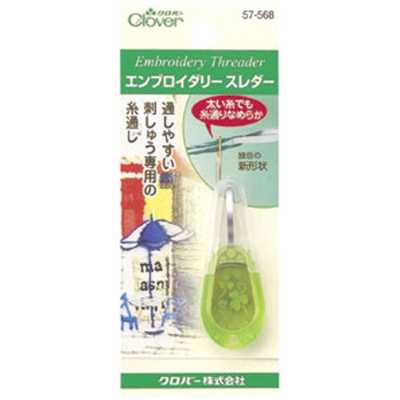
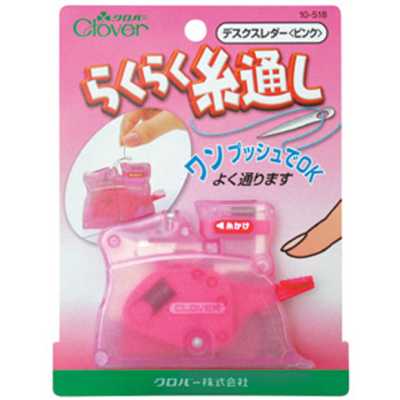
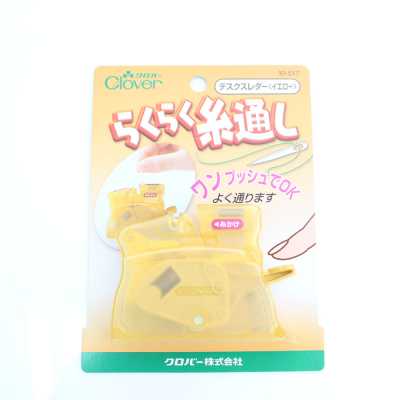
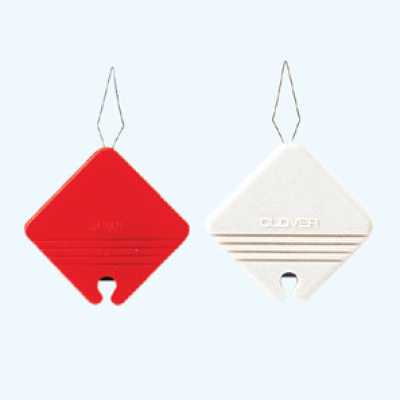
The standard wire type is a basic shape that can be used with many hand-sewing needles. On the other hand, hook-ended types are used depending on the shape of the needle eye and how the thread is hooked. There are also forms that improve ease of use and visibility, such as those with handles or magnifying lenses.
When choosing one, make sure the tip fits into the needle eye of the needle you will use without difficulty and that it can hook the thread you will use. A thin-wire type is suitable for narrow needle eyes, but caution is needed because it can break easily when used with thick thread or in tasks that require strong force.
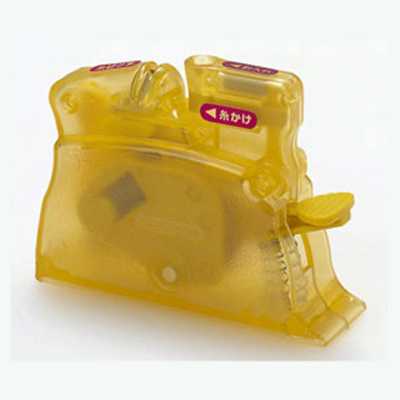
When using it for machine needles, confirm that it is compatible with the sewing machine model and the needle mounting position. Avoid forcing a hand-sewing threader onto a sewing machine with the needle already installed.
Care and Safety Notes
With wire-type threaders, if the wire tip bends or comes off, it becomes difficult to use. After use, remove lint and store it away from moisture. Do not use one if the wire is bent, frayed, or the fixed section is loose.
If you force a wire larger than the needle eye into place or pull thick thread too hard, you place stress not only on the threader but also on the needle. The tip of a broken wire can injure your fingers, so handle and dispose of it carefully.
A needle threader is not the needle itself; it is a tool for guiding sewing thread into the needle eye. An awl is a tool for enlarging holes or adjusting their position, and its purpose and tip shape are different.
Frequently Asked Questions
Why won't the needle threader fit into the needle eye?
The wire or hook may be too thick for the needle eye, may not match the direction of the eye, or the edge of the eye may be damaged. Do not force it in; switch to a thinner needle threader or review the needle-and-thread combination.
Can a needle threader be used with thick thread?
Even if the thread can be hooked, it cannot be used unless it is thin enough to pass through the needle eye. With thick thread, the wire is placed under heavy load, which can cause deformation or breakage. The basic rule is to choose a needle with a larger eye that is suitable for the thread.