Cutting
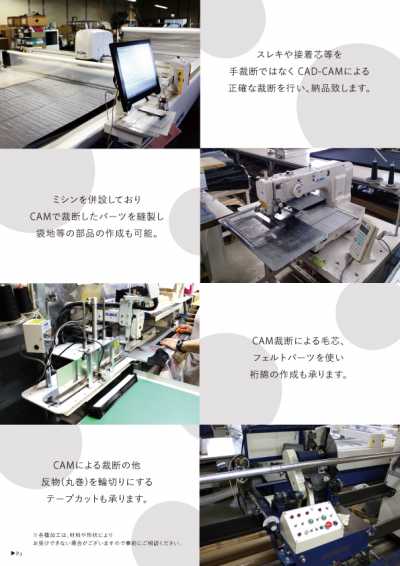
Cutting is the apparel production process of cutting textile into the required shapes according to the pattern and cutting specifications, and passing it on to the sewing process.
Contents6 sections
Definition and position in the process
Cutting is the process of dividing textile into parts such as the body, sleeves, and collar based on pattern information finalized after planning, pattern making, and grading. It is generally performed after fabric inspection, grain correction, spreading, and marking, and after cutting, the process moves on to sewing.
The accuracy of cutting affects the product dimensions, the appearance of patterns, ease of sewing, and material yield. Since misalignment during cutting and confusion between parts are difficult to correct in later processes, it is managed as an important process that affects production quality.
How to proceed and practical points
In mass production, spreading is performed to lay textile in layers, and cutting is done according to the marking that shows the cutting layout. After cutting, the parts are sorted by size, color, and style, bundled and managed, and identified so they are not mixed on the sewing line.
It is important to check the grainline, selvage, pattern direction, pile direction, and stretch of the textile before laying it out. In particular, for patterned materials such as stripes and checks, brushed materials, and prints with a directional design, the left and right appearance and pattern matching between parts are considered in advance.
- Before cutting, check color differences and fabric defects for each roll.
- Clarify whether the pattern includes seam allowance or whether seam allowance is added during cutting.
- Make notches, match points, and dart positions in a way that can be identified in later processes.
- Check the number of cut parts and the pairing of left-right symmetrical parts.
Items to confirm when placing an order
When outsourcing cutting, share the pattern, marking data or cutting instructions, as well as fabric width, consumption, shrinkage rate, pattern direction, and cutting method. Also decide in advance the quantity of textile and auxiliary materials to be handed over, how leftover rolls are handled, and the packaging format for parts at delivery.
If a specification change occurs after cutting has started, it may lead to recutting or a shortage of textile. Before placing an order, it is important to finalize the quantities by size and color, the number of pattern sets, whether pattern matching is required, and the criteria for unacceptable fabric defects.
Quality points to watch
For cutting quality, check for deviation from the cutting line, errors in part dimensions, misaligned grainline, missing match points, and fraying or heat sealing at the cut edge. In multiple-layer cutting, textile misalignment is likely to occur, so the conditions for spreading and cutting should be adjusted according to the material’s slipperiness, thickness, and stretch.
Parts cut on knit or bias directions are prone to stretching, and even woven fabrics do not have stable dimensions if they have skew or shrinkage. If necessary, perform grain correction or washing before cutting, and before mass production, make a trial cut and check sewing to identify problems.
Differences from similar terms
Spreading is the work of layering and laying out textile at a specified length and number of layers so it can be cut; it is not the act of dividing it into pieces itself. Marking refers to arranging patterns efficiently to determine material consumption and cutting positions, or to the information for that arrangement.
Cutting refers to the entire process of cutting textile, whereas tailoring scissors are the tool used for cutting. A pattern is design information that shows the shape and dimensions of product parts, and cutting is the process of reflecting that information onto the actual textile.
Frequently asked questions
Why is grain correction done before cutting?
It is done to correct distortion and skew in the textile and make it easier to cut parts along the grainline. If cutting is done while the grainline is off, the product may twist after sewing, or the silhouette and appearance of the pattern may become unstable. The need is judged according to the characteristics of the material.
What kinds of textile require pattern matching in cutting?
Stripes, checks, plaids, borders, and prints with a directional design may require the pattern position to be matched between the left and right body pieces or pockets. Since pattern matching may increase material consumption, it is important to decide in the planning stage which areas are priorities and what range is acceptable.
How is cutting quantity confirmed?
It is confirmed by calculating the number of parts needed for each product based on production quantities by size and color. Manage left-right pairs, outer fabric and lining, interfacing, and other materials separately, and after cutting, confirm the number of pieces in each bundle. Also manage with replacement quantities caused by fabric defects in mind.