Setting Tool
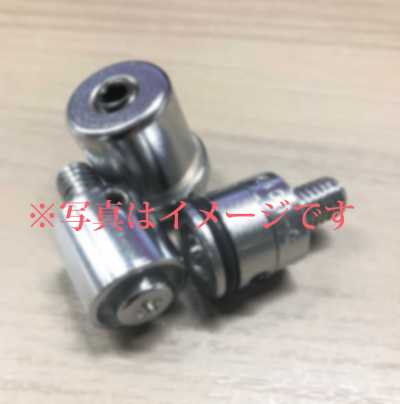
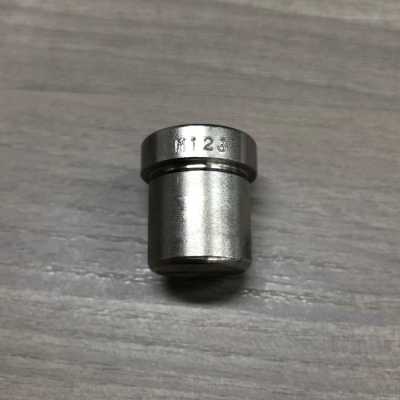
A setting tool is a dedicated tool used together with a hand press or setting rod to clinch components into the required shape when attaching hardware such as press fasteners, eyelets, and cap and close posts to textile.
Contents6 sections
Definition and Overview
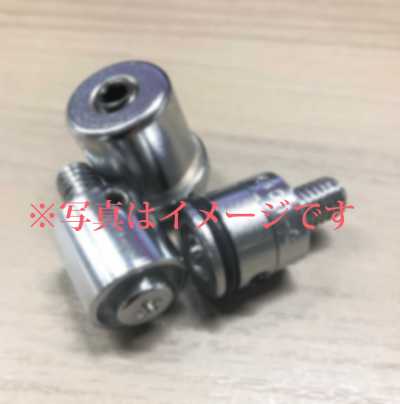
Setting tools are specialized tools used to attach press fasteners and eyelets. They are used in pairs, with one side receiving the surface of the hardware and the other side crushing the leg or tube section to secure it, transmitting the force of a blow or press to the proper position of the hardware.
“Setting tool” may be used to refer collectively to punch rods, dies, and setting punches. However, because it may refer either to a rod-shaped tool struck by hand or to a pair of upper and lower dies mounted on a press, the machine in use and the compatible parts should be checked when ordering.
Structure and Compatible Parts
Many setting tools consist of an upper die that supports the surface of the hardware without scratching it, and a lower die that deforms and secures the leg, prong, or tube section. They have recesses and projections matched to the shape of the parts, and it is important to combine them in the correct orientation.
Setting tools differ according to the type of hardware and part configuration, such as press fasteners, spring hooks, jumper hooks, cap snap buttons, eyelets, and cap and close posts. Even hardware with the same appearance may not be interchangeable if the maker, product number, or specifications differ.
- Upper die: Receives the front side head or stud, etc., and reduces surface scratches and deformation.
- Lower die: Pushes apart or crushes the leg, prong, or tube section to secure it.
- Punch rod: Refers to a rod-shaped tool used for hammer striking.
- Press die: A die mounted on a hand press or machine press for applying pressure.
Size Indication and Selection
The size of a setting tool is generally indicated not by a single dimension, but by the corresponding hook or eyelet standard, head diameter, leg length, product number, and so on. Even if the outside diameters of the hardware are similar, proper setting may not be possible if the leg thickness or the shape of the receiving part differs.
When selecting, check the type of hardware set to be attached, size, front and back part configuration, and the mounting standard of the press machine to be used. In test striking, check for surface dents, deformation, part lifting, rotation, and pullout.
How to Attach and Main Applications
With a hand press or machine press, position the textile and hardware, then attach the corresponding upper and lower setting tools and set them with appropriate pressure. When using a punch rod, striking vertically on a stable, hard workbench contributes to a consistent finish and strength.
Setting tools are used for garment front openings, pockets, cuffs, and belts, as well as for attaching hardware to bags and clothing accessories. In mass production, presses are often used for efficiency and repeatability, while punch rods may be used for prototyping and small-lot processing.
Fabric Suitability and Quality Points
If the textile is too thin, the hardware may pull out or the textile may tear; if it is too thick, the leg length may be insufficient for proper setting. With highly elastic textiles, brushed textiles, or loosely woven textiles, reinforcement material should be used and the attachment position considered, and advance verification including tensile testing is necessary.
Incompatible setting tools or excessive pressure can cause hardware cracking, plating damage, surface dents, and insufficient setting. Rust or discoloration of hardware is affected by the material, plating, storage environment, washing, and chemicals, so evaluation should be made according to product conditions.
For products that require needle detector compatibility, the breakage and wear of the setting tools used must also be managed along with the hardware. If consideration of contact with nickel is necessary, confirm that the hardware is nickel-free, and distinguish this from the specifications of the setting tool itself.
Frequently Asked Questions
Can setting tools be shared for press fasteners of the same size?
Not necessarily. Even if press fasteners have the same head diameter, the leg shape, part thickness, and spring or stud specifications may differ. Incompatible setting tools can cause scratches, deformation, and insufficient setting, so check the hardware product number or compatibility chart and always perform test striking.
Is punching a hole necessary before setting an eyelet?
It depends on the type of eyelet, textile, and processing method. In addition to the method of punching a hole before insertion, there are cases where the hardware is attached so that its leg pierces the textile, depending on the conditions. If the hole diameter is too large, it will pull out more easily, so settings should follow the specified hardware and setting tool.
What causes scratches or dents on the surface of the hardware when using setting tools?
The main causes are using an incompatible die, wear or dirt on the die, misalignment of the hardware position, and excessive pressure. Clean the receiving surfaces of the setting tools and align the centers of the upper and lower parts. Adjust the pressure according to textile thickness and hardware specifications, and check the finish before mass production.