Seam Ripper
A seam ripper is a small sewing tool with a forked tip, used to cut threads in seams and undo sewn sections.

Contents6 sections
Definition and Overview
A seam ripper is a tool used for resewing, removing basting threads, and taking out sewing thread around buttons and zippers. It has a forked tip that lets you place the thread between the two prongs and cut only the thread with the inner blade, so the purpose is to undo seams without cutting the textile.
Dressmaker’s shears and thread snips can also cut thread, but a seam ripper is shaped so it can be inserted easily into a single point in a seam. It is suited to post-sewing corrections and is not suitable for cutting textile as a substitute for cutting shears.
How to Use It
Check the seam you want to undo and insert the shorter tip under the sewing thread. After making sure only the thread is caught between the two prongs, move it gently to the point where the blade meets the thread and cut. The basic rule is not to insert the blade deeply into the textile.
For long seams, it is efficient to cut the thread on the face or back side every few stitches and then pull out the thread on the opposite side. For fine thread, thin fabrics, brushed materials, and knit fabrics, work stitch by stitch so you do not catch the structure of the textile or the surface yarns.
- Lightly lift the sewing thread and create a gap between the thread and the textile before inserting the blade.
- Cutting while the seam is pulled tight makes it less likely to damage the textile.
- Remove cut thread debris each time and check the seam and the textile surface.
Types and How to Choose
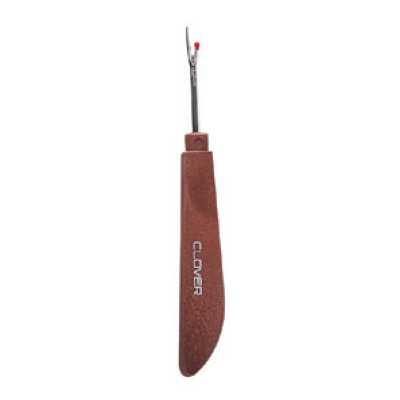
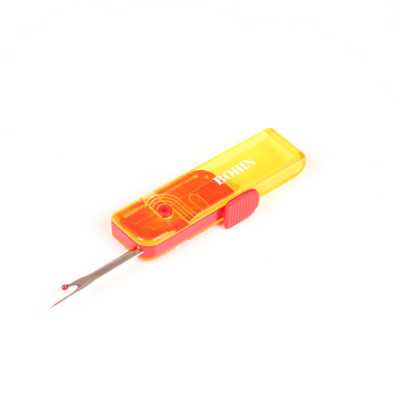
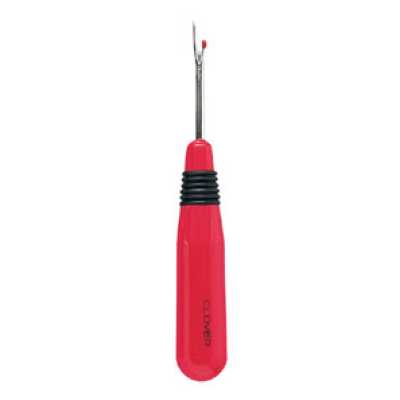
A typical seam ripper consists of a handle, a forked metal part, and a blade. A model with a thin tip is easier to handle on fine seams and in narrow areas, while a slightly larger model tends to be easier to grip for thick fabrics and long seams.
When choosing one, check the fineness of the seam to be removed, the amount of work, and how easy it is to hold. Models with a protective cap at the tip help with safe storage, but in addition to the presence of a cap, also check the precision of the blade tip and the stability in your hand.
Care and Safety Notes
After use, remove any thread debris attached to the blade tip and forked section, and store it away from moisture. If the seam ripper is chipped, bent, or dull, it can catch on the textile, so instead of forcing continued use, consider replacing it.
The blade tip is sharp. Do not move it toward your hand or fingers, and when placing it on a desk, attach the cap or protect the blade tip. When removing seams near the surface of a sewn item, try from the hidden side and check frequently that you are not cutting the outer fabric.
Differences from Similar Terms
Thread snips are small scissors used to cut thread ends that come out during sewing. A seam ripper, on the other hand, picks up the thread in a seam and cuts it, so it is a tool that is easy to use for resewing and disassembly work. Both are different in purpose from dressmaker’s shears, which are used to cut the textile itself.
An awl is a pointed tool used for making holes, shaping corners, and assisting when opening seam allowances. Even if its shape is similar to a seam ripper, an awl usually does not have a blade for cutting sewing thread. Using an awl for cutting thread reduces work efficiency and safety.
Frequently Asked Questions
Are there any tips for avoiding cutting the textile with a seam ripper?
The basic method is to lightly lift only the thread and then insert the shorter tip under it. Do not push the blade tip toward the textile; instead, move it so the thread is guided between the two prongs. For thin fabrics and knit fabrics, do not cut many threads at once; remove the seam stitch by stitch while checking as you go.
Which should I use, a seam ripper or thread snips?
Use thread snips for cutting thread ends or excess thread after sewing, and use a seam ripper for undoing sewing mistakes. A seam ripper is shaped to fit under seams easily and cut only the thread. However, for cutting textile, use dressmaker’s shears with either tool.