Prong Hook
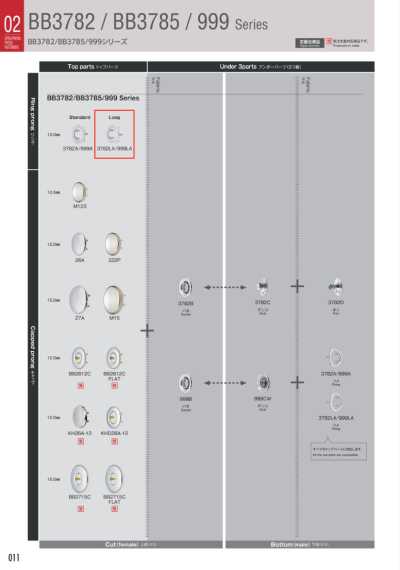
A prong hook is a type of press fastener in which prong-shaped legs are pushed through the textile to clinch the parts in place, and the raised and recessed parts are engaged and disengaged to fasten it.
Contents6 sections
Definition and Overview
Prong hook is a type of press fastener in which multiple prongs on the parts are pushed into the textile to secure them in place. Unlike snap buttons that are sewn on, it is attached with a setting tool and a press machine or hand press. It can be made for visible use with a metal head on the front side, or for use on the back side.
Part Configuration and Materials
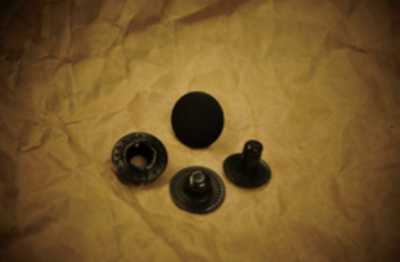
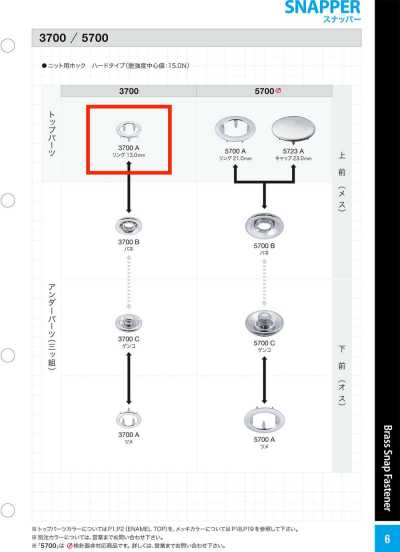
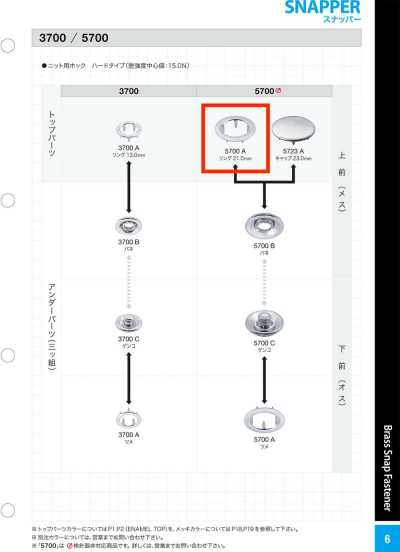
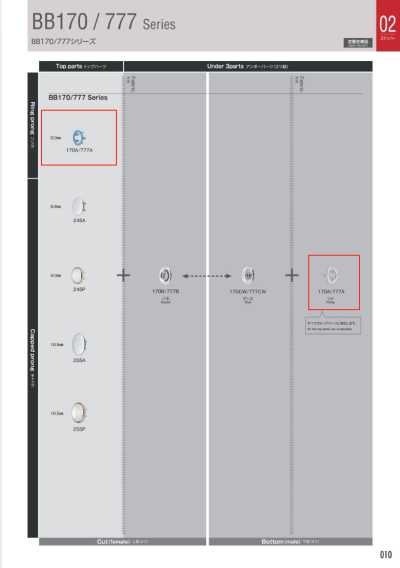
In many cases, it combines a head that covers the front side, a spring or recess on the receiving side, a protrusion on the fastening side, and a washer or prong part with prongs. The names and combinations of the parts vary by product, so it is important to use the combination specified for the same series.
Materials are often metals such as brass, and the surface may be plated to adjust color tone and corrosion resistance. Parts containing iron may react to a needle detector, so for products with a needle detection process, confirm in advance whether they are needle detector compatible.
- The head is a part that serves both as the front-side design element and as a way to hold the textile in place.
- The recess and protrusion are functional parts that engage when fastening and unfastening.
- The prong part or washer is a part that secures the textile by sandwiching it.
Size and Installation Method
Sizes are generally expressed in millimeters as the diameter of the visible head or hook body after completion. However, the basis of the notation differs by product, whether it refers to the head, recess, or protrusion, so check the drawing, actual dimensions, and compatible setting tools together.
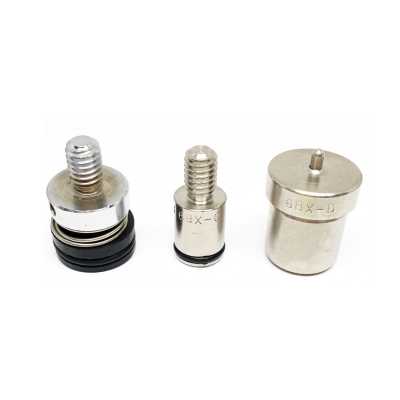
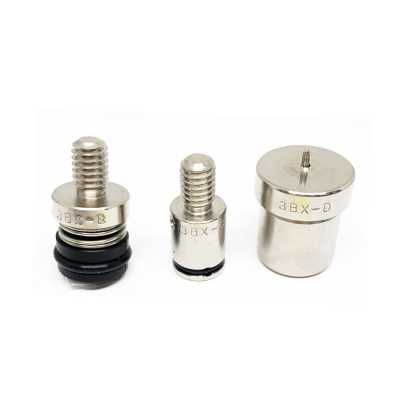
When installing, check the front and back sides of the textile and the orientation of the parts, then press each part straight with a dedicated setting tool. Hand presses are used for prototyping and small-volume work, while foot-operated or machine presses are used for mass production. Choose a setting tool that matches the shape and size of the hook.
Main Applications and Selection
Prong hooks are used as fasteners for openings and pockets in shirts, blouses, outerwear, uniforms, kids' clothing, and similar items. Select the shape and size based on ease of opening and closing, the visible metal design, and the required holding power.
Textile thickness, density, weave structure, and stretchability affect holding power. On thin fabrics, prong marks or tearing may occur, and on thick fabrics, the prongs may not catch properly or pressing may be insufficient. For thin fabrics or knits that stretch easily, consider reinforcing the attachment area with pressing cloth, interfacing, or reinforcement tape.
Precautions and Differences from Similar Products
After setting, check the engagement and release of the raised and recessed parts, looseness in the parts, prong pullout, and scratches on the front and back sides. Excessive holding power can make opening and closing difficult and place stress on the textile, while too little holding power can cause it to come undone during use. Before mass production, test it on the actual textile and the same number of layers, and confirm the specifications with a tensile test and similar checks.
Spring hooks and jumper hooks are press fasteners classified mainly by the structure of the recess. In contrast, prong hook is a name that focuses on the fastening method to the textile. Therefore, whether it is prong-style and the type of recess structure need to be checked as separate pieces of information. If consideration for nickel-related metal allergies is required, confirm the nickel-free range and contact areas.
Depending on the usage environment, such as humidity, sweat, washing, and chemicals, rust, discoloration, or plating deterioration may occur. For products that require washing or corrosion resistance, including color transfer to the textile, evaluate not only the accessory itself but also the product in its assembled state.
Frequently Asked Questions
Can prong hooks be attached to thin fabrics?
Attachment is possible, but on thin fabrics the prongs may damage the textile or pull out during use. Check the fabric density and strength, and reinforce it with interfacing or pressing cloth if necessary. Always perform a test setting with the same textile, number of layers, and setting conditions as in full production, and confirm the holding condition.
Do prong hooks require a dedicated setting tool?
In principle, yes. Using a setting tool that does not match the outer diameter of the parts, the shape of the prongs, or the structure of the raised and recessed sections can cause deformation, insufficient pressing, surface scratches, and poor fastening performance. Check the upper and lower dies corresponding to the part series and size, and adjust the press pressure with test settings.
Does nickel-free mean it can address metal allergies?
Nickel-free may indicate a specification that reduces nickel use, but it does not guarantee that skin problems will not occur for everyone. It is also necessary to confirm whether it applies only to the plating or to the entire part. Confirm the specifications including the positions that touch the skin and the condition after washing.
- Search products for "prong hook"
- Products with material "Brass"
- Products with material "Metal"
- Products for style "For Shirts/blouses"
- Products for style "For Outerwear/blousons/coats"
- Products for style "For Uniforms/Workwear"
- Products for style "For Kids"
- Browse Press Fasteners And Eyelets products