Button Seal
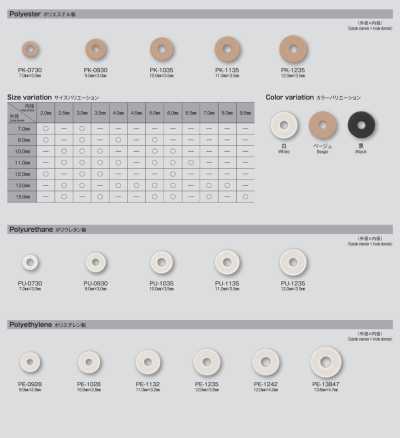
A button seal is a ring-shaped metal part used to hold and reinforce the crimped section when attaching a press fastener or hook to textile, by clamping the textile from the back side.
Contents6 sections
Definition and Overview
A button seal is a washer-like part used at the attachment area of a press fastener or hook. It is placed on the back side of the textile, and by passing the leg of the opposing part through it and crimping, it clamps the textile in place. In parts configurations, it may also be called a washer.
Unlike the head or cap, which forms the decorative front side, the button seal mainly supports fastening on the back side. However, depending on the type of hook and the manufacturer’s terminology, the shape and combination of parts referred to by button seal may differ.
Materials and Part Combinations
In many cases, button seals are made of metal and are ring-shaped or dish-shaped, with a hole in the center for the leg to pass through. As the driven leg spreads around the button seal, it creates a secure attachment that is difficult to pull out.
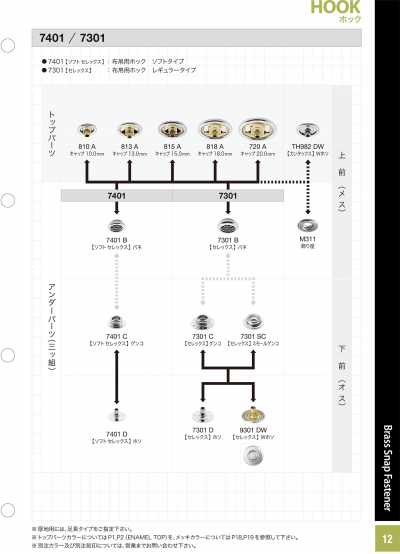
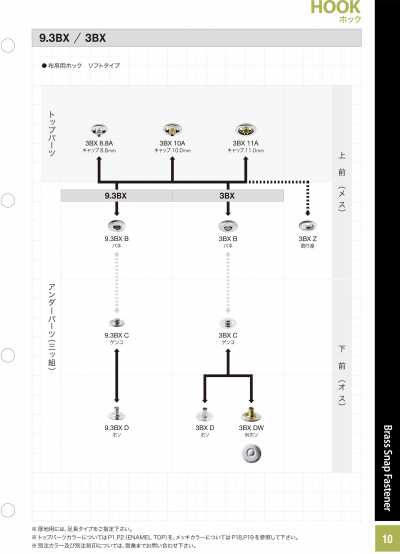
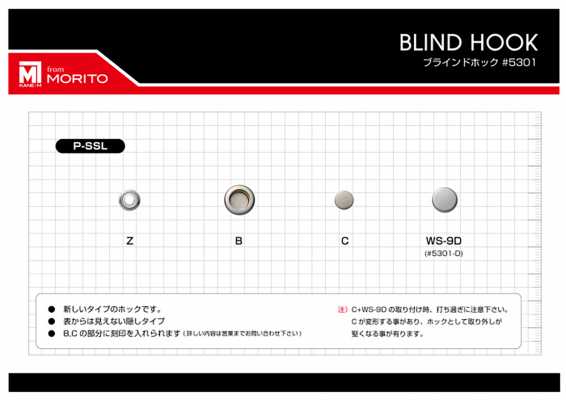
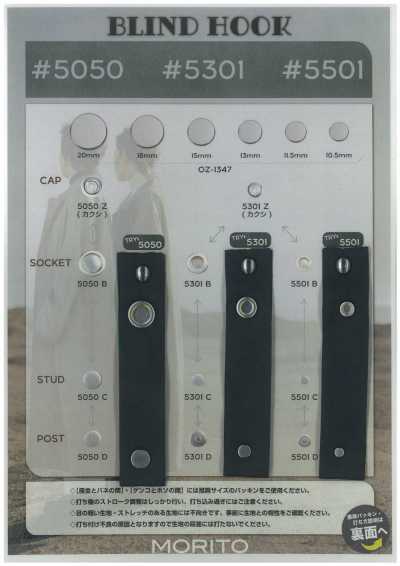
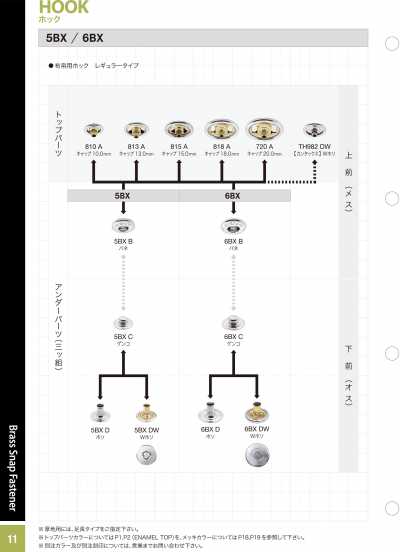
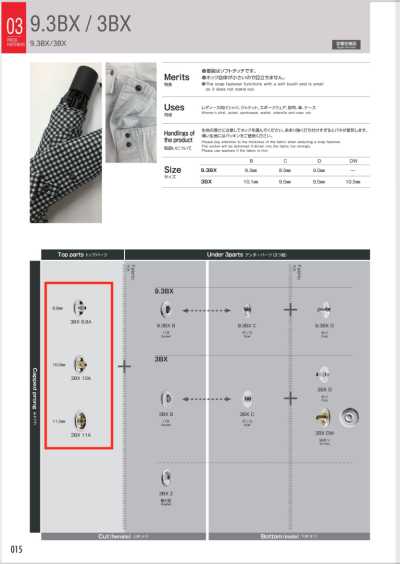
Press fasteners are generally composed of a front cap, a functional part on the recess side or protrusion side, an attachment part with a leg, and a button seal, paired together. It is important to combine parts within the same standard and the same series, and not substitute other combinations.
- With spring hooks, they may be combined with the attachment part on the receiver side or the male side.
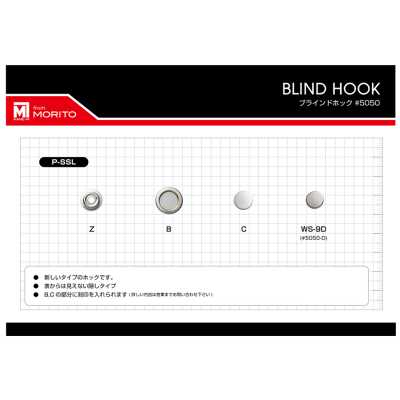
- For jumper hooks and cap snap buttons, use the corresponding dedicated button seal.
- Eyelets and cap and close posts also use washer-like parts with a similar role, but their shapes and compatible parts differ.
Size Indication and Attachment Method
Button seal sizes are often managed by the corresponding hook size, head diameter, leg diameter, or product number system, and compatibility cannot be determined by the outer diameter of the button seal alone. Specification sheets list the type of hook, size, color, and front/back part configuration together.
Attachment is done with a hand press or automatic press fitted with the appropriate die. A pilot hole is made in the textile, or the leg is driven through the textile, then the parts are set in the proper orientation and pressed. Using the wrong die selection can cause deformation or detachment.
- Before mass production, perform trial fastening with the actual layered materials, including the main textile and interlining.
- Match the die, tooling, and press pressure to the specified hook being used.
- After attachment, check for lifting on the front and back, tilting, damage, and insufficient crimping.
Main Applications and Selection Notes
Hooks using button seals are used in areas where opening/closing and retention are required, such as front openings, pockets, cuffs, necklines, and bags. Considering the required opening/closing strength for the application, confirm the thickness and strength of the attachment area, including the textile, interlining, and seam allowance.
With thin or highly stretchable textiles, the button seal may cut into the textile, causing tearing or pull-out. If necessary, reinforce the attachment area with interlining or a pressing cloth, and verify the effect on the textile’s hand and appearance through testing.
Metal parts may rust or discolor due to sweat, humidity, washing conditions, or chemicals. For products that require consideration of nickel allergies, confirm the scope of nickel-free specifications. If needle detection is part of the process, share the needle detector compatible requirements in advance.
Differences from Similar Terms
A washer broadly refers to a plate-like part inserted under screws, eyelets, cap and close posts, and similar items to distribute load. A button seal for a hook may be treated as a type of washer, but when it is referred to as a dedicated part for hooks, it is distinguished as a button seal.
An eyelet is a fitting that reinforces the area around a hole, and a cap and close post is a fitting that secures multiple materials. A washer-like part may be used together with either, but a button seal is not a part that has an opening/closing function on its own; it is an auxiliary part for securing a hook to the textile.
Frequently Asked Questions
Do I need to choose the button seal separately from the hook?
As a rule, choose the button seal that matches the type, size, and series of the hook being used. Even if the outer diameter or color looks similar, if the leg diameter, hole diameter, or crimp shape do not match, it can lead to faulty attachment or insufficient strength. Check the complete hook set and the corresponding die together.
What should I watch out for when attaching a hook button seal to thin textile?
With thin textile, the leg may bite too strongly or the button seal may cut into the textile, causing tearing or waviness. Reinforce the attachment position with interlining or a pressing cloth, and perform trial fastening with the same layered textile as the product to confirm appearance and tensile strength.
Are a button seal and a washer the same thing?
Button seal is a name often used to refer to a dedicated washer-like part used for hook attachment. Washer, on the other hand, is a more general term used for a broad range of fittings including eyelets and cap and close posts. Depending on the workplace and part specifications, the names may overlap.