Embroidery Thread
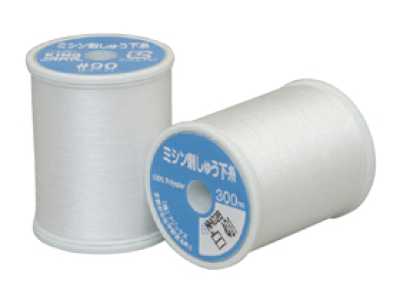
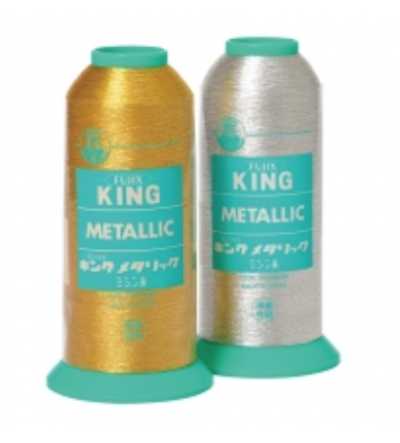
Embroidery thread is thread used for embroidery to stitch out patterns, and is a decorative thread selected according to purpose for qualities such as luster, color development, thickness, and strength.
Contents6 sections
Definition and Overview
Embroidery thread is thread used to express patterns, letters, outlines, and other designs in hand embroidery and machine embroidery. Unlike sewing thread, which is primarily used for seaming, it is valued for the color, sheen, texture, dimensionality, and coverage that appear on the surface.
The appearance and sewability change depending on the material, structure, thickness, dyeing, and finishing. The embroidery method, base textile, fineness of the design, and even wearing and washing conditions are all considered together when combining the thread, auxiliary materials, and sewing conditions.
Materials and Twist/Structure
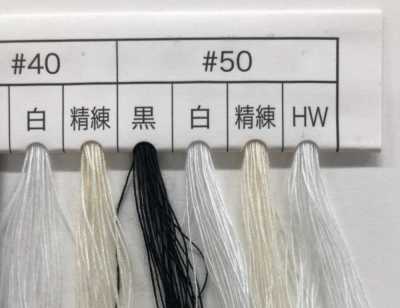
Materials include polyester, rayon, cotton, and silk. In general, polyester is chosen for applications that require strength and durability, while rayon is chosen for applications that make use of its soft sheen. Natural-fiber types are used for embroidery that aims to express a natural material feel.
Thread may be made as filament thread with continuous long fibers, spun thread made by twisting short fibers, or twisted thread made by combining multiple strands. The stronger the twist, the more stable the shape tends to be, but the appearance of sheen and fullness changes depending on the material and twisting method.
For hand embroidery, there are also types that loosely bundle several fine strands and can be divided into the needed number of strands for use. For machine embroidery, many threads are used with structures and finishes that consider uniformity and slipperiness in order to reduce thread breakage and fuzzing at high operating speeds.
How Thickness Is Expressed
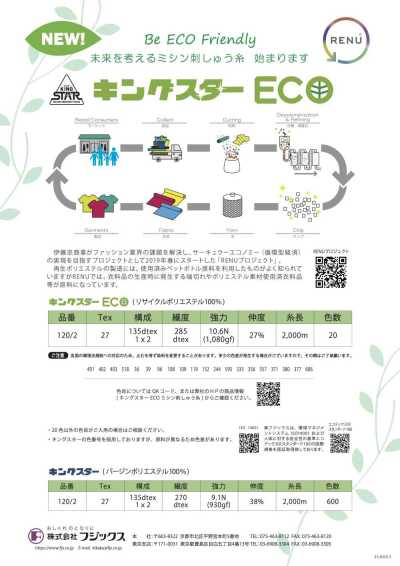
The thickness of embroidery thread is indicated by counts, denier, tex, or manufacturer-specific count designations. However, because display methods and standards are not uniform, the thickness of different types of thread cannot be simply compared by the count designation alone.
Count is one unit used to express thread thickness, and in systems such as cotton count, a larger number means a finer thread. Denier, on the other hand, is expressed by mass per fixed length, and a larger number means a thicker thread. In specifications, listing the material, structure, display unit, and color number together helps reduce mistakes.
In machine embroidery, needle size, needle eye, upper thread tension, bobbin thread, and stitch density are adjusted according to the thickness of the thread. Thick thread can create a stronger presence, but in fine patterns overlapping and crowding may become noticeable, so trial stitching is used for confirmation.
Main Applications
Embroidery thread is used for patches, names and logos, emblems, garment pattern embroidery, and decoration on household items and bags. In addition to blending in with the base textile, it is also used to make patterns stand out through differences in sheen and color combination.
In hand embroidery, the number of strands and thickness are adjusted according to techniques such as outline stitches, satin stitch, and French knots. In machine embroidery, stitch volume, stitch direction, underlay, and the handling of travel threads also affect how the embroidery thread looks and the load on the textile.
How to Choose and Sewing Considerations
When selecting thread, in addition to the desired sheen and color, check compatibility with the base textile, resistance to washing and friction, embroidery area, and the fineness of the pattern. For stretch knits and thin fabrics, use suitable interlining and underlay together to control fabric stretch, shrinkage, and puckering.
Before mass production, make samples using the actual textile, interlining, needle, bobbin thread, and embroidery data to check thread breakage, skipped stitches, loops, thread tension, shrinkage, and color transfer. When combining dark and light colors, or for products that undergo washing processing, it is also important to check fastness and staining transfer.
Embroidery thread can sometimes be used as sewing thread, but the applications and sewing conditions differ. For areas that require seam strength, choose sewing thread suitable for the sewing specifications, and use embroidery thread separately as the thread that carries the design expression.
- Thread sinking into or floating above the textile
- Thread breakage and skipped stitches caused by the combination of needle and thread
- Textile shrinkage and puckering caused by embroidery density
- Color stability against washing, friction, sweat, and chemicals
Frequently Asked Questions
What is the difference between embroidery thread and sewing thread?
Embroidery thread is designed and selected for the purpose of expressing the sheen, color, and texture of patterns visible on the surface. Sewing thread is primarily intended for seam strength and suitability for sewing. When embroidery thread is used in sewing, trial stitching is used to check the required strength, thread tension, and the appearance of the stitches.
Does a larger count number mean finer embroidery thread?
In count-based systems, a larger number may mean a finer thread, but embroidery thread may also be indicated by denier or by proprietary count designations. In denier, a larger number means a thicker thread. When comparing threads that use different display systems, also check the material, structure, and mass indication.
What should be done if the textile shrinks or ripples during embroidery?
Possible causes include embroidery density being too high, thread tension being too strong, or the underlay or interlining not matching the textile. Review the stitch volume and stitch direction in the embroidery data, choose interlining that suits the fabric's stretch and thickness, and adjust the conditions using the actual textile.