Voile
Voile is a lightweight woven fabric made mainly with strongly twisted threads in plain weave, characterized by sheerness, moderate firmness, and a smooth feel.
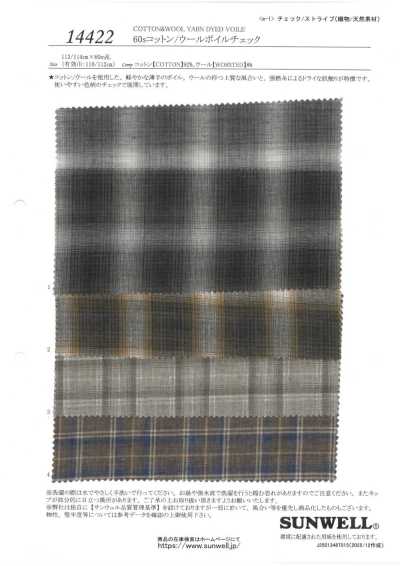
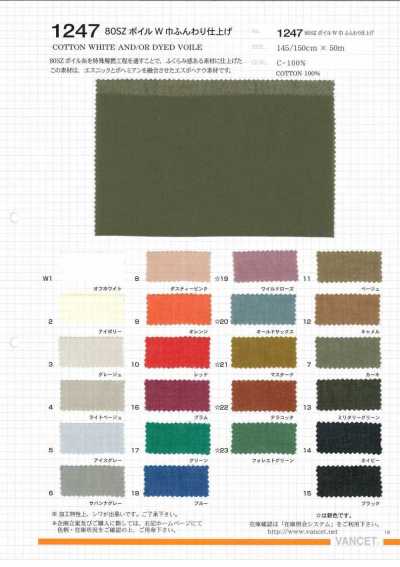
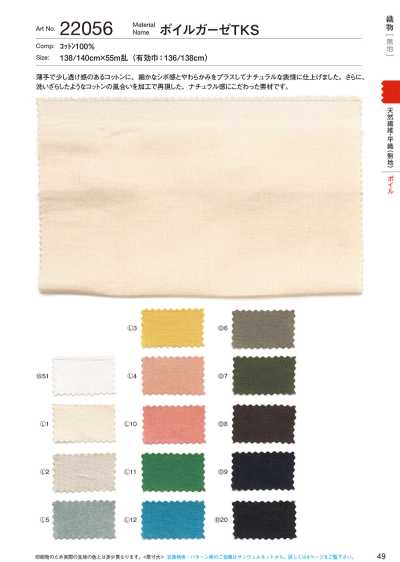
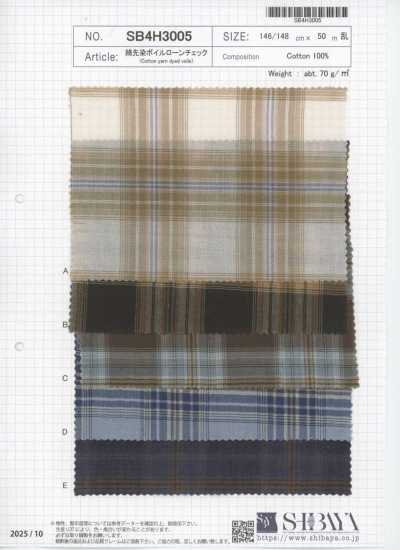
Contents6 sections
Definition and Overview
Voile is a lightweight woven fabric that is often made with strongly twisted yarns. Plain weave is generally used, and it has a subtle texture, lightness, and breathability from the yarn twist. The raw materials and blends vary, including cotton, polyester, rayon, and silk.
The name often indicates the feel and construction of the woven fabric, and does not limit the fiber composition. Even within voile, softness, sheerness, and body can vary greatly depending on yarn thickness, density, and finishing.
Characteristics
Strongly twisted yarns keep the fibers together more easily and create a dry, smooth hand that does not cling to the skin. Because it is thin and breathable, it is well suited to clothing for hot weather. The surface may show a slight textured effect or a dry appearance.
Depending on its thinness and density, it can be highly transparent, so it often needs to be designed for innerwear, lining, or layering when used on its own. In addition, firmer types make gathers and tucks more three-dimensional, while softer types can create a light drape.
- A lightweight woven fabric that is easy to make breathable.
- Features a cool feel from strongly twisted yarns.
- Because it can be sheer in light colors or thin fabrics, care is needed during garment construction.
Main Applications
It is often used for light clothing for spring and summer, such as blouses, shirts, dresses, skirts, and tunics. Taking advantage of its sheerness and lightness, it is also used for layered parts of dresses, scarves, and shawls.
Depending on the fiber composition and finishing, it can be used for clothing ranging from casual to polished styles. Voile made from natural fibers tends to create a natural look, while those made with synthetic fibers may be selected for uses that emphasize color vividness and ease of handling wrinkles.
Selection and Handling Notes
When selecting, check the fiber composition, fabric weight, density, sheerness, and whether it has been finished by examining the actual fabric. White and light colors are especially prone to showing through, so it is important to consider the color of the innerwear to be worn, whether there will be a lining, and even how seam allowances will look.
Thin fabrics can easily shift the grain during sewing, and shrinkage or puckering may occur. Choose a fine needle and fine sewing thread suitable for the fabric, and check the stitch appearance, thread tension, and feed with a test sew. When cutting, stabilize the fabric and handle it without pulling.
Shrinkage, wrinkling, and changes in texture caused by washing vary depending on the type of fiber and the finishing process. Perform a washing test before productization, and determine the care label based on the fabric's quality label and the test results.
Differences from Similar Terms
Lawn is a thin plain weave made with fine yarns, and it is sometimes treated as having a relatively smoother and softer feel than voile. However, the names and classifications of both may overlap depending on the material, yarn usage, place of origin, and trade practices.
Chiffon is a very thin, soft, and sheer woven fabric, and tends to have stronger drape than voile. Organza is characterized by transparency and body, but its feel differs from voile in terms of yarn usage, structure, and finishing.
Frequently Asked Questions
Is voile a fabric for summer?
Voile is generally used for spring and summer clothing because it is lightweight, breathable, and often has a smooth feel from strongly twisted yarns. However, seasonality also depends on the fiber composition, density, fabric weight, and whether there is a lining, so it should be judged by checking the actual thickness and sheerness.
Is voile sheer?
Many thin voiles are sheer, and caution is especially needed with white or light colors and low-density fabrics. In products, methods include adding a lining, pairing with innerwear in a similar color, or making a double-layer construction. It is also checked in prototypes whether seam allowances or pocket bags can be seen from the outside.
What is the difference between voile and lawn?
Both are handled as thin plain weave fabrics, but voile is characterized by a dry hand and moderate body from strongly twisted yarns. Lawn often refers to a smoother and softer feel from fine-count yarns. However, there is some variation in how the names are used depending on trade practices.