Organza
Organza is a thin woven fabric made in plain weave with fine threads, characterized by sheerness, crispness, and a light luster.
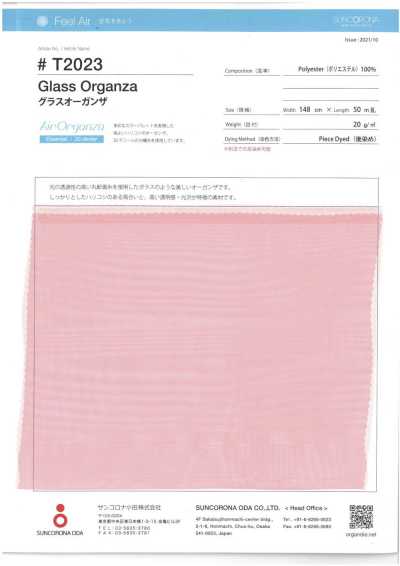
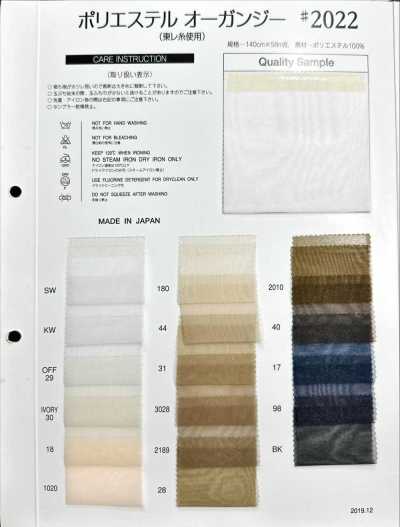
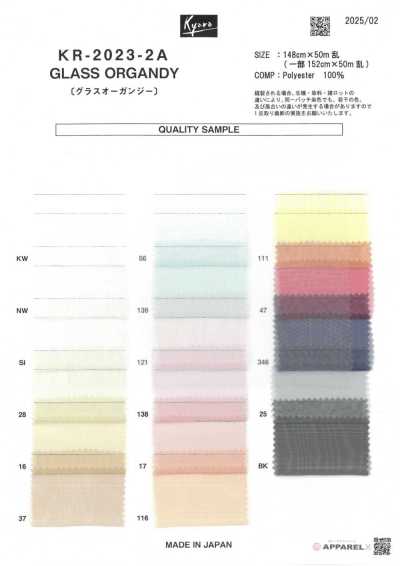
Contents6 sections
Definition and Overview
Organza is a lightweight woven fabric made from fine-count yarns in a plain weave. Because there are moderate gaps between the yarns, it has transparency and, while being lightweight, it has body that makes it easy to keep its shape. Depending on the fibers used, such as cotton, silk, or polyester, its texture and ease of handling change.
There is some variation in the term used, and it is sometimes called organza. Depending on the material, yarn usage, and finish, the two are not always clearly distinguished, so when procuring it, it is important to check the actual item for composition, sheerness, and firmness.
Characteristics
It is characterized by a transparent appearance and a light look that seems to contain air. Layering it makes colors appear deeper, and it can create a sense of dimension in gathers, flares, and ribbons. Some types show a delicate sheen when they catch the light, making them suitable for ornate designs.
In general, it has little stretch, and the edges tend to fray easily. Because it is thin, it is also a material in which snags and abrasion marks are more noticeable. The degree of firmness varies greatly depending on the fiber type, yarn thickness, density, and finishing.
Main Applications
It is used for dresses, formalwear, blouses, skirts, and more. In addition to outer fabric that takes advantage of its sheerness, it is also suitable for decorative parts such as sleeve and yoke panels, frills, corsages, and ribbons. It is especially used for light, airy expressions in spring and summer, and for glamorous designs intended for occasions.
Since it is sheer on its own, when used for the body of a garment it is designed on the premise of being layered with lining or another fabric. When layering fabrics of different colors, consider how the color, sheen, and seam allowances of the underlying material will affect the appearance on the surface.
- Outer fabric or overlay for dresses and formalwear
- Sheer sections for blouses, skirts, and dresses
- Accessory decorations such as frills, ribbons, and floral embellishments
Selection and Handling Notes
When selecting it, check not only the composition but also sheerness, body, sheen, density, and width. Soft types are suitable for designs that take advantage of drape, while firmer types are suited to puff sleeves and voluminous decorations. Also confirm how the color appears and how noticeable the seams are, including the fabric it will be layered with.
During cutting, it is slippery and the grain can easily shift, so it is necessary to take measures such as avoiding cutting multiple layers at once and keeping it stable on the cutting table. During sewing, use a fine needle and fine-count thread, and sew a test seam so that puckering and needle holes do not stand out. For edge finishing, choose narrow rolled hems, overlock rolled hems, or French seams depending on the application and the firmness of the fabric.
Changes due to washing and ironing depend on the fiber composition and finishing. Even for items that can be washed at home, care is needed, such as avoiding friction and snags and using a laundry net. Since some synthetic fibers are heat-sensitive, check the care label and test ironing from a low temperature using a pressing cloth.
Differences from Similar Terms
Chiffon is a thin fabric that is soft, supple, and easy to drape. Organza, by contrast, generally has more body and is easier to keep in shape. Since their applications sometimes overlap, choose by actually comparing how gathers stand and how sheer the fabric is.
Voile is known as a thin fabric with a crisp feel made using highly twisted yarns. Organza also has a cool, fresh feel, but its yarn usage and surface texture differ from voile, and organza is more often used for firmer, more dimensional expressions.
Frequently Asked Questions
Does organza need lining?
For areas such as the bodice where you want to conceal the skin or inner structure, lining or another fabric is often layered underneath. This is because organza is highly sheer and seam allowances and pocket bags are also easy to see. For designs that intentionally show sheerness, even seam finishing and inner construction are designed with that in mind.
How do you choose between organza and chiffon?
For gathers, frills, and puff sleeves that need to hold their shape, firm organza is suitable. If you want soft drape or a flowing feel, chiffon is more appropriate. However, differences vary depending on composition and finishing, so check the actual fabric's fall and sheerness according to the intended use.