High-twist Yarn
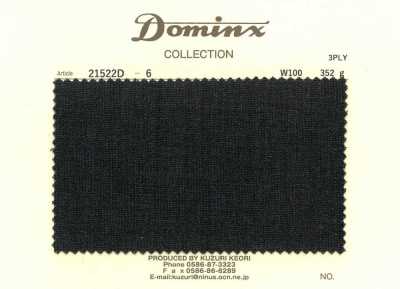
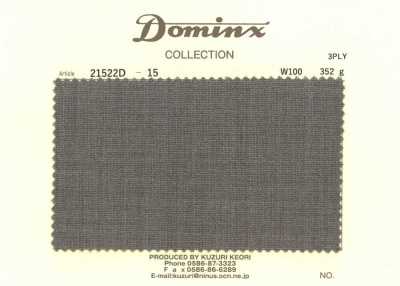
High-twist yarn is yarn that has been tightly twisted with more twist than usual, giving the textile a crisp feel, a dry touch, and a moderate resilience.
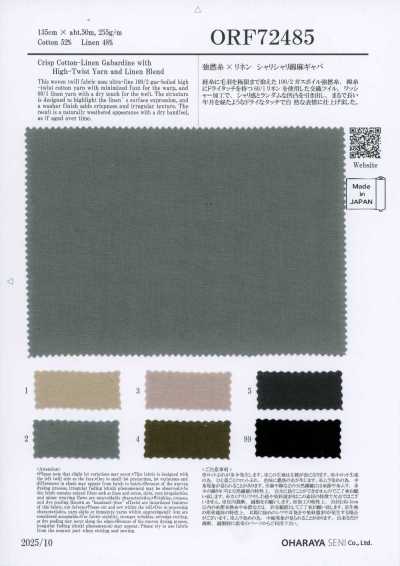
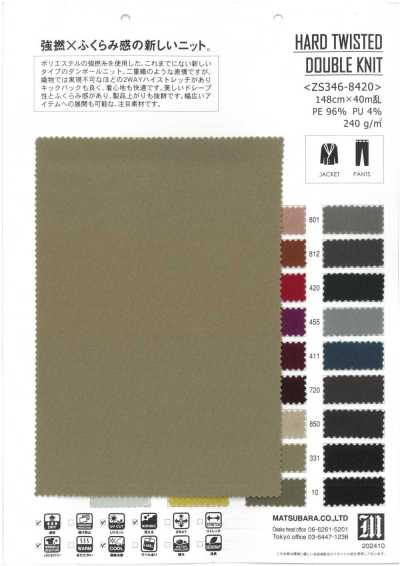
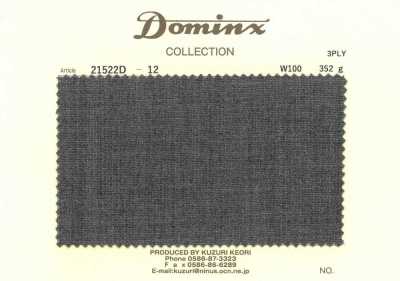
![21522D-17 [Limited Stock] 3-ply High-twist Yarn, 100% Wool DOMINX (Domincs) Dark Brown](/img/item/thumb/YX/1109664_t2.jpg)
Contents6 sections
Definition and Overview
Strongly twisted yarn is yarn made by adding a stronger twist than usual to fibers bundled together. Twist refers to the process of spirally twisting fibers or single yarns together. It is used for woven warp and weft yarns, yarns for knit fabrics, and other materials, and it adjusts the look and wearing comfort of the textile.
There are many fibers that can be made into strongly twisted yarn, including cotton, linen, wool, silk, rayon, and polyester. Even with the same strongly twisted yarn, the finish hardness and drape differ depending on the material, yarn thickness, twist direction and amount, weave or knit structure, and finishing process.
Features
Because the twist is strong, the fibers tighten up, and the surface tends to feel smooth and crisp, with a cool, dry texture. It also has bounce and is less likely to cling to the skin, and in lightweight textiles it may be used for materials that make use of sheerness and a delicate appearance.
On the other hand, because twist-related force remains in the textile, depending on the material and structure, crimping, skewing, or twisting may appear. In particular, with lightweight or drapey textiles, it is important to check stability and grain line before and after cutting.
- It is easy to achieve a dry, crisp hand.
- It has good separation from the skin and is used for spring and summer materials.
- It tends to create moderate firmness, resilience, and bounce.
- Depending on the material and structure, it can also create a drapey appearance.
Main Applications
Textiles made with strongly twisted yarn are used for blouses, shirts, dresses, skirts, pants, jackets, and more. In addition to spring and summer clothing that prioritizes breathability and separation from the skin, they are also used for formal and dress applications that make use of surface texture and supple drape.
In woven fabrics, the characteristics of strongly twisted yarn are brought out in plain weave, twill weave, georgette, voile, and similar constructions. In knits, it may be used to give T-shirts and cut-and-sewn items a dry touch.
Selection and Handling Precautions
When selecting, do not judge only by the label strongly twisted; check the blend ratio, fabric weight, density, thickness, sheerness, stretch, and post-finish hand with the actual material. Depending on the application, it is important to organize whether to prioritize crispness, drape, or opacity.
Before cutting, let the roll rest sufficiently and check the grain line and any twisting at the fabric edges. In sewing, needle holes, puckering, and seam shrinkage are more noticeable in lightweight fabrics, so adjust the needle, thread, and feed conditions through test sewing. For washing and pressing, always follow the care label and handling conditions for each textile.
Differences from Similar Terms
Strongly twisted yarn is a term that describes the degree of twist in the yarn; it is not a name for a textile structure. For example, voile and georgette are treated as textile names or structures, and by using strongly twisted yarn, each produces its own characteristic sheerness, crinkled texture, and dry hand.
Slub yarn is yarn with an intentionally uneven thickness, and its nature differs from strongly twisted yarn. Single yarn and plied yarn are categories that indicate yarn construction. Strong twist, slub, and single yarn / plied yarn may also be used in combination.
Frequently Asked Questions
Is strongly twisted yarn fabric suitable for summer?
Because strongly twisted yarn fabrics are easy to give a smooth touch and good separation from the skin, they are generally used often in spring and summer clothing. However, how warm or cool they feel also depends on the type of fiber, thickness, density, structure, and finishing process, so it cannot be determined by strong twist alone.
Does strongly twisted yarn fabric shrink easily?
The degree of shrinkage depends not only on whether the yarn is strongly twisted, but also on the material, woven or knitted structure, dyeing and finishing process, and washing conditions. Because textiles made with strongly twisted yarn may show crimping or deformation caused by twist during washing and similar processes, perform washing tests and check dimensional change before mass production.
What is the difference between strongly twisted yarn and voile?