Tricot
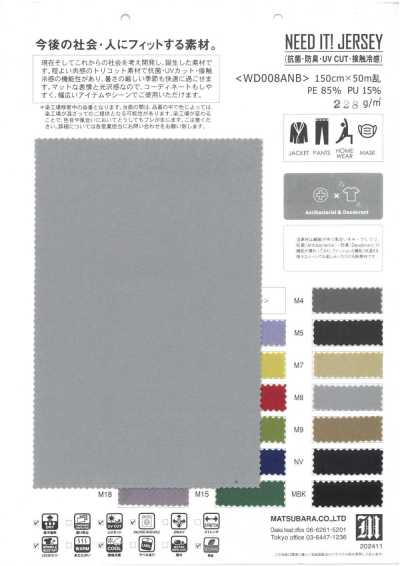
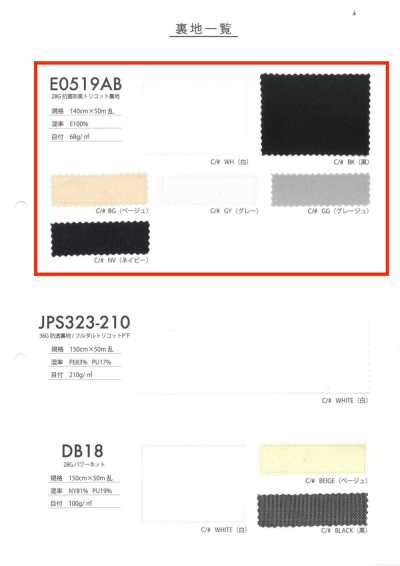
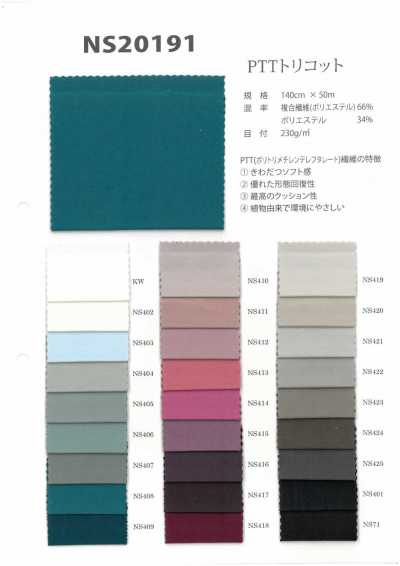
Tricot is a representative warp-knit fabric made by knitting multiple warp threads, and is used for linings, sportswear, and other applications that take advantage of its fine surface texture, thinness, and dimensional stability.

Contents6 sections
Definition and Overview
Tricot is a type of warp knitting that simultaneously knits many yarns arranged in the warp direction. Unlike weft knitting, which moves yarn back and forth in the crosswise direction, it is less likely to run and tends to form a relatively stable knit.
In general, fine vertical ribs are visible on the front surface, and yarns running horizontally can be seen on the back. It is combined according to the intended use with materials centered on polyester and nylon, as well as rayon, cupro, and polyurethane blends.
Features
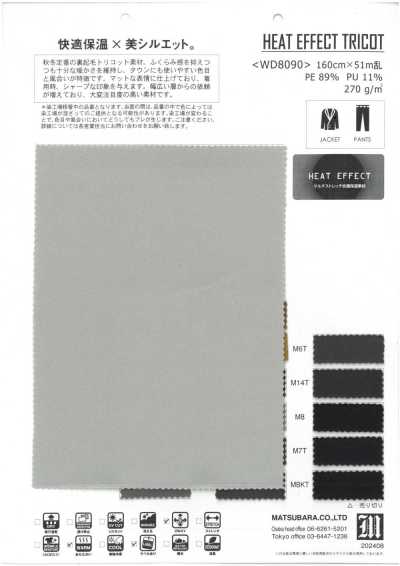
It can be made in a wide range from lightweight to medium-weight, and is a knit that easily expresses a smooth, refined surface. Depending on the structure, yarn thickness, luster, and processing such as brushing or mesh, qualities such as drape, breathability, and warmth vary greatly.
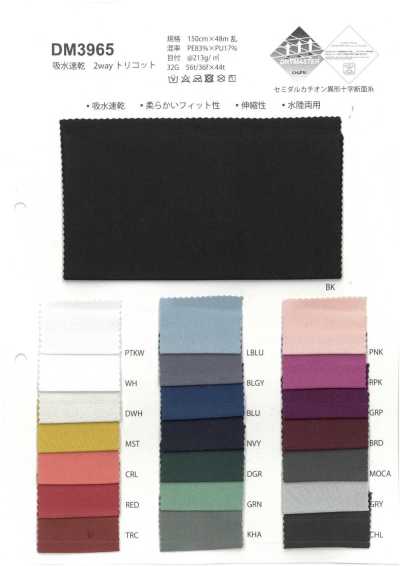
Compared with cut-and-sew fabrics made by weft knitting, it is generally less prone to stretching and losing its shape, though elasticity varies depending on the structure and blended fibers. A 2-way type with polyurethane incorporated is used as a material that stretches in both directions.
- Stitches are less likely to ladder or run, and edges tend not to curl easily.
- When filament yarn is used, smoothness and luster are easier to achieve.
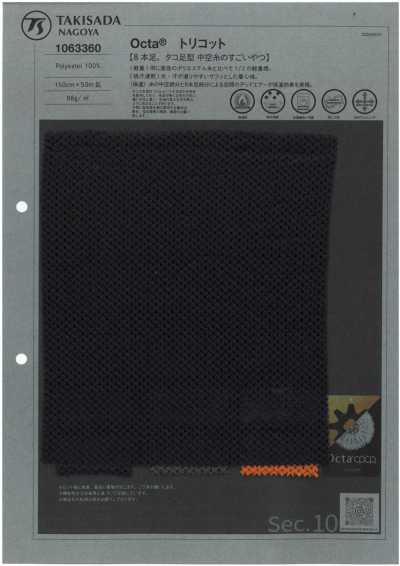
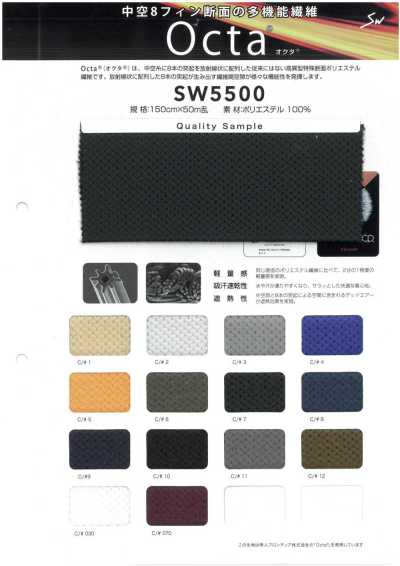
- Mesh structures make it possible to take advantage of lightness and breathability.
Main Applications
It is used for garment linings, lingerie, and innerwear that take advantage of its smoothness and thinness. Types with added moisture absorption and quick-drying performance or stretch properties are also used in sportswear, swimwear, uniforms, and outdoor apparel.
Taking advantage of its fine surface, it is also sometimes used for print base fabrics, reinforcement applications close to interlining materials, and parts of bedding and interior items. When deciding on an application, it is important to check not only the knit structure name, but also the blend ratio, fabric weight, elongation rate, and finishing process.
Selection and Handling Notes
For linings, check the slip against the outer fabric, tendency to build up static electricity, sheerness, and durability. For sports applications, select the required directional stretch, rebound, breathability, and abrasion resistance according to the actual sewing specifications and wearing conditions.
If the grain line shifts during cutting, the knit may twist or look uneven after sewing. Before cutting, align the vertical stitches, and with stretchy materials, handle them without excessive pulling. To prevent needle holes, dropped stitches, and seam puckering, adjust the needle, thread, and feed conditions through test sewing.
Dimensional changes from washing, deformation from heat, and the degree of color fading or color transfer vary depending on the type of fiber and processing. Before mass production, it is necessary to carry out washing tests and sewing tests, and to follow the care label instructions and the fabric maker's handling conditions.
Differences from Similar Terms
Jersey, circular rib, and circular interlock knitting are knits that are mainly classified as weft knits. Because these are knitted with one or more yarns in the crosswise direction, their knitting method, stretch behavior, and stitch appearance differ from tricot.
“Warp knitting” is the broader category name for knitted fabrics that includes tricot. In addition to tricot, warp knitting also includes raschel, and even within warp knitting, mesh size, thickness, elasticity, and applications differ depending on the structure.
Frequently Asked Questions
Which direction does tricot stretch?
The way it stretches depends on the structure, yarn use, and whether polyurethane is included. Standard tricot tends to stretch less and be more stable than weft knits, but 2-way types and similar fabrics stretch greatly in both directions. Please check the elongation rate and recovery needed for the application in the required direction.
Can tricot be used for lining?
Tricot is used for linings because of its thinness, smoothness, and stability. However, slip against the outer fabric, static electricity, sheerness, and durability vary depending on the material and finish. It is also reassuring to check compatibility when layered with the outer fabric, as well as snagging at the seam areas.
Are tricot and mesh the same?
No, they are not the same. Tricot is the name of a warp-knit structure or knit fabric, while mesh refers to a structure with holes and breathability. Since some fabrics are made into a mesh-like form through tricot knitting, both names may be listed together.