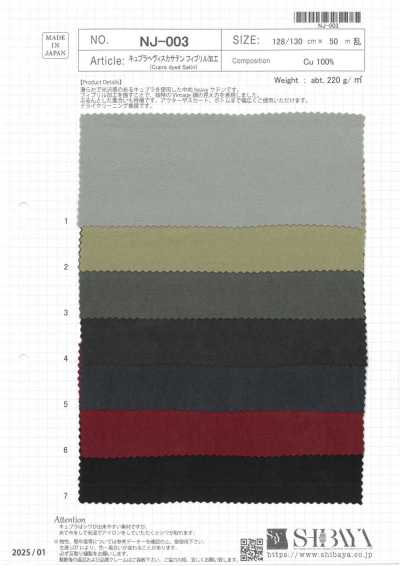
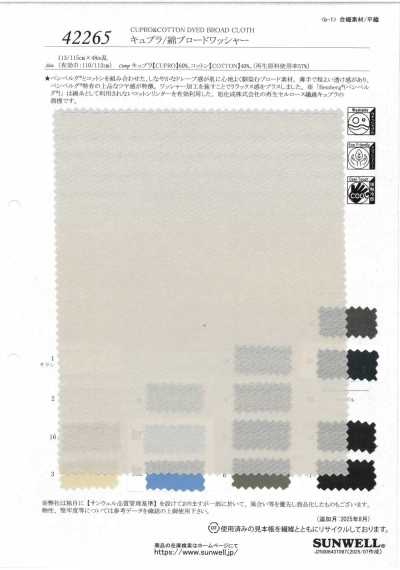
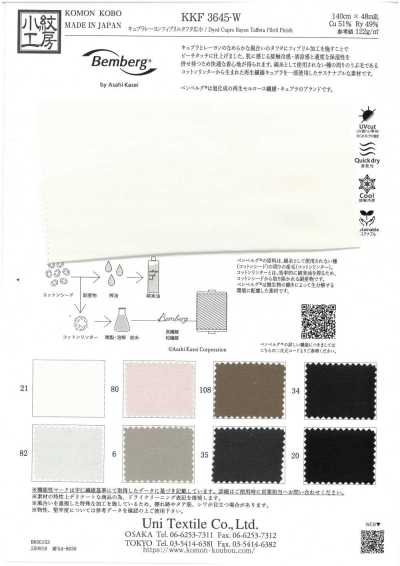
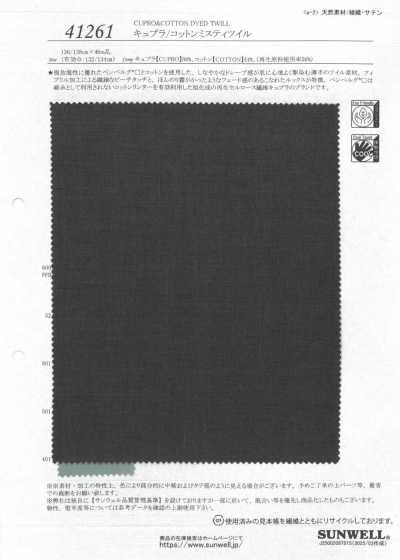
Cupro
Cupro is a type of regenerated cellulose fiber made from cotton linter, the short fibers that remain around cottonseed.
Contents6 sections
Definition and Overview
Cupro is a regenerated fiber made by dissolving and regenerating the cellulose contained in cotton linters. It is often used as filament yarn, and its smooth surface and supple drape make it widely used mainly for linings.
“Bemberg” is sometimes used in distribution as a name for cupro, but it is a trademark, not a generic material name. In specifications and blend ratios, the material name and the trademark name should be checked separately.
Characteristics
It has moisture absorption and release properties, making it effective at reducing stuffiness inside garments. Its smooth surface reduces friction against outer fabrics and inner layers when worn in layers, making it suitable as a lining that is easy to put on and take off.
It has a soft, flowing texture and a modest sheen. On the other hand, thickness, sheen, firmness, and sheerness vary greatly depending on the weave, yarn thickness, dyeing process, and blending with other fibers.
- A smooth material that helps sleeves slide on easily.
- Static electricity tends to occur less easily than with synthetic fibers.
- Because its properties can change when it absorbs moisture, care label instructions should be checked.
Main Applications
It is often used for the lining of jackets, coats, skirts, dresses, and similar items. It is less likely to interfere with the silhouette of the outer fabric and is also suitable for sleeve linings and fully lined constructions. In formal wear and dresses, it is used to take advantage of its suppleness and refined appearance.
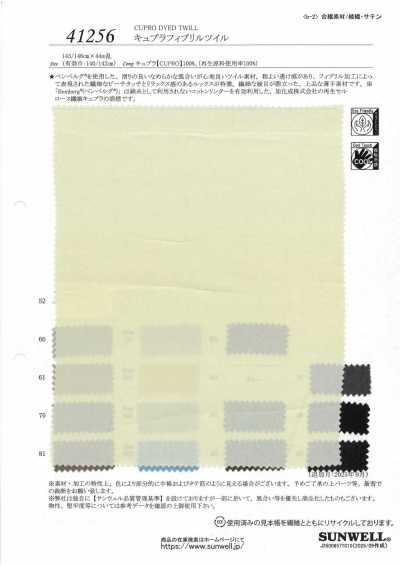
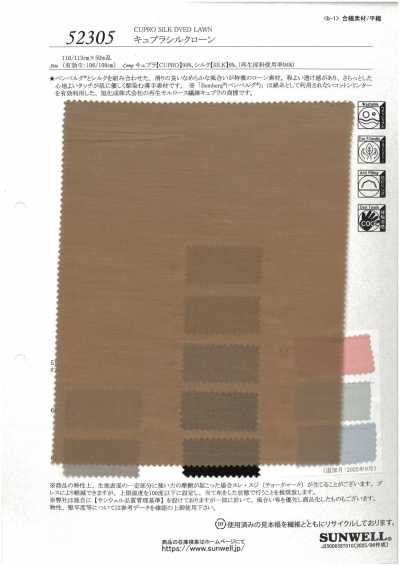
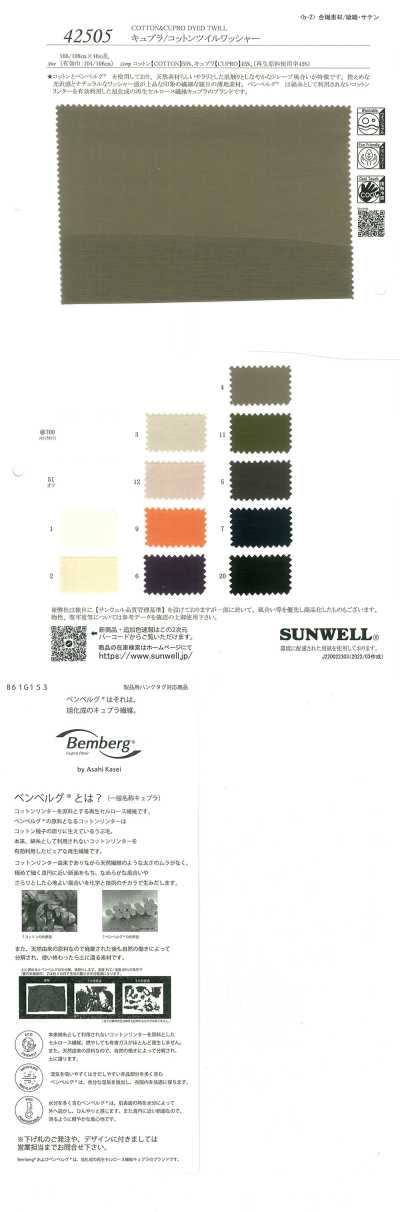
Its appearance can be changed by the weave structure and pattern, such as taffeta, twill, and Jacquard. In addition to the garment application, the fabric thickness and structure are selected according to compatibility with the outer fabric, the required durability, and sewing specifications.
Selection and Handling Precautions
When selecting a lining, check its smoothness against the outer fabric, thickness, color, sheen, and required strength. For light-colored outer fabrics, also check sheerness, and for dark-colored items, check for color transfer and staining from friction. It is important to consider it while layering it with the actual outer fabric.
Cupro is easily damaged when rubbed while wet, and washing may cause shrinkage, wrinkles, or color fading. Whether a product can be washed depends on the fabric, so decisions should be based on the care label and test results.
During cutting and sewing, the fabric is slippery, and in lightweight fabrics, distortion and sewing shrinkage may occur. Align the grain and cut the fabric, and test and adjust the needle, yarn, and stitch conditions in advance.
Differences from Similar Terms
Rayon and lyocell are also regenerated fibers made from cellulose, but they differ in raw materials, manufacturing methods, yarn shape, texture, and applications. Do not judge performance by the material name alone; compare including the blend ratio, fabric structure, and finishing.
Silk is a natural fiber of animal origin, and its raw material differs from cupro. Cupro can express silk-like smoothness and sheen, but it is not the same fiber.
Frequently Asked Questions
Can cupro be washed at home?
Whether home washing is possible depends on the fabric structure, dyeing process, blended materials, and product specifications. Cupro is susceptible to the effects of friction when wet, and shrinkage, wrinkles, or color fading may occur. Always follow the product care label, and conduct washing tests before mass production.
What is the difference between cupro and rayon?
Both are regenerated fibers made from cellulose, but cupro is mainly made from cotton linters and is manufactured differently from rayon. Cupro makes use of the smoothness of filament yarn and is often used for linings, while the final texture and performance vary depending on the fabric design.