Sewing Machine Needle
A sewing machine needle is a needle attached to a sewing machine that penetrates the textile, carries the upper thread, and interlocks it with the lower thread or button loop to form a stitch.
Contents6 sections
Definition and Structure
A sewing machine needle is a sewing component that moves up and down between the needle plate and presser foot, punching holes in the textile and carrying the upper sewing thread passed through the needle eye to the lower mechanism. In general, it consists of a shank that is fixed to the sewing machine, the needle shaft, the needle eye, the long groove that guides the thread, and the needle point.
Sewing machine needles are consumables. Wear, bending, or burrs on the needle point can cause skipped stitches, thread breakage, puckering, and damage to the textile. Using a needle suited to the sewing conditions leads to stable stitches.
Types and Selection
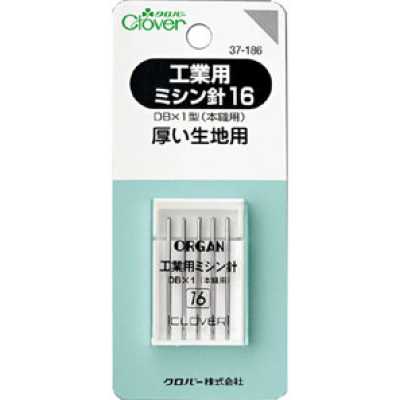
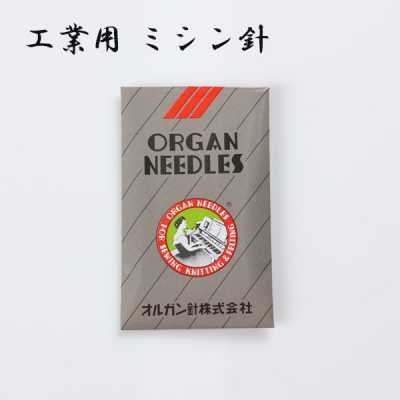
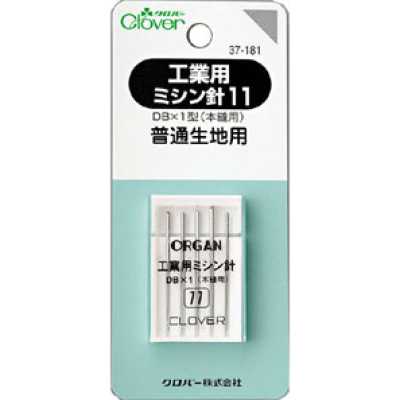
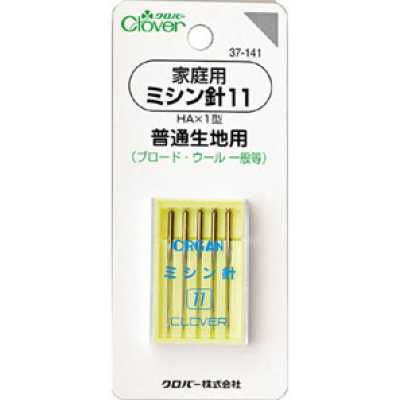
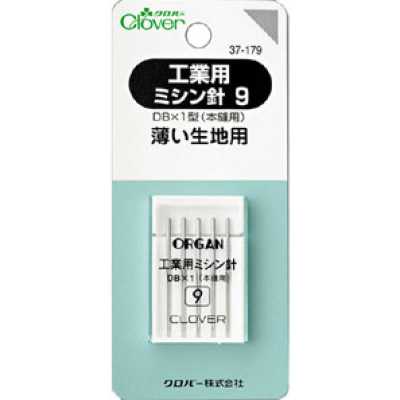
When selecting a needle, first check the standard and needle size that match the sewing machine being used. Household sewing machine needles and industrial sewing machine needles differ in shank shape, length, and how they are attached, so they may not be interchangeable even if they look similar. For industrial use, check the needle size and needle system that match the machine model and sewing method.
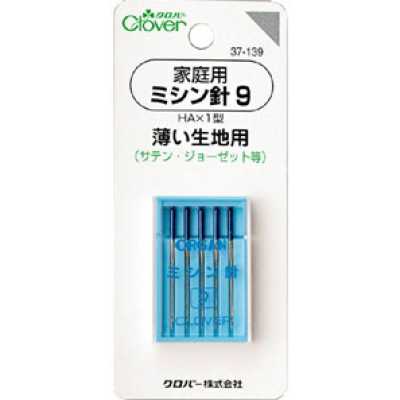
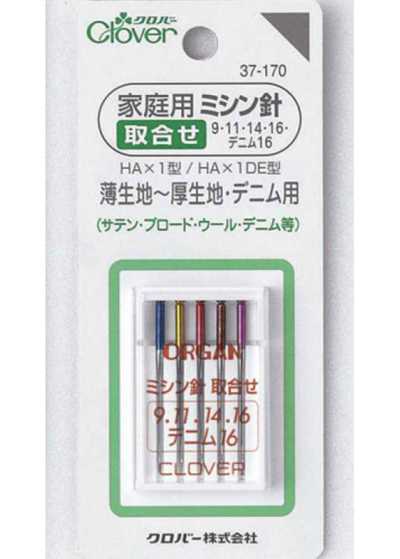
Needle size is a guideline for needle thickness. In general, use a thin needle for lightweight fabrics, a standard-thickness needle for medium-weight fabrics, and a thick needle for heavyweight fabrics or layered areas. However, fabric density, processing, sewing thread thickness, and sewing speed also have an effect, so test stitching is done before mass production.
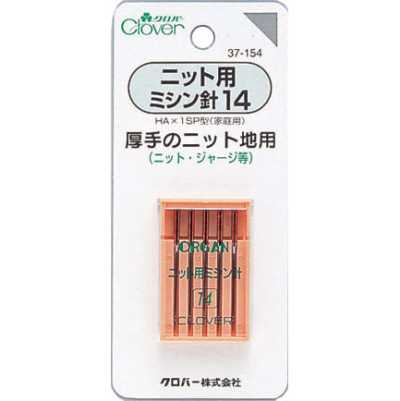
The shape of the needle point is also important. A general standard needle is used for woven fabrics, a ballpoint-type needle that is less likely to damage the loops is used for knits and jersey, and stretch needles are used for highly elastic materials. For high-density textiles such as denim, or for synthetic leather and leather, a dedicated needle suitable for the application may be selected.
- Match the fabric type, thickness, and density with the needle size.
- Check the balance between thread thickness and needle-eye size.
- Test stitch using the same textile, interfacing, thread, and sewing conditions as in actual production.
- For knits and stretch materials, also check for holes and skipped stitches.
Installation and Use
Replace the needle with the sewing machine power turned off, insert it fully according to the instruction manual, and tighten the needle clamp screw securely. Needles have a front-back orientation, and the direction of the long groove and scarf is specified. If the orientation is wrong, the thread cannot be caught properly, causing skipped stitches and thread breakage.
If unusual noise, skipped stitches, thread breakage, or irregular stitches continue during sewing, first check for needle damage, installation direction, and the combination of needle size and thread. If replacing the needle does not improve the problem, also inspect the sewing machine side, such as thread tension, needle plate, hook, and button loop.
Care and Safety Precautions
The needle point is easily damaged if it hits hard objects or is dropped, so store removed needles in a case or similar container. Since bending and tip wear are difficult to judge by sight alone, in sewing where quality is important, replacement is planned based on sewing time or process intervals.
Broken needles and used needles should not be left on the worktable or floor; collect them in a dedicated container with a lid. In garment production, if a needle breaks, it is important to confirm the location of the fragments and, if necessary, perform needle inspection management. Turn off the power when changing needles, threading, or cleaning to avoid accidental operation.
Difference from Hand Sewing Needles
A hand sewing needle is a needle for hand sewing, used by pushing and pulling by hand. In contrast, a sewing machine needle is designed on the premise of being fixed to the sewing machine needle bar and moved up and down at high speed, and it has a needle eye and groove for carrying the upper thread to the lower side of the machine. Since the application, structure, and standards differ, it cannot be used as a substitute.
Also, a pin is a needle used to temporarily secure cut textiles and parts, and is normally removed before sewing. Sewing with a pin left in place can cause breakage from contact with the sewing machine needle, or damage to the textile or sewing machine, so caution is necessary.
Frequently Asked Questions
When should a sewing machine needle be replaced?
Consider replacing it when skipped stitches, thread breakage, irregular stitches, snagging on the textile, or holes appear. Needles wear even if there is no visible problem, so especially in mass production where quality control is required, the replacement timing is predetermined according to the material and process, and the condition is checked with test stitching.
Can a standard needle be used on knit fabric?
It may be possible to sew thin, stable knits, but a standard needle can damage the knitted yarn and cause holes or skipped stitches. For knits and stretch materials, consider a ballpoint-type needle that can separate the loops more easily, or a stretch needle, and test stitch with the thread and sewing conditions being used.
Can household sewing machine needles and industrial sewing machine needles be used interchangeably?
In general, no. Household and industrial needles differ in standard specifications such as shank shape, length, thickness, and needle-eye position. In addition, industrial needles have needle systems specified for each sewing method and machine model. Be sure to check the sewing machine manual and specified specifications before selecting one.