Irish Linen
Irish linen is a term for linen spinning, weaving, and finishing techniques developed on the island of Ireland, especially in Northern Ireland, and for linen textiles that follow that tradition.
Contents6 sections
Definition and production area
Irish linen is a term associated with the linen industry nurtured on the island of Ireland, especially the weaving and finishing traditions of Northern Ireland. It does not simply mean that the flax used as raw material is grown in Ireland.
Today, the raw material growing area, spinning area, weaving area, and dyeing and finishing area may span multiple countries. For that reason, the label Irish linen alone cannot be used to determine that every process from raw material to fabric was carried out in Ireland.
History and specialized techniques
In Northern Ireland, linen spinning, weaving, bleaching, and finishing have long been carried out, and a wide range of linen textiles have been made, from shirting to apparel fabrics and home textiles. Techniques for using different yarn counts, twists, weave densities, and finishes according to application have been accumulated.
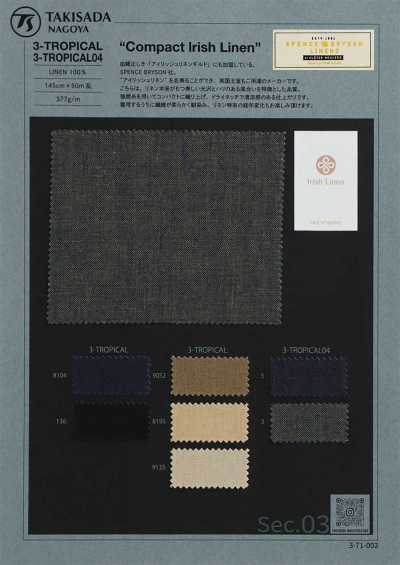
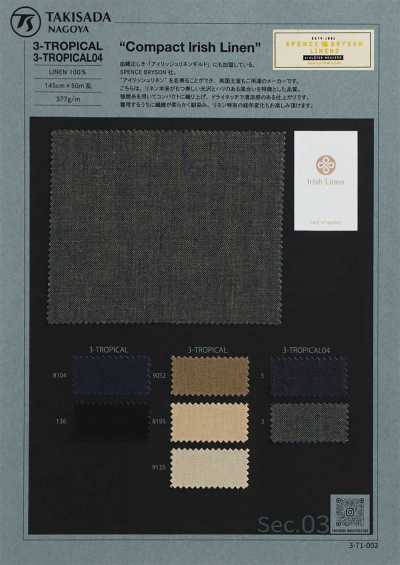
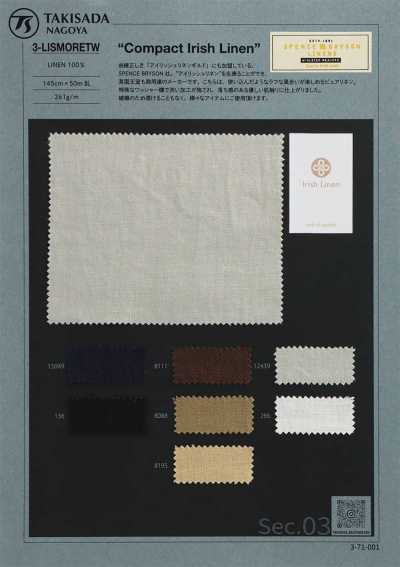
Fabrics include those that make use of linen’s characteristic luster, firmness, and cool feel, as well as those that add softness and drape through washing. Because the texture is not uniform even with the same name, checking the actual material is important during planning.
Typical fabrics and applications
Mainly plain weaves, there are relatively light fabrics for shirts and blouses, medium-weight fabrics for jackets and pants, and sturdy fabrics that can also be used for interior applications. High-density fabrics made with strong-twist yarns tend to have a dry hand and a neat appearance.
In apparel, they are used for shirts, blouses, dresses, jackets, pants, skirts, and more. While they make it easier to take advantage of moisture absorption and breathability, sheerness, firmness, and drape vary greatly depending on the weave and finish.
- Applications that make use of firmness: shirts, tailored jackets, pants
- Applications that make use of softness: blouses, dresses, skirts
- Applications that make use of thickness: bags, interior accessories
Points to check when purchasing
For the production area description, confirm with the supplier which process it refers to: the flax raw material, spinning, weaving, or finishing. If necessary, also confirm the basis used for country-of-origin labeling and whether documents related to traceability are available.
Because it is a natural fiber, there may be lot-to-lot differences in color, slubs, neps, width, and hand feel. Before full production, check a sample roll or mass-production lot, and decide the conditions including whether color matching will be possible for additional production.
For imported fabrics, delivery times vary depending on stock status, minimum lot size, roll length, shipping origin, and transport time. Confirm lead times for samples, mass production, and additional orders separately, and it is also advisable to test shrinkage before cutting.
Differences from similar terms
Linen refers to the fiber and material itself made from flax. Irish linen, on the other hand, is not a material name; it is a production area or origin-related term connected to the linen industry and production background of the island of Ireland. Therefore, not all linen fabrics are Irish linen.
Belgian linen is also a term related to the linen industry and regional characteristics, but the relevant region and the basis for labeling are different. Do not judge quality or raw material origin uniformly from the name alone; check the individual specification sheet and supporting documents.
Frequently asked questions
Is the flax in Irish linen also grown in Ireland?
How is Irish linen different from Belgian linen?
Both are terms that indicate a regional connection to linen, but the associated production areas and backgrounds differ. As fibers, both are linen derived from flax. In planning and labeling, do not judge by the impression of the name; confirm the raw material origin, weaving location, certification, and labeling basis individually.
What is the minimum to confirm before purchasing?
Confirm the production area of each process—raw material, spinning, weaving, and finishing—along with blend ratio, fabric width, fabric weight, roll length, shrinkage rate, and washing conditions. In addition, confirming the color and texture of the mass-production lot, as well as delivery times and color continuity for additional orders, helps reduce misunderstandings during production.
- Search products for "Irish linen"
- Products with material "Linen"
- Products for style "For Shirts/blouses"
- Products for style "For Skirts And Dresses"
- Products for style "For Jackets/Suits"
- Products for style "For Pants"
- Products for style "For Interiors"
- Products for style "Sustainable"
- Browse Fabric products