Textured Thread
Woolly yarn is a processed yarn made by giving fine crimp and bulk to synthetic filament yarns such as nylon or polyester with heat and twist, to create stretch and bulk like wool. It is used both as yarn for textiles and as sewing thread for overlock machines and similar equipment.
Contents7 sections
Definition and Overview
Woolly yarn is a processed yarn made by applying heat and twist to synthetic filament yarns such as nylon or polyester to give them fine crimp and bulk. It is called this because it has the stretch and fullness of wool.
It is often made by false-twist processing, and nylon types are also called woolly nylon, while polyester types are also called woolly polyester. It is used not only as yarn for weaving and knitting textiles, but also widely as sewing thread for overlock machines and similar equipment.
Materials and How It Is Made
The raw material is smooth-surfaced nylon or polyester filament yarn. In false-twist processing, the yarn is heated while under strong twist to set the shape, then the twist is released. This leaves a coiled fine crimp in the yarn, creating stretch and bulk.
Because it traps air between the crimps, it becomes bulkier and softer than the original filament yarn. It is not rubber-like elasticity like polyurethane; instead, stretch comes from the crimp expanding and contracting, so recovery and durability vary depending on the material and processing conditions.
Woolly Yarn Used in Textiles
In textiles, it is used for knits such as tights, socks, innerwear, and sportswear, taking advantage of its stretch, bulk, and soft hand. In woven fabrics and lace, polyester woolly yarn is used to create wool-like appearance and resilience in wool-look twill and herringbone, woolly twill for linings, raschel lace, and mesh. There are also woven fabrics made with woolly nylon in the weft to give lightness and stretch.
In fiber composition labeling, it is listed as nylon or polyester, and woolly is often described in the notes as the name of the yarn processing method. Even with the same material, textiles made with woolly yarn tend to stretch more easily than those made with smooth filament yarn, have less gloss and slickness, and are less likely to be sheer.
Woolly Yarn for Sewing
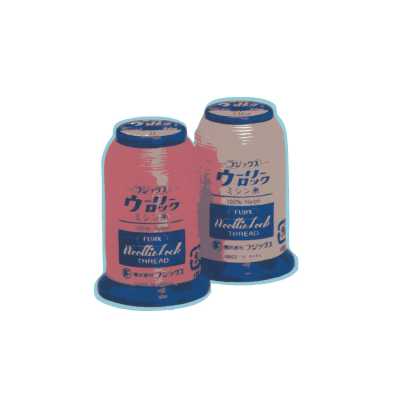
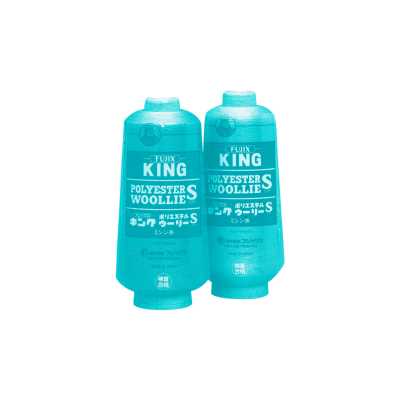
Woolly yarn for sewing is typically used as looper thread in lockstitch and overlock machines to create soft seams that cover the raw edge of the seam allowance. Because the seam follows the stretch of the fabric and feels gentle against the skin, it is used for sewing innerwear, lingerie, swimwear, cut-and-sew garments, and similar items.
- Looper thread for lockstitch and overlock machines
- Finishing seam allowances for underwear and lingerie
- Sewing stretch materials such as swimwear and leotards
- Finishing seam allowances for cut-and-sew garments and knits
Thickness is shown not only by direct counts such as denier, but also by manufacturer-specific count designations. Because its bulk creates an apparent thickness, do not compare it with smooth yarns by count alone; instead, confirm seam volume and stretch with trial sewing.
How to Choose and Handling Notes
When choosing a textile, check the material and blend ratio, degree of stretch, fabric weight, and whether it shrinks or pills after washing. Since nylon and polyester are easily affected by heat, set the iron and pressing temperature according to the care label.
When using it for sewing, its bulk and tendency to create friction may make thread tension unstable with the same settings as ordinary sewing thread. Check the product specifications to see whether it is for looper use only or can also be used for needle thread, and always test sew with the machine and fabric you will use.
Differences from Similar Terms
False-twist processed yarn is a name based on the processing method that gives crimp by heat and twist, and woolly yarn is a common name for this type of yarn. Taslan is a processed yarn made bulkier by creating loops in the yarn with air jets; compared with woolly yarn, it has less stretch and a dry, cotton-like feel.
Polyurethane is an elastic fiber whose yarn itself stretches and returns like rubber, and its stretching mechanism differs from woolly yarn. For textiles or sewing that require greater stretch and recovery, polyurethane is used.
Frequently Asked Questions
Is woolly yarn a type of sewing thread?
What are the characteristics of textiles made with woolly yarn?
They have stretch and bulk, and become soft and comfortable against the skin. Compared with textiles made from smooth filament yarn, they stretch more easily, have less gloss, and are less sheer, so they are used for tights, socks, innerwear, sportswear, and wool-look woven fabrics.
What is the difference between woolly yarn and polyurethane?
Woolly yarn is a processed yarn that gains stretch through the expansion and contraction of its crimp. Polyurethane is a fiber with rubber-like elasticity in the fiber itself and stretches and recovers more greatly. They are used according to the required stretch and recovery.