Alpaca
Alpaca is an animal fiber obtained from the wool of alpacas native to South America, and is used for autumn and winter clothing and knitwear, making use of its smooth texture, natural luster, and warmth.
![NT-2011 Craft Fur [Baby Alpaca Blend]](/img/item/thumb/OKURA/1089753_t2.jpg)
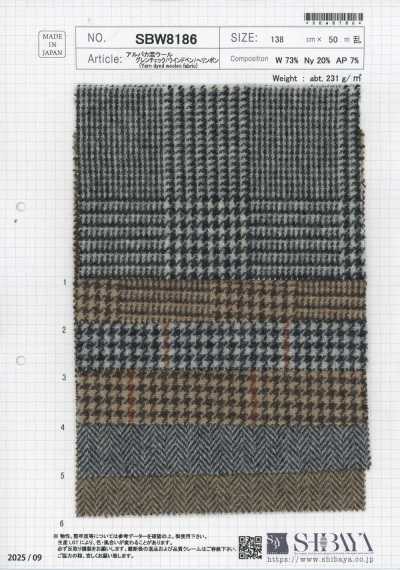
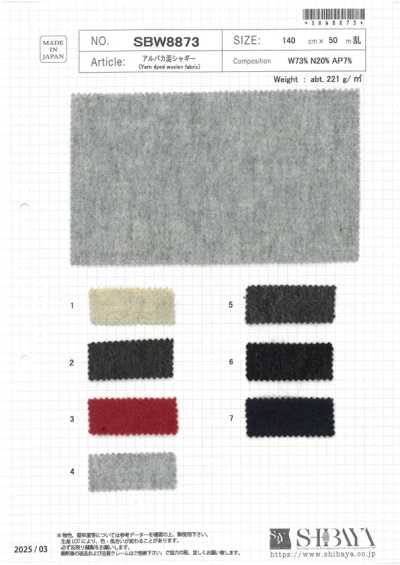
![NT-7030 Craft Fur [Baby Alpaca Blend Sheep]](/img/item/thumb/OKURA/1089766_t2.jpg)
Contents6 sections
Definition and Overview
Alpaca is an animal fiber collected from alpacas, which belong to the camelid family. In addition to referring to alpaca as a fiber, it is also sometimes used to refer to yarns and textiles blended with alpaca. It is used in many forms, including woven fabrics, knitted fabrics, and pile materials.
For apparel, it is used on its own or blended with wool, nylon, acrylic, and others. Depending on the blend ratio, yarn thickness, spinning method, knitted or woven structure, and whether it is brushed, the finished warmth, lightness, surface texture, and durability can vary greatly.
Features
Alpaca is characterized by a soft, smooth feel and a restrained, elegant luster. In knitted fabrics and brushed textiles that make use of the pile, it creates a voluminous look and rich expression. On the other hand, depending on the raw material type and processing, fuzzing and shedding may be noticeable.
Because it readily traps air within the fiber, it is generally a material that balances warmth and lightness well. It also has moisture absorption, but resistance to stuffiness when worn, thickness, stiffness, and abrasion resistance depend on blended materials and fabric design, so rather than judging by the material name alone, check test values and actual samples.
Main Applications
Making use of its warmth and soft appearance, it is used for autumn and winter sweaters, cardigans, knit vests, mufflers, hats, gloves, and more. In woven and knitted materials with a brushed feel, it is also used for coats, jackets, dresses, skirts, and more.
Materials that emphasize pile and volume are suited to statement items that showcase their look. In contrast, for items subject to frequent friction or frequent washing, reinforcement through blending, use of lining, and specification design that considers how much fuzzing appears are important.
How to Choose and Handling Notes
When selecting, check not only the alpaca blend ratio but also the fabric weight, thickness, pile, knitted or woven density, tendency to pill, and dimensional change. For knits, stretch in the fabric and lengthening from its own weight, and for brushed textiles, the direction of the nap and how it looks after cutting, also affect the product appearance and specifications.
Follow the washing instructions on each product's care label. Water washing may cause shrinkage, felting, or loss of shape, so confirm in advance whether home washing is possible. During storage, avoid humidity, take insect prevention measures, and it is generally best to fold knits that are prone to losing their shape.
In sewing, fabrics with long pile tend to trap the pile in the seam allowance, and the stitches may become hidden. Cut while aligning the nap, and sew while smoothing the pile in the seam allowance. Because stitch thickness and fraying tendency vary by fabric, confirm the sewing specifications and needle and thread through prior testing.
Differences from Similar Terms
Wool is a general term that mainly refers to sheep wool, while alpaca is an animal fiber derived from alpacas. Both are often used for autumn and winter materials, but the feel, luster, fuzzing, and elasticity differ depending on the raw material and the design of the yarn and fabric.
Cashmere is goat hair from cashmere goats, mohair is goat hair from Angora goats, and angora is rabbit hair from Angora rabbits. Like alpaca, these are treated as animal hair materials, but the animals they are collected from differ. Rather than the material name alone, it is important to compare the blend ratio and fabric samples to find the feel that suits the purpose.
Frequently Asked Questions
How is alpaca different from wool?
Wool mainly refers to sheep wool, while alpaca is animal hair from alpacas. Alpaca is generally used as a material that makes use of a smooth touch, natural luster, and lightness. However, the actual feel, warmth, and durability vary depending on the blend ratio, yarn construction, structure, and finishing process.
Can alpaca materials be washed at home?
Whether home washing is possible depends on the alpaca blend ratio, the structure of the knitted fabric or textile, and the processing, so check the product's care label. Water washing may cause shrinkage, felting, or loss of shape. For projects intended for home washing, washing tests and confirmation of dimensional change are necessary in advance.
What should be noted when sewing alpaca fabric?
For fabrics with pile, cut while aligning the nap direction, and sew while smoothing so that the pile does not get caught in the seam allowance. Thick fabrics tend to produce bulky seams, while thin fabrics and loose knits tend to stretch easily, so confirm interfacing, seam finishing, and the choice of needle and thread through sample production.