Blending
Blend spinning is a method of mixing two or more types of fibers with different properties and spinning them into a single yarn, so that the texture and functions of each material can be brought out in the textile.
![68500 1/10 Tweed Check [Made With Recycled Wool Yarn]](/img/item/thumb/OKURA/1087557_t2.jpg)
Contents6 sections
Definition and Overview
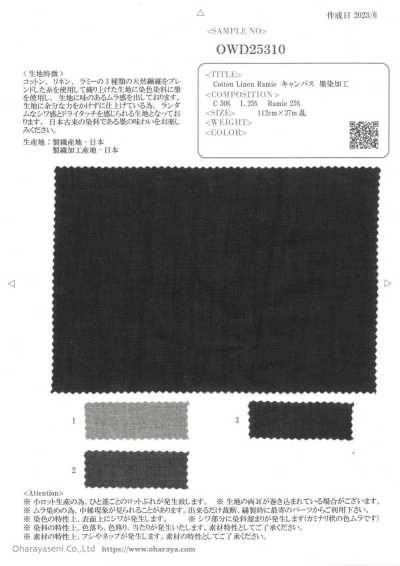
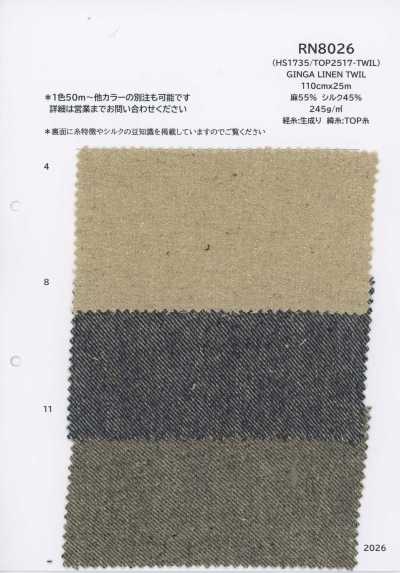
Blending is a method of combining multiple fibers, such as cotton, polyester, wool, and rayon, at the raw-material stage and spinning them into a single spun yarn. Fabrics and knits made from blended yarn are also generally called blended materials.
The properties of the finished textile vary greatly depending on the fiber types, blend ratio, fiber length, yarn thickness, and twist. For this reason, it is important not to judge performance from the label “blended” alone, but to check the composition and textile specifications together.
Features
Blending makes it possible to combine the softness and absorbency of natural fibers with the strength, quick-drying properties, and wrinkle resistance of synthetic fibers. It is characterized by making it easier to compensate for the weaknesses of one material and design the texture and practicality to suit the intended use.
Appearance and hand feel vary depending on the materials being blended. For example, different dyeing behavior can be used to create depth of color, such as a heathered look. However, differences in dyeability and luster among materials can also produce color variation and expression different from those of a single-material fabric.
- Blends containing cotton tend to make it easier to take advantage of skin feel and absorbency.
- Blends containing polyester tend to make it easier to improve strength and dimensional stability.
- Blends containing wool may be used to take advantage of warmth retention and loft while adjusting ease of handling.
Main Applications
Fabrics made with blended yarn are widely used for shirts, blouses, cut-and-sew items, pants, skirts, jackets, uniforms, and knit products. The material composition is selected according to the required durability, ease of care, appearance, and comfort.
They are not limited to any particular season. For spring and summer, blends that emphasize lightness, absorbency, and quick-drying properties are used, while for autumn and winter, blends that take advantage of warmth retention, loft, and brushed texture are selected. Fabric thickness and weave or knit structure are also factors that affect the seasonal feel.
How to Choose and Handling Notes
When selecting, check not only the blend ratio but also the fabric weight, structure, finishing, stretch, and care label. Even with the same combination of materials, shrinkage, pilling, breathability, and drape will differ if the blend ratio or manufacturing method changes. It is reassuring to conduct washing tests and sewing tests before mass production.
Shrinkage and deformation during washing are affected by the properties of the blended materials and the processing conditions. In particular, when the materials respond differently to heat, moisture, and friction, the surface feel and dimensions may change after washing. Products should be handled according to the care label.
In sewing, check in advance the fabric's slipperiness, stretch, fraying tendency, and heat resistance, and adjust the needle, thread, seam, and pressing conditions. For products that combine different colors or different materials, color transfer due to friction also needs to be checked.
Differences from Similar Terms
Union fabric is a weaving method in which different types of yarn are used separately for the warp and weft. Cross-knitting is a method in which different yarns are used separately in the knitting structure of a knit fabric. These differ from blending, which combines materials at the stage of making the textile by mixing raw materials into a single yarn.
Blending and union fabric/cross-knitting may be difficult to distinguish based only on the fiber composition shown on product labels. When considering texture, dyeing differences, or the appearance of the front and back during planning or sewing, check not only the blend ratio but also where each fiber is used in the yarn or textile.
Frequently Asked Questions
What is the difference between blending and union fabric?
Blending is a method of mixing multiple fibers into a single yarn. Union fabric is a method of weaving by using different types of yarn separately for the warp and weft. In blending, the materials are mixed throughout the yarn, whereas in union fabric, the arrangement of the yarn can create differences in material feel on the front and back or in different directions.
Does blended fabric shrink easily?
Being blended alone does not determine whether a fabric is likely to shrink. It depends on the fibers mixed, the blend ratio, the weave or knit structure, and the dyeing and finishing process. During planning, check the fabric shrinkage data and, if necessary, design with pre-washing before cutting or with post-wash dimensional changes in mind.
What should you pay attention to when sewing blended fabric?
Depending on the material composition, blended fabric differs in stretch, slipperiness, thickness, and response to heat. Perform a sewing test on the fabric edge, and adjust the needle size, sewing thread, thread tension, and presser foot pressure. Use a pressing cloth when ironing, and check whether temperature or steam changes the fabric's luster or shrinkage.
![68225Z 1/10 Nep Tweed (2) [Made With Recycled Wool Yarn]](/img/item/thumb/OKURA/1073681_t2.jpg)