Angora
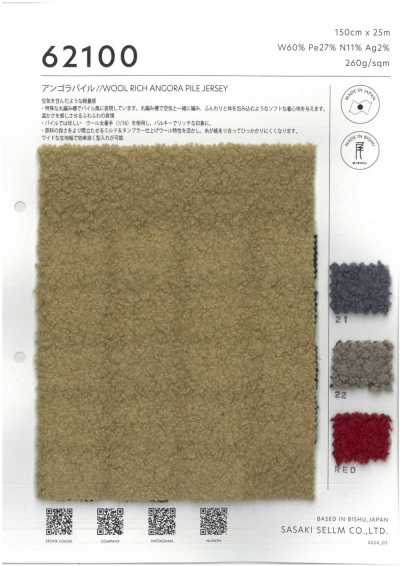
Angora is a material obtained mainly from the wool of Angora rabbits, made of very fine, soft fibers, and used in autumn and winter clothing for its lightness, warmth, and lofty pile.
![19300 40s Broadcloth [Sorry To Keep You Waiting! Matching Item]](/img/item/thumb/OKURA/1084542_t2.jpg)
Contents6 sections
Definition and Overview
Angora is an animal fiber generally obtained from Angora rabbits. The fiber itself is fine and smooth, and it has a tendency to trap air easily. In addition to being used on its own, it is often blended with wool, nylon, acrylic, and others to improve strength, shape retention, and knitability.
Although its name is similar to mohair, which is made from the wool of Angora goats, it is a different material. Angora tends to produce a more delicate, fluffy nap, while mohair tends to be characterized by luster, resilience, and the appearance of its pile.
Texture and Function
The major features of Angora are its soft touch, light wearing comfort, and rich loft. Its surface develops a white, misty nap, giving it a gentle and elegant appearance. It is a material that easily creates a soft, airy impression, especially in light colors.
Because it readily creates an air layer, it is generally expected to provide warmth. On the other hand, if the fibers are short and slippery, shedding and transfer of fuzz to other garments can occur more easily. Care must also be taken to prevent fuzz distortion and pilling caused by friction.
- It is a material that can balance lightness and warmth.
- Its fluffy nap creates a textured appearance.
- Shedding and durability vary depending on the blend ratio, yarn structure, and knitted or woven fabric.
Main Applications
Angora-blend materials are often used for knit products such as sweaters, cardigans, and pullovers. Taking advantage of its soft nap and warmth, it is also suitable for cold-weather accessories such as scarves, gloves, and hats. It is a material often chosen for autumn and winter collections.
When used for coats, jackets, dresses, and similar items, it can create an elegant and soft look that makes use of its surface texture. However, the strength required for the application, shedding, and resistance to friction should be checked not only by the Angora blend ratio, but also by considering the structure, fabric weight, and specifications of the lining and interfacing.
Selection and Handling Notes
When selecting the material, do not judge it by blend ratio alone; check the length and density of the nap, the degree of shedding, the density of the knitted or woven fabric, and the tendency to pill using the actual product. For items that come into direct contact with the skin, it is important to consider individual differences in irritation and evaluate them through fittings and swatches.
Because shrinkage, felting, and fuzz distortion may occur during washing and drying, follow the care label for each product. Whether water washing is possible and the cleaning method depend on the blended material and the product structure. During storage, avoid friction and pressure, and fold the item after arranging the pile to make it easier to handle.
In sewing, the nap can easily be caught in the seam during cutting and sewing, so work while smoothing the nap in the seam allowance. Test the needle, thread, and sewing conditions in advance according to fraying tendency, seam strength, and thickness, and consider seam finishing and the use of interfacing as needed.
Differences from Similar Terms
Wool is a general term for sheep's wool, while Angora refers to the wool of Angora rabbits. Both are animal fibers, but Angora tends to be finer, lighter, and more likely to produce a fuzzy appearance. Blending it with wool is one way to adjust practicality while making use of Angora's texture.
Mohair is a material made from Angora goat wool, and its raw animal source differs from Angora, which is made from Angora rabbit wool. Cashmere is another material made from goat wool. On material labels and in planning documents, confirm the raw material name and blend ratio to avoid confusion.
Frequently Asked Questions
Are Angora and mohair the same material?
No, they are not the same. Angora is generally made from Angora rabbit wool, while mohair is made from Angora goat wool. Angora tends to be characterized by a soft, lofty fuzz, while mohair tends to be characterized by a lustrous, resilient pile. Check the raw material name and blend ratio on the material label.
Can Angora-blend clothing be washed at home?
The washing method depends on the blended material, knitted or woven fabric, product structure, and finishing, so the care label must be checked. In water washing, shrinkage, felting, and fuzz distortion may occur. Avoid rubbing it strongly or using a dryer on your own judgment.
Does Angora shed easily?
Due to the characteristics of the fiber, Angora may shed fuzz that attaches to other garments. However, the degree of shedding varies depending on the quality of the raw material, blend ratio, yarn structure, density of the knitted or woven fabric, and finishing. During planning, it is important to check friction and shedding during wear using the actual product.