Tulle Lace
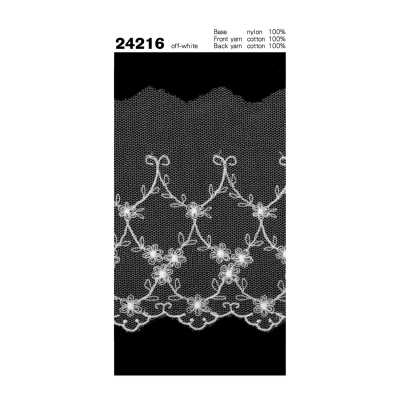
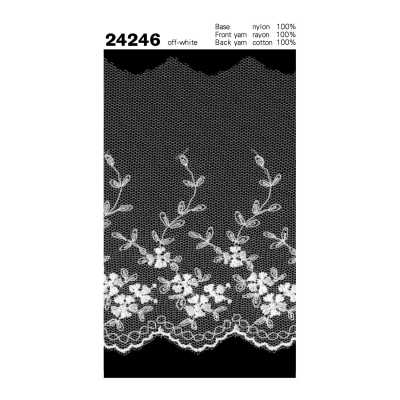
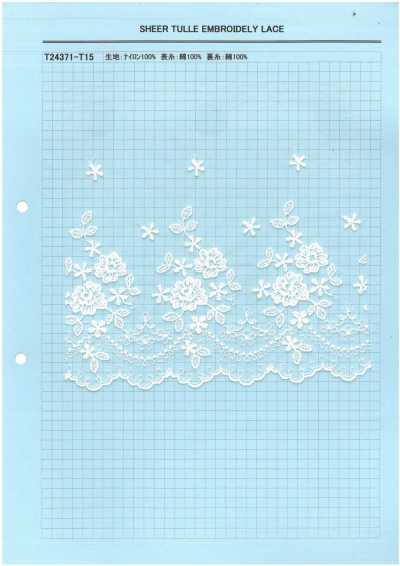
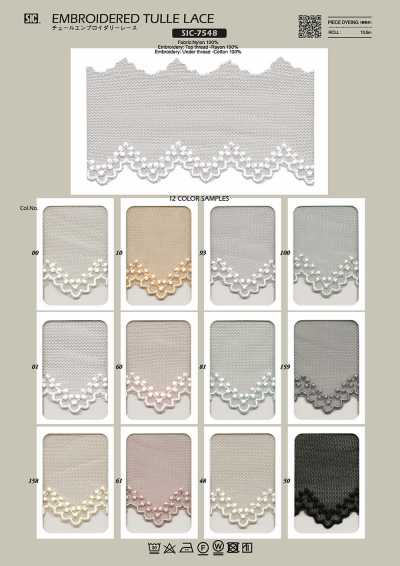
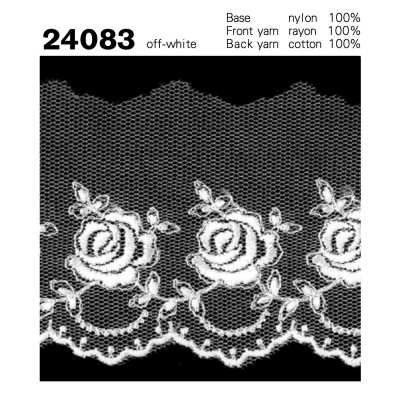
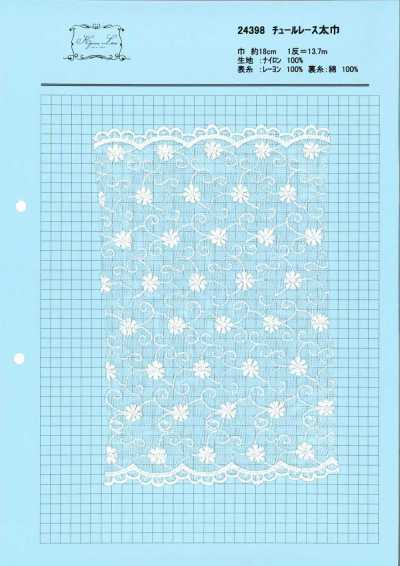
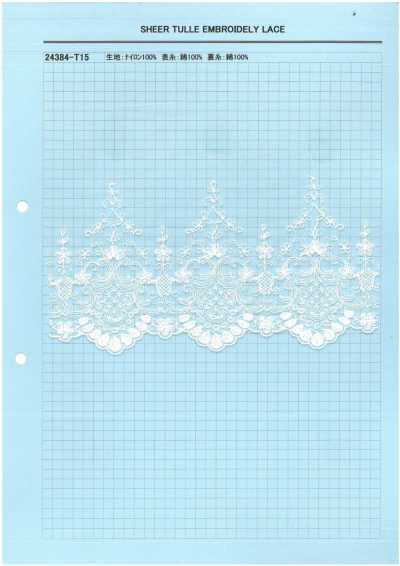
Tulle lace is a general term for lightweight, delicate lace decorated with embroidery or patterns, using net-like, sheer tulle as the ground fabric.
Contents6 sections
Definition and Overview
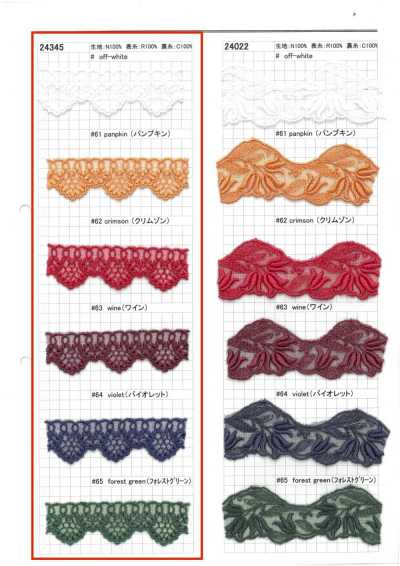
Tulle lace is a general term for a light, delicate lace made by using tulle with a fine hexagonal or diamond-shaped mesh as the base and decorating it with floral or geometric patterns. It is characterized by sheerness and an airy lightness, and its appearance and strength vary depending on the way the pattern is made, the structure of the tulle, and the material.
“Tulle” refers to the net-like sheer fabric itself, and “lace” is a general term for decorative fabric with openwork patterns. Tulle lace is distinguished by combining the transparency of tulle with lace patterns.
How It Is Made and Materials
In addition to embroidering the tulle base, there are types in which the base structure and pattern are formed at the same time on a knitting machine, as well as types with layered motifs. The finish ranges from delicate to three-dimensional depending on the pattern density, the thickness of the embroidery yarn, and whether there is metallic yarn or cord.
Polyester and nylon are commonly used materials. Products blended or interknit with polyurethane may have stretch, but do not judge stretchability from appearance alone; it is important to check actual stretch and recovery in both the warp and weft directions.
Appearance Characteristics and Main Applications
Because the pattern floats on a thin, sheer base, it can create a sense of depth when layered. It is more decorative than plain tulle, and products with dense patterns have less sheerness. On the other hand, in products where the base structure is visible, the impression changes greatly depending on the color and texture of the textile layered underneath.
It is used for dresses, formal wear, blouses, skirts, lingerie, and stage costumes. It is used for body outer fabric, sleeves, neckline switches, yokes, and hem decoration, and the degree of sheerness is adjusted by how it is layered with lining or another fabric.
How to Choose and Handling Precautions
When selecting, check the pattern size, width, sheerness, stiffness, and the weight of the embroidered sections according to the intended use. When gathering, check the strength of the base structure and how the pattern looks; when using it cut raw, check how easily the edges fray. For applications that touch the skin, it is also necessary to check irritation from the embroidery yarn or decorative yarn.
Products with large mesh openings or stretch are prone to stretching or distorting during sewing, so handle them without pulling too hard. Before cutting, check the grain and pattern direction, and stabilize with underpaper if necessary. To prevent fraying at sewn edges, use a lock finish, narrow tape finishing, or a facing finish, depending on the specification.
Washing methods vary depending on the material, embroidery, and whether decoration is present. Since the mesh or pattern may be damaged by snagging, friction, or twisting, follow the product’s washing instructions. Before mass production, conduct washing and wearing tests to check for shrinkage, stretching, fraying, and changes in decoration.
Differences from Similar Terms
Raschel lace is a term for a type of lace mainly made on raschel knitting machines, and some kinds also have a net-like base similar to tulle. By contrast, tulle lace is a term focused on the appearance and structure that uses tulle as the base structure, and it is not a name limited to a single manufacturing method.
Stretch lace is lace characterized by elasticity. Some tulle lace products also stretch, but not all are stretch lace. Chemical lace is lace made by embroidering on a dissolvable or similar base fabric and then removing the base fabric, and it is usually distinguished from tulle lace, in which the tulle mesh remains as the base.
Frequently Asked Questions
Can tulle lace be used with raw edges?
It depends on the product number and the location of use. If the base structure and pattern edges are stable, it may be possible to use it cut raw, but the mesh may unravel or embroidery yarn may come loose. Before mass production, conduct a test on the cut edges, and if necessary choose seam allowance finishing or facing finishing.
Does tulle lace stretch?
It may stretch depending on whether it contains polyurethane or on the knitted structure, but many products do not stretch. Also, the amount of stretch may differ in the warp, weft, and bias directions. Before deciding the pattern design and sewing conditions, check the actual stretch and recovery, and whether waviness appears near the seams.
What should be noted when washing tulle lace?
The mesh is vulnerable to snagging and friction, and extra care is needed when there is embroidery or decoration. Follow the product’s washing instructions, and if using a washing machine, reduce contact with other garments by using a laundry net. During planning, check shrinkage, deformation, and fraying after washing.