Scallop
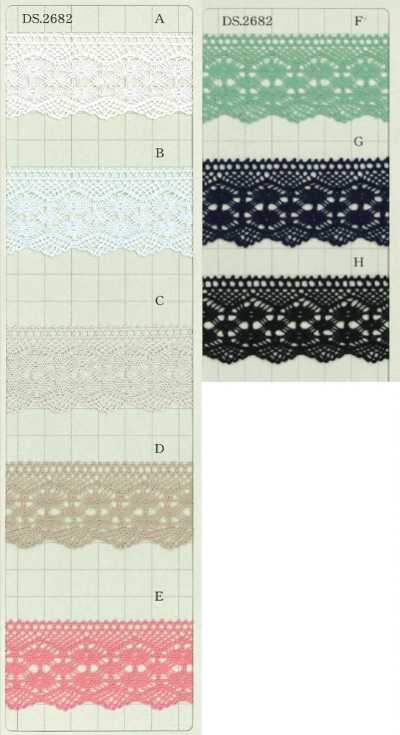
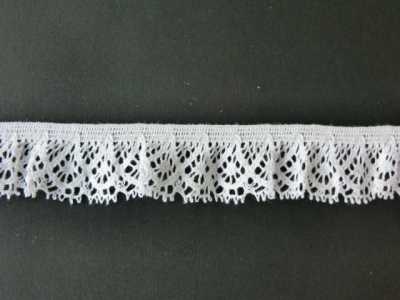
A scallop is a decorative edging that features continuous semicircular or wave-like curves, like the edge of a shell, along the edge of lace or textile.
Contents6 sections
Definition and Overview
A scallop is a border shape made by repeating semicircular arches. It is used on the selvage of lace and on the hems and cuffs of textiles, creating a softer, more elegant impression than a straight finish. It refers not to the pattern itself, but mainly to the outline of the edge.
The term comes from the English word scallop, inspired by the shape of a scallop shell, a type of shellfish. The appearance changes greatly depending on the size of the arches, the spacing, and the depth of the curves; small arches look delicate, while large arches give a more striking look.
How It Is Made and Materials
Scallops can be formed at the edge during lace knitting or weaving, or expressed by outlining with embroidery and cutting out the inside. They can also be made by cutting fabric into curves and sewing it, or by cutting along the outline after embroidery.
They are often seen in lace made from cotton, polyester, nylon, and similar materials, but a scallop itself is not a material name. Depending on the embroidery or lace structure, the base textile, and the edge reinforcement method, the firmness, delicacy, stretch, and durability vary.
Visual Characteristics and Main Uses
The regularly repeated curves give a feminine and light impression. When combined with openwork patterns or floral embroidery, the curved edge makes the design stand out. On the other hand, a simple plain scallop is easy to use as understated decoration.
It is used for blouse collars, plackets, and cuffs; hems of dresses and skirts; lingerie; and kidswear. Outside clothing, it is also used for handkerchiefs and edging on small items. Precut scallop lace is also handled as an accessory that serves as a finishing edge.
- Decoration for collars, cuffs, and hems
- Details for blouses, skirts, and dresses
- Edging for lingerie and nightwear
- Decoration for kidswear, small items, and apparel accessories
How to Choose It and Sewing Considerations
When selecting it, check the width and depth of the arches, the overall direction of the pattern, and how well it matches the curve of the intended placement. In strongly curved areas such as necklines and armholes, the pattern may look uneven depending on the arrangement of the arches, so it is important to consider how it will look on the pattern.
For stretch lace, pulling it during sewing can easily distort the scallop shape. If necessary, use stay tape together with it, and confirm the feed amount and stitch settings through sampling. When cutting, align the pattern position so that the peaks and valleys of the arches are not lost.
There are also specifications that can be used as is without finishing the edge, but the ends of embroidery thread and net sections may be damaged by friction. The tendency to fray varies by method, so check the strength of the edge. Follow the care label on the product when washing, and consider using a laundry net or separating it from other garments to avoid snagging.
Differences from Similar Terms
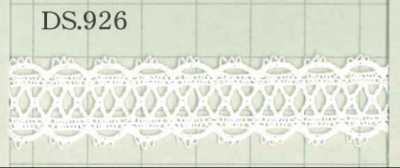
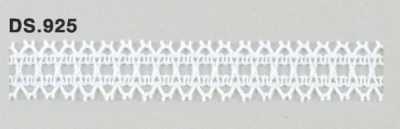
While scallop refers to a wavy edge, picot refers to an edging with small loops or projections in a series. Both are used on lace edges, but scallop differs in that it is recognized as a larger semicircular curve.
Lace is a general term for openwork fabric and decoration, while scallop is a shape that may be applied to lace. Also, embroidery lace, torsion lace, and raschel lace are names of manufacturing methods or types, so their classification standard differs from scallop.
Frequently Asked Questions
Can scallops be used with a raw edge?
Scallop lace whose edge is sufficiently secured by embroidery or a knitted structure can basically be used without edge finishing. However, net fabric and cut sections may fray. Before use, gently pull the edge and check it, including after friction and washing.
When sewing scallop lace, how do you prevent stretching and distortion?
Without pulling the lace, check with test stitching whether the presser foot causes overfeeding or waviness in the fabric. For stretchy materials or areas that tend to stretch, such as necklines, using a suitable stay tape makes it easier to maintain the shape. Also align the peaks and valleys of the pattern in advance.
What is the difference between scallop and picot?
A scallop is a relatively large edge outline made of continuous semicircular or wavy curves. A picot refers to an edging with small loops or bead-like projections in a row. However, usage can vary by product and industry, so it is important to confirm with shape photos and specifications.