Leavers Lace
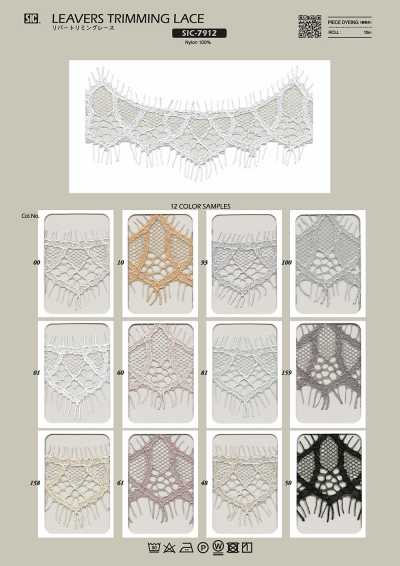
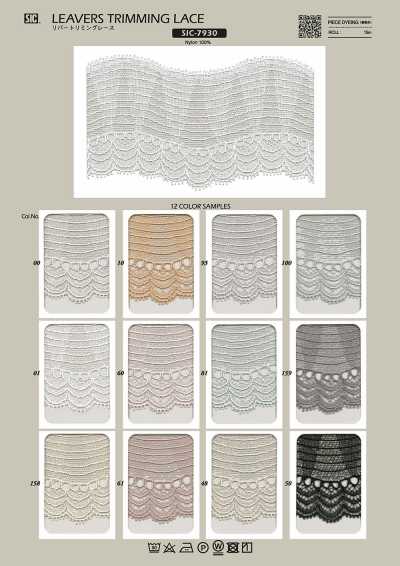
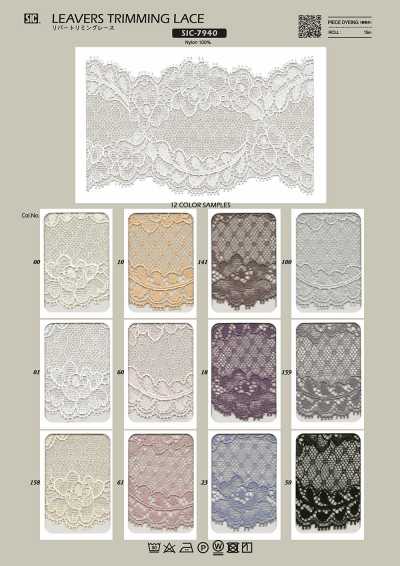
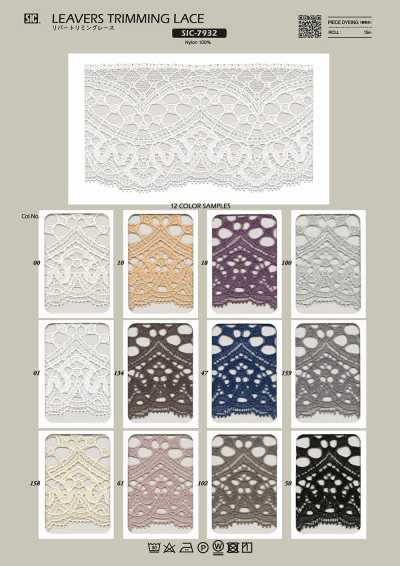
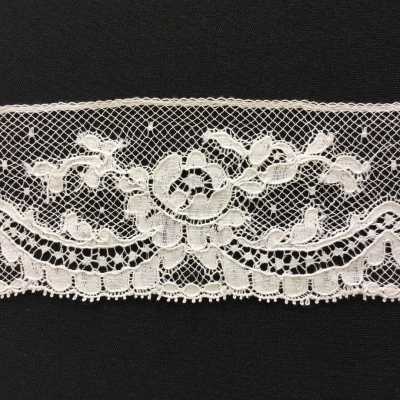
Leavers lace is a highly decorative lace that expresses complex patterns on a Leavers machine using many threads, and is characterized by delicate netting and a three-dimensional design.
Contents6 sections
Definition and Overview
River lace is a machine-made lace produced on a lace machine called a river machine. By combining many yarns, it can express netting, floral patterns, cord-like outlines, and other features as one integrated design, and it has the refined, ornate look characteristic of handmade lace.
Lace is not a material name, but a general term for fabrics and tape-like decorative materials with openwork patterns. River lace is a classification based on its manufacturing method, and even within river lace, the yarns used, patterns, width, and stretchability vary by product number.
How It Is Made and Materials
On a river machine, yarns running in the warp direction and yarn wound on bobbins are intricately interlaced to form the pattern. By placing thicker yarn or yarn with a different texture along the outline of the pattern, it is also possible to create an effect where the design stands out above the delicate ground structure.
Materials include cotton, nylon, polyester, rayon, and silk. Stretchability is not determined by the manufacturing method name alone; confirm whether the specification uses elastic yarn such as polyurethane.
Visual Features and Main Applications
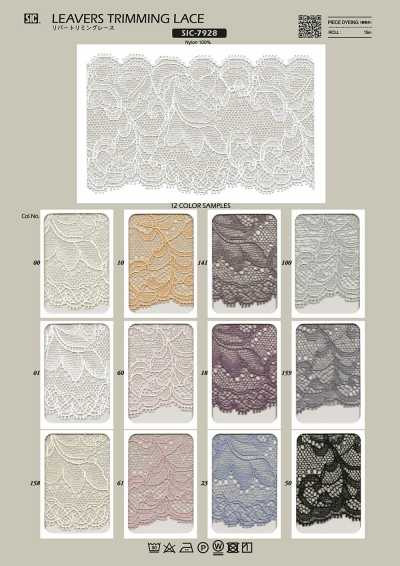
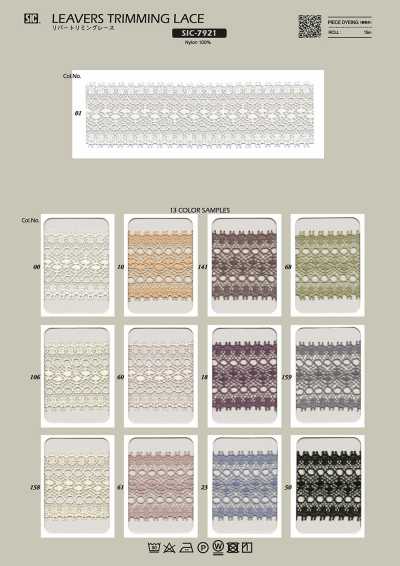
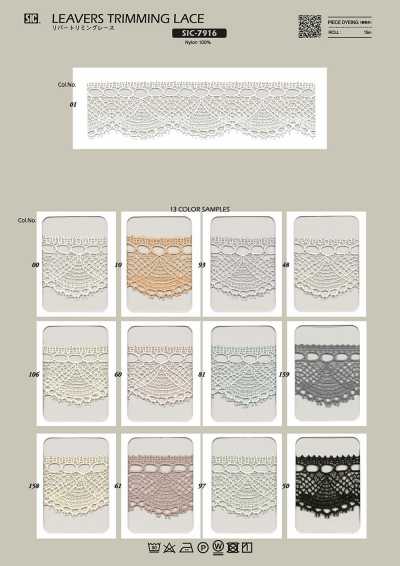
The typical appearance is a combination of fine mesh and complex patterns, with scalloped edges at the pattern ends. While it has a sheer look, the pattern tends to have density and shading, making it suitable for areas where delicacy, elegance, and dimension are desired.
It is used for lingerie and innerwear, as well as blouses, dresses, and also for trimming collars, cuffs, and hems. If you want to reduce sheerness, check how the pattern appears with layering, assuming use with a lining or another fabric.
- Decorative sections of lingerie and innerwear
- Formal wear, bridal wear, and stage costumes
- Yokes, collars, sleeves, and hems of blouses and dresses
- Decorative use for fashion accessories and interiors
How to Choose and Handling Notes
When selecting, check the material, width, pattern size, presence or absence of scallops, strength of the ground structure, and sheerness. Because the appearance of the pattern changes depending on the cutting direction, allow extra material for areas that need to be placed symmetrically or matched.
Lace can have yarn breakage or fraying due to snagging or friction. If using the cut edge, test the seam finishing method in advance, and for fine patterns or thin mesh, adjust the needle, thread, and sewing conditions so the stitches do not flatten the pattern.
For product numbers with stretch, pulling them during sewing can easily cause waviness or dimensional changes, so check the feed amount. Wash according to the product care label and material composition; in general, consider using a laundry net and gentle handling, and avoid snagging.
Differences from Similar Terms
Raschel lace is machine lace made with a knitting machine and is used for a relatively wide range of mass-produced expressions. River lace derives from a method that intricately combines yarns, and is characterized by finely detailed patterns and cord-based outlines. However, the manufacturing method cannot be determined from appearance alone.
Chemical lace is lace in which embroidery is applied to a base fabric and then the base fabric is dissolved away to leave the pattern. Torsion lace refers to narrow lace made by twisting yarn together. Both differ from river lace in manufacturing method, and differ in thickness, pattern structure, and edge appearance.
Frequently Asked Questions
Does river lace stretch?
Stretchability cannot be determined from the name river lace alone. Stretch specifications using elastic yarn will stretch, but many product numbers do not. Check the blend ratio, stretch direction, and amount of stretch in the product information, and it is important to test the actual textile before sewing.
Does the cut edge of river lace fray?
Depending on the mesh structure, yarn structure, and cutting position, yarn may unravel from the cut edge or damage may occur due to snagging. In some cases the scalloped edge can be used, but when using a cut edge, confirm through prototyping methods such as overlock finishing, stitching into the seam, or tape finishing.
Can river lace be washed at home?
Whether washing is possible depends on the material, dyeing, accessory components, and product specifications. Lace requires care to avoid friction with other items and snagging on hardware. Always follow the product care label, use a laundry net if necessary, and avoid strong mechanical action.