Lace
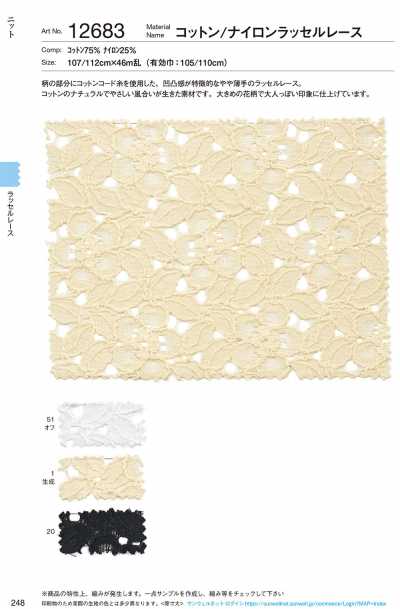
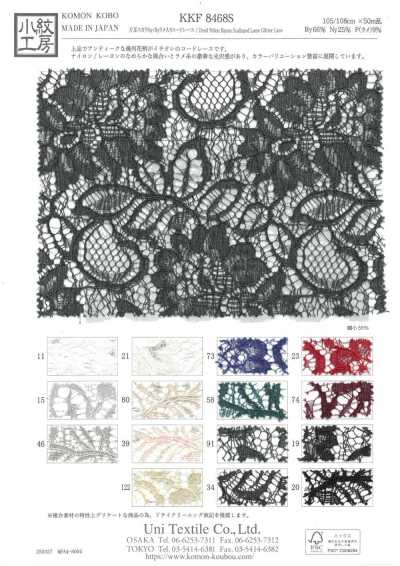
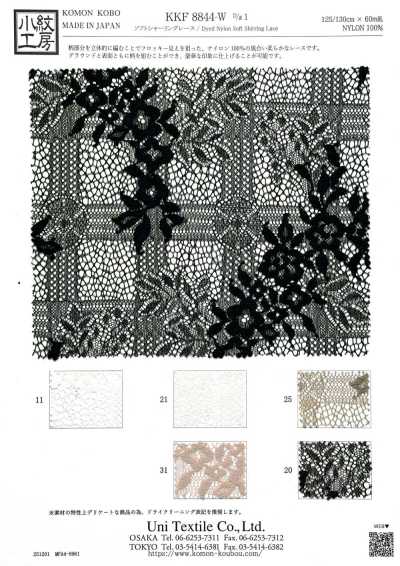
Lace is a general term for highly decorative fabrics that use thread combinations to create openwork patterns, and are made with a variety of techniques and materials, including knitting, weaving, and embroidery.
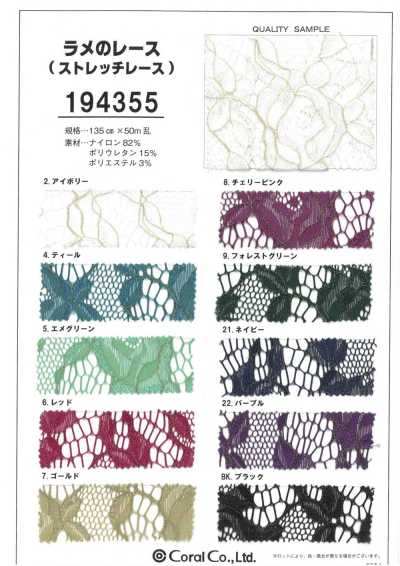
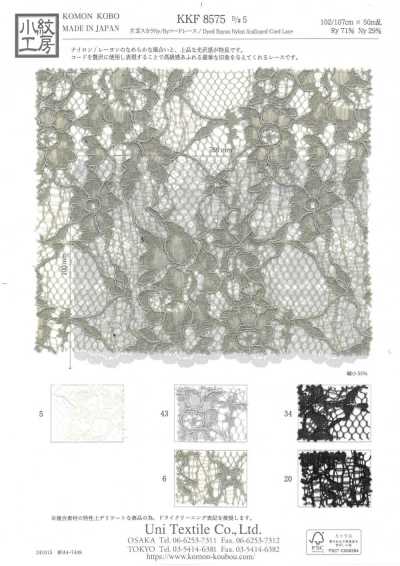
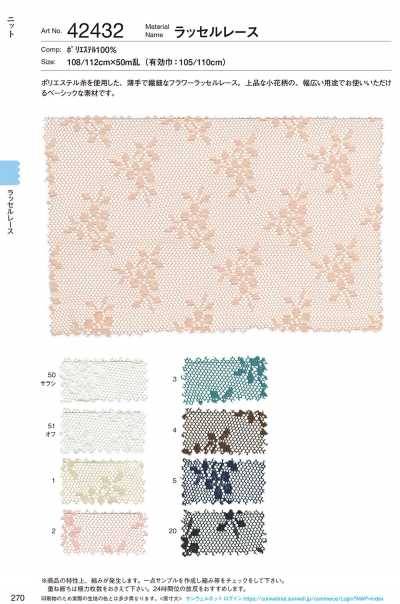
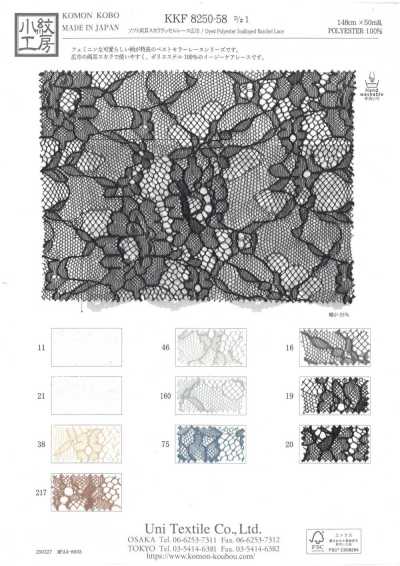
Contents6 sections
Definition and Overview
Lace is a fabric characterized by openwork patterns that create space between threads and delicate motifs such as flowers and geometric designs. In the broad sense, it is a general term that does not depend on manufacturing method and includes knitted lace, woven lace, and embroidered lace.
There are types that show patterns on a ground structure and types that form patterns through the combination of the threads themselves, so it can be difficult to judge the manufacturing method by appearance alone. In planning and production, it is important to confirm the construction method, material, stretch, and even the direction of the pattern.
Characteristics
With its sheerness and raised patterns, this material makes it easy to express lightness, elegance, and delicacy. Pieces made with fine or lustrous threads have a refined impression, while those made with thicker threads or cord have more prominent patterns and a stronger presence.
Materials used include cotton, nylon, polyester, rayon, and silk. Depending on the material and structure, softness, firmness, drape, durability, and stretch vary, so even with similar patterns, the wearing feel and sewing suitability differ.
- Items with decorative edges such as scallops on both ends can use the scallops at hems and cuffs.
- Stretch lace is used for fitted garments and seam sections.
- The size of the pattern and the proportion of sheer areas affect the product's appearance and the need for lining.
Main Applications
It is used for blouses, skirts, dresses, formal wear, as well as lingerie and nightwear. In addition to being used over the entire body, it can also be used in sections such as collars, sleeves, yokes, and hems for decorative accents.
For spring and summer, it is often used for light items that take advantage of sheerness, while layered use and heavier lace are also suitable for autumn and winter dresses and decorative applications. It is also sometimes used for interior accessories, costumes, and additional trimming.
Selection and Handling Notes
Select according to the application by checking pattern size, ground stability, sheerness, stretch direction, and edge specification. When cutting, consider pattern placement and left-right appearance, and if using scallops, decide the required yardage and placement in advance.
When using sheer lace in garments, the pattern appearance changes depending on the color combination with the lining or separate fabric. Also check skin comfort, and for patterns with pronounced texture, consider a specification that prevents seam allowances and joined sections from becoming bulky.
Items with delicate threads or structures that catch easily may be damaged by friction during washing or wear. Follow the washing method indicated for the material and product, and in sewing, confirm fraying at the fabric edge, needle holes, presser marks, and seam shrinkage through prototypes.
Differences from Similar Terms
Jacquard refers to a technique that expresses complex patterns through weaving, or to the woven fabric itself. There are also openwork Jacquards, but lace is a general term characterized by openwork and decorative thread combinations, and is not necessarily limited to woven fabrics.
Organza and chiffon are mainly woven fabrics characterized by thinness and sheerness. Lace may also have sheerness, but it differs in that patterns are formed. Stretch lace is one type of lace and refers to lace given stretch.
Frequently Asked Questions
Can lace be used without a lining?
It depends on the degree of sheerness, the density of the pattern, and the wearing occasion. Sometimes sheerness is used as part of the design, but if you want to prevent the inner layer from showing, use a lining or pressing cloth. The color of the lining greatly changes how the pattern looks, so always check it layered together.
What should be noted when sewing lace?
Before cutting, check pattern placement, left-right symmetry, grain, and how the scallops will be used. Because open structures and stretchable materials are prone to shifting and waviness, perform test stitching including interfacing, presser settings, and sewing conditions, and also consider how to finish the seam allowances.