Straight Tape
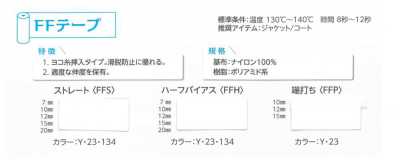
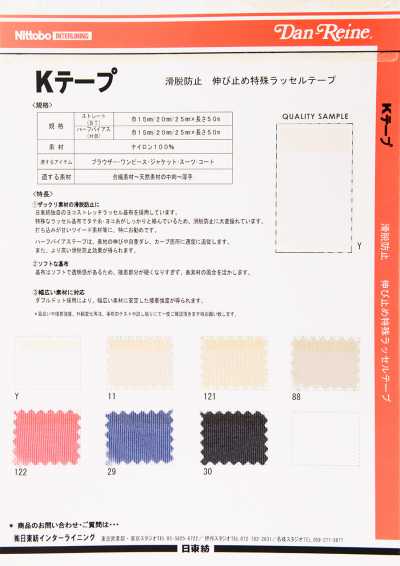
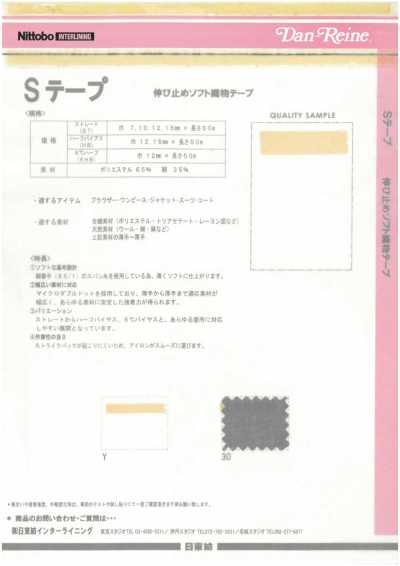
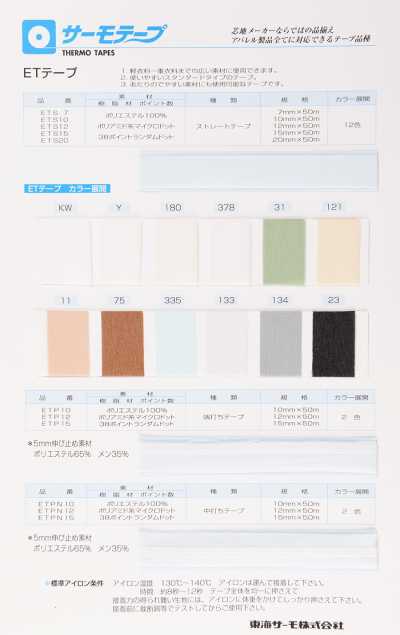
Straight tape is an anti-stretch tape used along the grain of the textile to prevent seams and cut edges from stretching or losing shape.
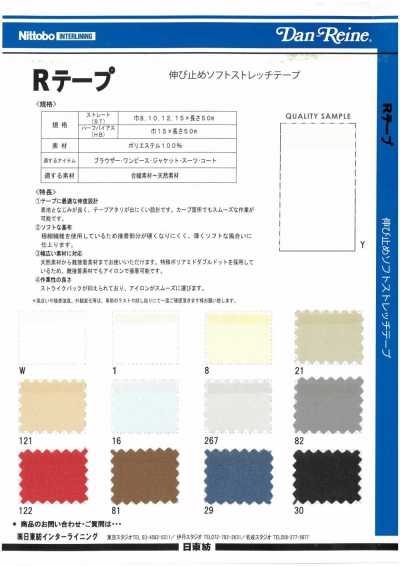
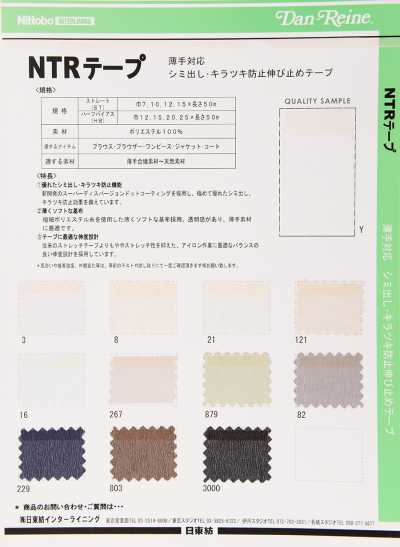
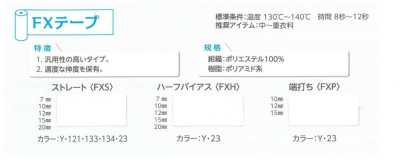
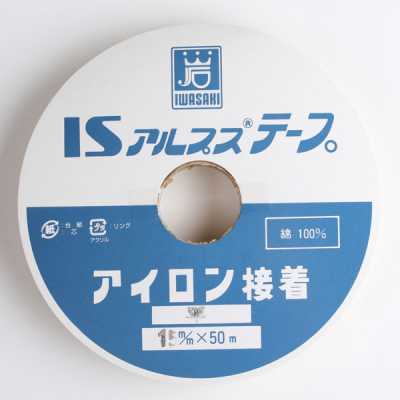
Contents6 sections
Definition and Overview
Straight tape is a tape with little stretch, mainly in the lengthwise direction, used to reinforce areas that stretch easily and stabilize dimensions and shape. It is made from woven fabric, nonwoven fabric, and similar materials, and there are types that are sewn on as-is and types that are attached with adhesive.
“Straight” refers to the tape’s lengthwise direction being straight in relation to the fabric grain, or to a name that indicates it is used to control stretch. Because it is not a name that uniformly indicates the material or whether it is adhesive, specifications should be checked.
Areas Used and Their Role
It is used on areas where stretching during wear or sewing affects the finished result, such as shoulder seams, center back, front edges, pocket openings, around buttonholes, and zipper attachment positions. It helps suppress seam waviness, gaping, and sagging.
Especially in knits, lightweight fabrics, and areas easily subject to force from diagonal directions, partial stretching can affect the appearance of the product. By inserting straight tape only where needed, it is possible to avoid excessive stiffness while helping the shape hold after sewing.
- Preventing stretch in shoulder seams
- Stabilizing front edges and facing edges
- Reinforcing pocket openings and seam lines
- Controlling stretch at zipper attachment positions
Types and Differences from Bias Tape
By cutting method, the straight type cut along the warp or weft of the fabric stretches less in the lengthwise direction and is suitable for stabilizing straight sections. By contrast, bias tape cut at a 45-degree angle has stretch and drape and is used for finishing curved edges.
By attachment method, there are adhesive types that are attached with an iron and similar tools, and non-adhesive types that are sewn in or sewn on. Adhesive types are easy to work with, but depending on compatibility with the fabric and the bonding conditions, the appearance and bonding strength may be affected.
How to Choose
Choose the width according to the area to be reinforced, the seam allowance width, and the sewing position. If the width is too narrow, stability will be insufficient; if too wide, the edge may show through to the outside or create localized stiffness.
For stretch, in principle choose one with little stretch in the lengthwise direction. However, if the outer fabric is a stretch material, completely stopping stretch can cause tightness when worn, so consider a specification that preserves the necessary amount of give.
The tape’s thickness, stiffness, color, and adhesive type also affect the finish. With lightweight fabrics and light-colored outer fabrics, it is important to check whether sheerness or fading appears, and to confirm through sample production including the outer fabric, interfacing, and sewing conditions before mass production.
Precautions for Bonding and Sewing
For adhesive types, set the temperature, pressure, and time according to the outer fabric’s heat resistance. If the conditions are too weak, peeling may occur easily; if too strong, it may cause fabric shine, shrinkage, changes in texture, or adhesive bleed-through.
When sewing on, do not pull the tape, and sew without applying extra tension to the outer fabric. If only the tape is shrunk or stretched, it can cause puckering or seam waviness after sewing.
After bonding or sewing, carry out checks assuming washing, dry cleaning, and stretch during wear. Especially with stretch fabric, confirm differences in how the reinforced area and surrounding fabric stretch, and adjust the width or specifications as needed.
Frequently Asked Questions
Can straight tape be used instead of bias tape?
For finishing curved edges or finishing along curves, bias tape is generally more suitable. Straight tape stretches less in the lengthwise direction, so it is more likely to cause wrinkles or tightness on curves. Use it separately as reinforcement and stretch control for straight sections.
Can straight tape be used on stretch fabric?
Yes, but check the mobility needed for each area. It is effective for areas where stretch should be controlled, such as shoulder seams and pocket openings. On the other hand, in areas that need stretch for putting on and taking off or for movement, stopping stretch too much may lead to tightness or damage.
What should be noted when using adhesive straight tape?
It is important to bond it at the temperature, pressure, and time appropriate for the outer fabric and to test it before mass production. Depending on the bonding conditions and the combination with the fabric, peeling, bubbling, shrinkage, shine, and fading may occur. Check it including after washing.