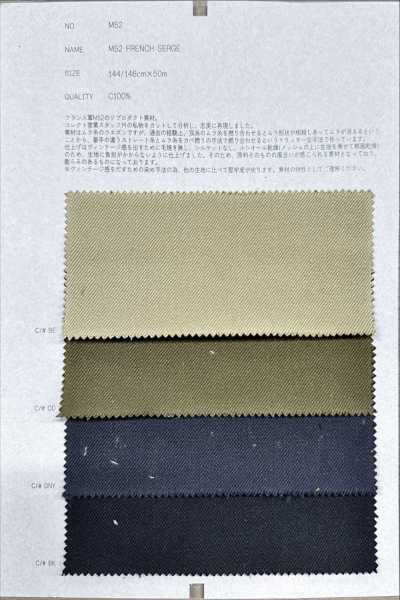
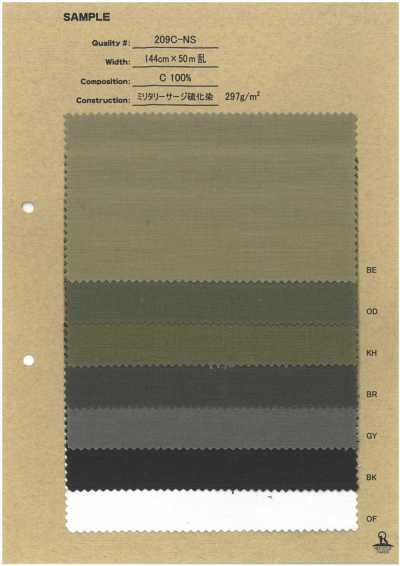
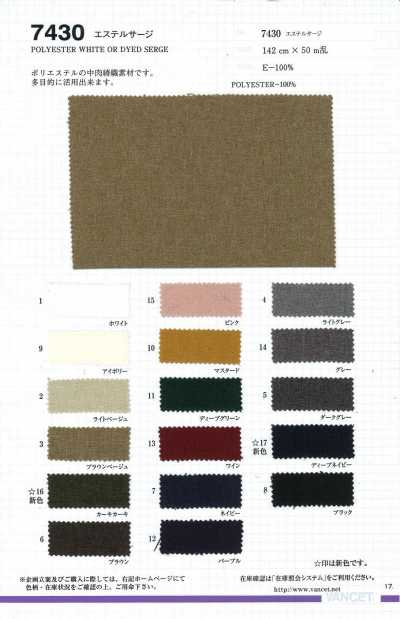
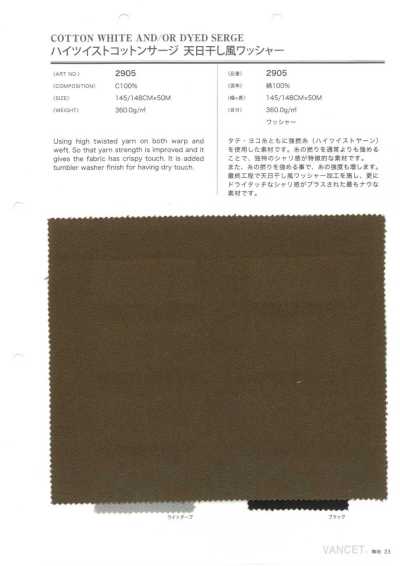
Serge
Serge is a woven fabric that uses a twill weave with diagonal ribs, and is often durable with moderate thickness and flexibility.
Contents6 sections
Definition and Overview
Serge is a twill fabric that creates diagonal ridges by crossing warp and weft yarns at regular intervals. It is known as a wool fabric, but cotton, polyester, and other materials are also used, and its properties vary greatly depending on the raw material, yarn thickness, density, and finish.
The name often indicates the weave structure or the appearance of the textile, not the material name. When ordering, it is important not to judge it by the term “serge” alone, but to confirm the blend ratio, fabric weight, thickness, stretch, and finish.
Features
The surface shows diagonal lines from the twill weave, and it tends to be softer than plain weave and easier to drape. Depending on the density and raw material, it can have a subdued luster, a smooth hand, and a neat appearance.
Because twill weave has areas where yarns appear longer on the surface, glossing from friction and fading may become noticeable. In addition, depending on the direction of the twill line and the finish, the appearance of skewing or seam twisting can vary.
Main Applications
Taking advantage of its moderate firmness and suppleness, it is used for suits, jackets, pants, skirts, dresses, and uniforms. Since the wearing feel changes depending on the raw material, fabric weight, and whether it is brushed, applications are not limited to autumn and winter; if it is lightweight, it can also be used for spring and summer.
Wool serge is suitable for garments that require a polished look. In polyester blends or cotton blends, it may also be used for uniforms and workwear, taking durability, ease of handling, and cost into consideration.
Selection and Handling Precautions
When selecting, check not only the clarity of the twill lines, but also the fabric weight, thickness, blend ratio, stretch, abrasion resistance, and washing instructions according to the intended use. For pants and uniforms, it is reassuring to confirm in a sample whether glossing, pilling, and seam puckering occur in areas subject to frequent wear.
Shrinkage from washing, changes in texture, and color fading vary depending on the material and processing. Items containing wool may not be suitable for home washing, so follow the care label. Before cutting, align the grainline, and in sewing, matching the direction of the twill lines makes it easier to reduce differences in appearance between the left and right sides.
- Perform a washing test before mass production to check shrinkage rate and skewing.
- Use a pressing cloth when ironing, and be careful of glossing and shine caused by strong pressure.
- For dark colors, check the possibility of color transfer due to friction according to the intended use.
Differences from Similar Terms
Twill is the general term for twill weave, while serge is a fabric name often used for apparel fabrics among twill weaves. However, in trade, the two terms may be treated with similar meanings, so the structure, material, and specifications should be checked individually.
Gabardine is also a representative twill fabric, but in general it tends to refer to a fabric with a steeper twill line and a denser weave than serge. The distinction between these names varies depending on region of origin and trade practice.
Frequently Asked Questions
Is serge a wool fabric?
Serge woven from wool is typical, but serge itself is not a material; it is a term for a fabric made with twill weave. There are also fabrics made with cotton, polyester, rayon, or blends of these materials. Check the blend ratio and finish according to the required performance.
Are serge and twill the same?
Twill is a broad term referring to twill weave in general, while serge is a term often used as an apparel fabric name made with twill weave. However, in sales settings, they may also be used with similar meanings. Do not distinguish them by the name alone; check the material, structure, fabric weight, and thickness.
What should be noted when cutting and sewing serge?
Because the twill lines appear diagonally, it is important to align the grainline with the direction of the twill lines when cutting. If the twill lines appear differently on the left and right pieces, the product's appearance will differ. Depending on the material, also check for sewing shrinkage and glossing from pressing.