Sashiko
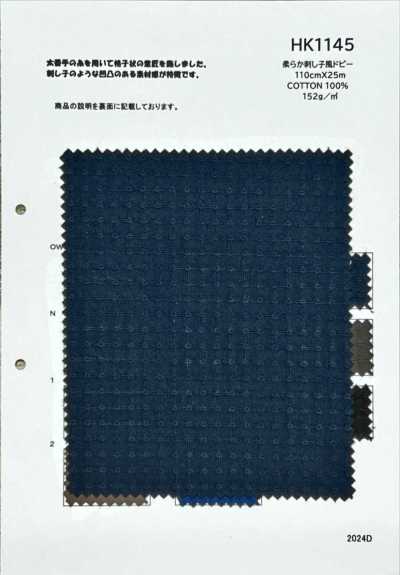
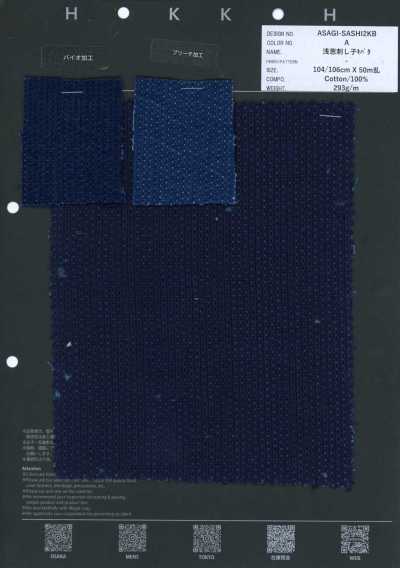
Sashiko refers to a woven fabric or expression that originates from decorative reinforcing stitching and is characterized by raised sashiko-style patterns made with thick yarn and a durable texture.
Contents6 sections
Definition and Overview
Sashiko is originally a handcraft technique in which fabric is layered and stitched with fine running stitches to provide reinforcement and warmth. Sashiko sold as textile often refers to material that expresses the look of these stitches through weaving, and it may also be called sashiko weave.
While cotton is often used as the material, the thickness and firmness vary greatly depending on blended materials, weave structure, and yarn thickness. For this reason, sashiko should be understood not as the name of a single weave structure or material, but as a term that describes the surface appearance and applications.
Features
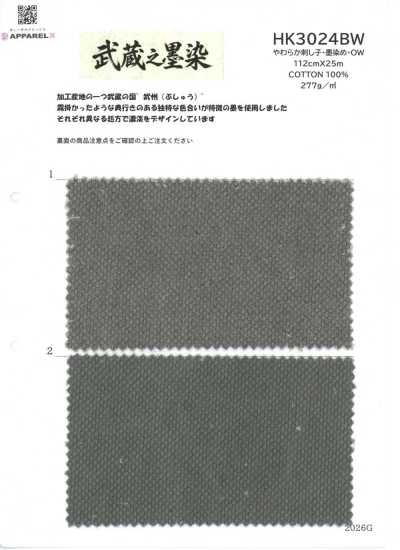
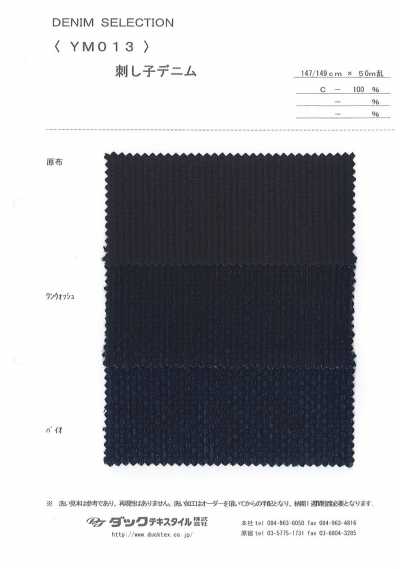
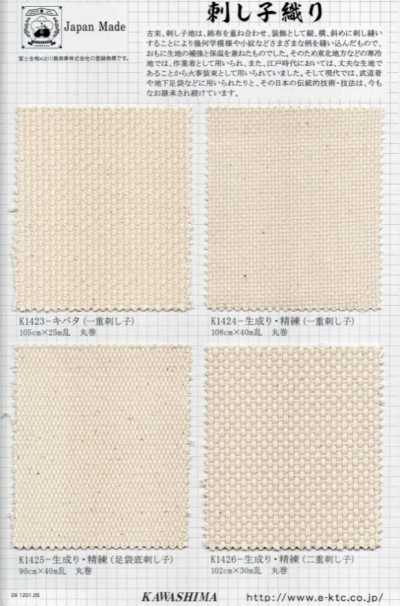
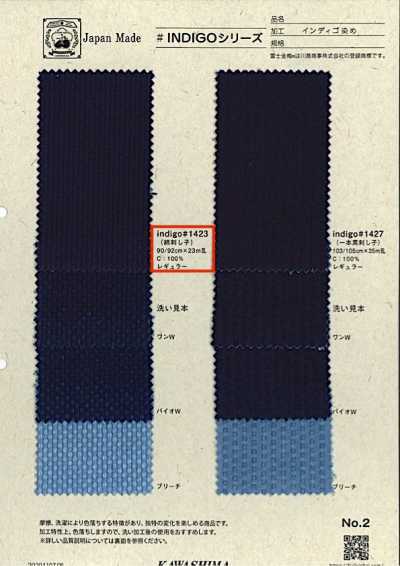
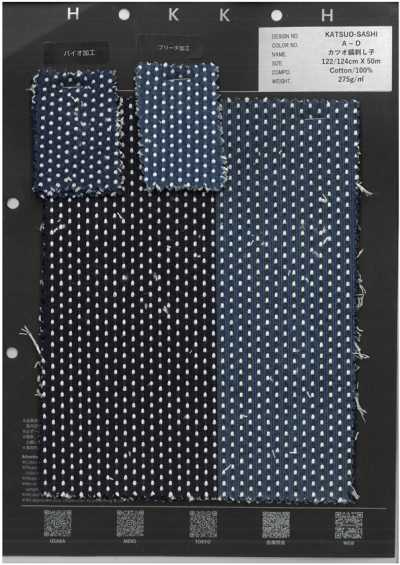
Thicker yarns and textured weaving create a three-dimensional, stitch-like look such as checks, crosses, and continuous patterns. It shows character even in solid fabrics, and can make use of a rustic, craft-like appearance as well as the appeal that develops with repeated washing.
It is generally dense and tends to have a fairly substantial hand, so it is also suitable for uses that receive friction. However, it does not simply mean a heavy fabric, and there are also lightweight sashiko-style materials. It is important to check the fabric weight, thickness, firmness, and sheerness with the actual sample.
- The degree of texture and the visibility of the pattern may differ between the front and back sides.
- If the woven pattern has a direction, confirm the grainline and pattern direction when cutting.
- Stretch is generally not great, but it varies depending on blended materials and structure.
Main Applications
Taking advantage of its durability and surface texture, it is used for work jackets, blousons, pants, skirts, dresses, and more. It is also suitable for items that require durability and design appeal, such as bags, accessories, aprons, and covers.
Fairly substantial fabrics are easy to use for spring and autumn outer layers or year-round bottoms, and heavier types are also used in autumn and winter. In thinner product numbers, it may also be suitable for shirts and lightweight apparel, so the season should be judged by the fabric specifications and construction, not by the name alone.
How to Choose and Handling Notes
Check the fabric weight, thickness, density, structure, and fiber blend for the intended use. For outerwear and bags, choose something that holds its shape well; for apparel, it is also easier to select if you check the feel against the skin and drape. With large-pattern fabrics, allow for extra yardage for pattern matching.
Unfinished or minimally finished fabrics that are mainly cotton may shrink or change in hand after washing. Before mass production, confirm the shrinkage rate, skew, color fading, and appearance on the front and back under the planned washing conditions, and if necessary, perform pre-washing and grain correction.
With textured structures, seam allowances can overlap and become thick. Match the needle size and thread to the fabric thickness, and test-stitch in advance at stepped areas to check for stitch crowding, feed problems, or fading.
Differences from Similar Terms
Sashiko is a name derived from the technique of stitch sewing, and it is not the name of a weave structure that indicates how warp and weft yarns intersect, such as plain weave or twill. Woven fabrics with a sashiko look are expressed through a combination of structures and yarn usage.
Quilting refers to a material or process in which a top fabric, quilt batting, backing, and other layers are stacked and sewn together. Sashiko also sometimes involves layering fabric and sewing by hand, but sashiko weave as a fabric can express a textured pattern through weaving alone, and its production method differs from quilting.
Frequently Asked Questions
Is sashiko an embroidered fabric?
Originally, sashiko is a stitch-sewing technique used to reinforce and decorate fabric. However, as a fabric name, it often refers not only to cloth with embroidery, but also to sashiko weave, which expresses a stitch-like textured pattern through weaving. In specifications, state clearly whether it is embroidery or a woven pattern.
Does sashiko fabric shrink when washed?
Sashiko fabrics that are mainly cotton may shrink or change in hand after washing. Because the amount of shrinkage varies depending on the fiber blend, density, finishing process, and washing conditions, it is necessary to conduct a washing test on the actual fabric before mass production and confirm the shrinkage rate and skew.