Single Yarn And Two-ply Yarn
Single yarn and plied yarn are yarn structures: single yarn consists of one yarn, while plied yarn is made by twisting two single yarns together. They affect the appearance, strength, thickness, and ease of handling during sewing of a textile.
Contents6 sections
Definition and Overview
Single yarn is yarn made by using a single yarn spun by spinning or similar methods as is. Double yarn is yarn made by twisting together two single yarns, and is also called two-ply yarn. It is used as warp and weft in woven fabrics and as knitting yarn in knits, affecting the properties of the textile.
Double yarn is generally made by twisting in the opposite direction to the twist applied to the single yarn, so as to suppress twist back. However, yarn thickness, material, number of twists, and dyeing or finishing conditions also affect quality, so textile performance is not determined by whether it is single yarn or double yarn alone.
Characteristics
Single yarn tends to be relatively soft and to express lightness and a natural fullness more easily. On the other hand, yarn fuzz and the effect of twist are more likely to appear on the surface, and depending on the applications and quality conditions, it is necessary to check strength, fuzzing, and skew.
By twisting two yarns together, double yarn generally makes it easier to obtain yarn uniformity and strength, and is said to more easily produce a textile with a smoother surface. In shirting fabrics, for example, it may be used to achieve a clean look, moderate firmness, and durability.
- Even with the same count indication, the actual yarn thickness and the impression of the textile differ depending on whether it is single yarn or double yarn.
- Double yarn is a term indicating a structure in which "two yarns are twisted together," and is not a name for a type of material.
- Those made by twisting together three or more single yarns are handled as plied yarns or multi-ply yarns.
Main Applications
Single yarn is used for shirts and blouses, cut-and-sew items, linings, thin woven fabrics, and knits that make use of lightness and a soft feel. However, even for the same item, the suitable yarn structure differs depending on fiber type, count, density, and weave or knit structure.
Double yarn is seen in shirting fabrics where a smooth surface and durability are emphasized, woven fabrics for uniforms and workwear, and fabrics for jackets and pants. It is not limited to thick fabrics; it may also be used for delicate fabrics made from fine single yarn twisted into double yarn.
Selection and Handling Notes
When selecting a textile, in addition to the single yarn or double yarn indication, check the material blend ratio, count, warp and weft composition, weave or knit structure, density, and fabric weight. In the planning stage, it is important to evaluate the desired texture, strength, seam appearance, and dimensional change after washing with actual samples.
In sewing, high-density woven fabrics using double yarn require attention to needle penetration and puckering, and the needle size, thread, and sewing conditions should be set to suit the fabric. For fabrics using single yarn that tend to fuzz, or fabrics with loose twist, check in advance for fraying at cut edges, seam slippage, and surface changes after washing.
Differences from Similar Terms
Twisted yarn is a broad term referring to the act of applying twist to multiple yarns or fiber bundles, or to yarn made in that way. Double yarn is a type of twisted yarn, but specifically refers to a structure made by twisting together two single yarns. Therefore, twisted yarn and double yarn are not synonymous.
Strong-twist yarn refers to yarn with more twist than usual and is a classification separate from single yarn or double yarn. Strong-twist designs are possible for both single yarn and double yarn. Count is a measure indicating yarn thickness and is distinguished from single yarn and double yarn, which indicate how many yarns are twisted together.
FAQ
Is double yarn always stronger than single yarn?
Double yarn generally has a structure that makes it easier to obtain strength and uniformity, but it is not necessarily stronger than single yarn under all conditions. Results vary depending on the raw material, single-yarn thickness, number of twists, spinning method, and weaving or knitting conditions, so tear strength and abrasion resistance as a textile should also be checked.
What do notations like 80/2 on a fabric label mean?
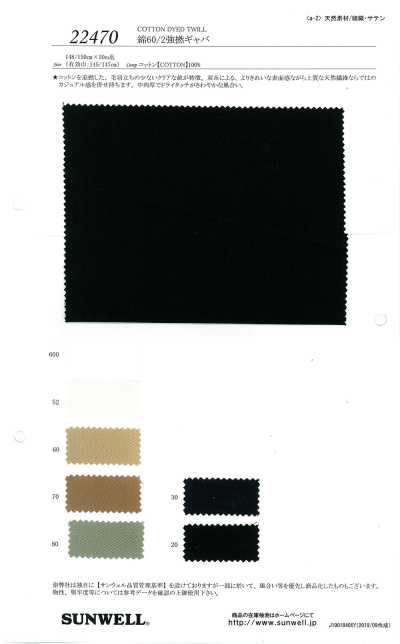
In general, "80/2" is used as a symbol indicating double yarn made by twisting together two single yarns equivalent to count 80. However, because count notation methods and applicable ranges may differ depending on fiber type and trade practice, the yarn structure should be checked in the specification sheet.
Can single yarn and double yarn be distinguished by appearance alone?
In some cases, tendencies can be inferred from surface fuzz, luster, and smoothness, but it is difficult to identify them definitively by appearance alone. The impression changes especially depending on finishing, dyeing, and whether or not the fabric is brushed. For accuracy, check the fabric specification and yarn structure information.