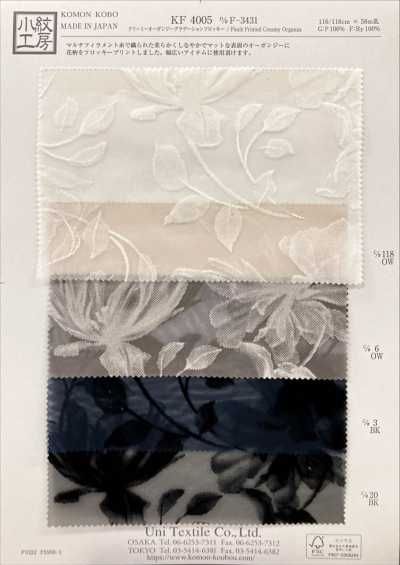
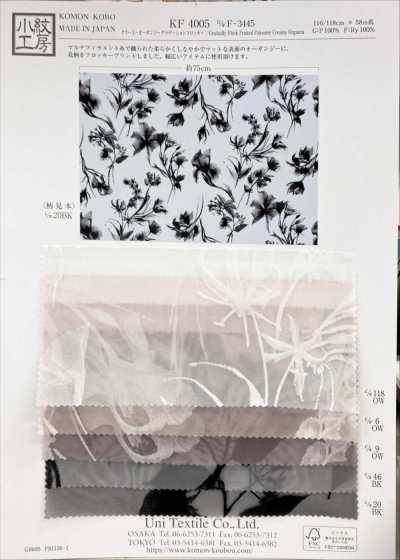
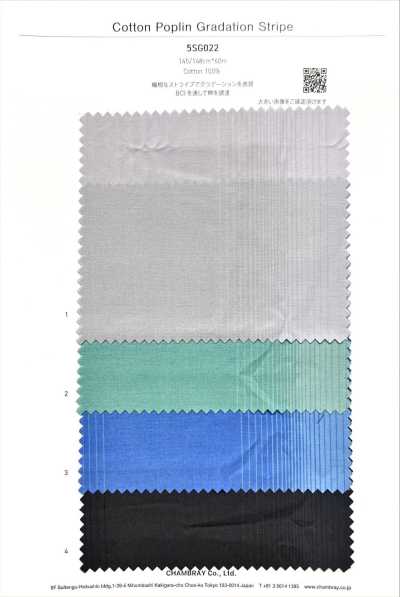
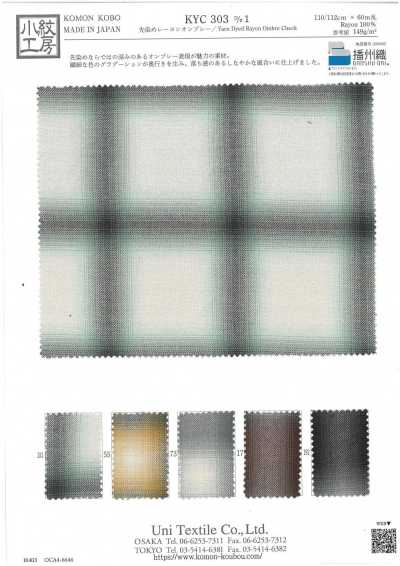
Gradation
A gradation is a pattern composed of two or more colors or tones that transition continuously and smoothly without a strong boundary.
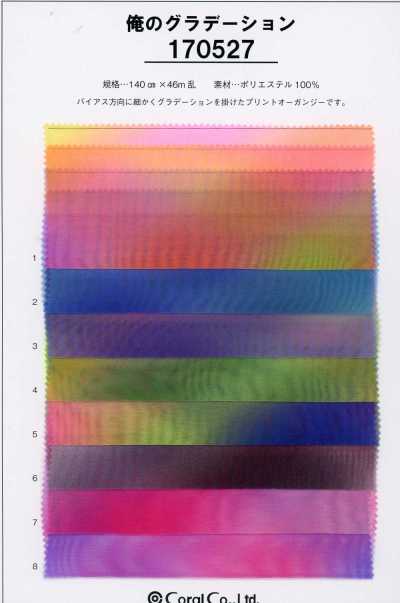
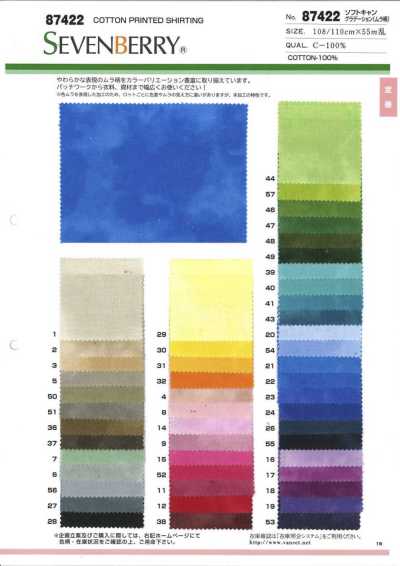
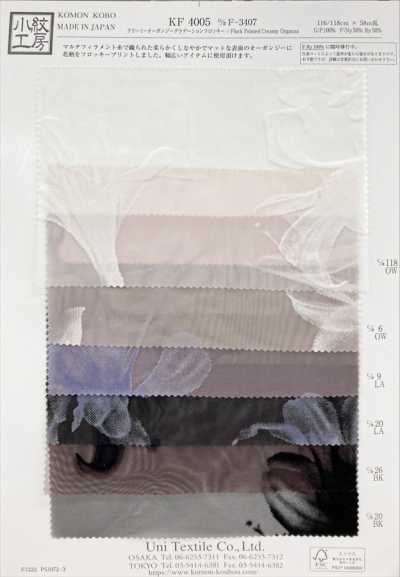
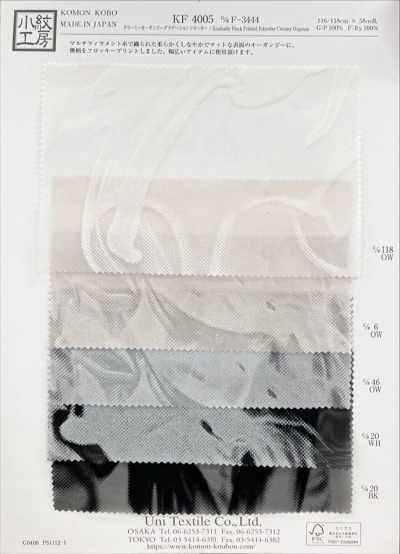
Contents5 sections
Definition and Overview
Gradient is a pattern in which one or more of hue, lightness, or saturation changes step by step. It does not refer to a fabric structure or material name, but to a color-and-pattern expression that appears on the surface. Through blurring or transitions in tone, it creates a sense of depth and lightness.
The direction in which the color change progresses, such as warp direction, weft direction, or diagonal direction, varies by fabric. In some cases, it is made up of only different shades of the same color; in others, it transitions continuously into different colors. The direction of the pattern and the range of change greatly affect the appearance of the product.
How the Pattern Is Formed and Its Name
Gradient is expressed not only by continuously rendering color through printing, but also through dyeing-related tonal changes, the arrangement of yarn dyed threads, and differences in weave structure. Depending on the processing method, the clarity of the outline, how colors mix, differences between front and back, and pattern reproducibility will vary.
Ombre is generally used to describe an expression in which color gradually shifts into lighter or darker tones, and it is sometimes treated with a meaning close to gradient. Tie-dye, on the other hand, is characterized by irregular color changes caused by tying or uneven dyeing, so its appearance differs from gradient, which aims for a uniform and continuous transition.
- Horizontal gradient in which color shifts sideways
- Vertical gradient in which color shifts up and down
- Radial gradient in which color changes outward from the center
- Blur-style gradient with softened color boundaries
Main Applications and Seasonality
It is used for items such as blouses, shirts, dresses, skirts, gowns, and scarves, where the surface area can be used to show color transitions. In fabrics with drape and sheerness such as chiffon, georgette, and satin, the way colors appear through layering also becomes a design element.
Expressions that transition from pale colors to brighter ones, and materials with sheerness, are often used in spring and summer planning, while deep tonal variations and brushed materials are also used in autumn and winter. However, the seasonal impression is determined by the combination of color scheme, material, fabric weight, and product design.
Notes on Fabric Selection and Cutting
When selecting fabric, confirm the direction of the color change, whether the pattern repeats within one roll, and the range of the pattern needed for one garment. In particular, with large gradients, the width of the fabric and the layout of the pattern may make it impossible to place the dark or light areas where intended.
Before cutting, decide the pattern placement for each piece and review it so the flow of color does not look unnatural on the left and right body panels, sleeves, collar, and so on. Pattern matching may be required to align color differences at the seams, and extra fabric may need to be allowed for more than usual.
Printed fabrics may show differences in color tone and pattern placement depending on the lot or position within the roll. In mass production, it is important to share the pattern direction, reference position, and allowable range using a sample roll and cutting instructions, and to check how the pattern appears across the entire roll before cutting.
Frequently Asked Questions
What is the difference between gradient and ombre?
Both refer to expressions in which color changes gradually, and in practice they are sometimes used with similar meanings. Gradient broadly refers to continuous color change in general, whereas ombre is often used as a term for the transition between light and dark tones. Check the product's pattern description and the actual item.
Does gradient fabric require more fabric?
It may increase depending on the direction of the pattern and the specified color positions. This is because conditions such as matching the light and dark areas at the top and bottom or left and right of the body, or aligning the color flow between the sleeves and body, make it harder to arrange the layout freely. Confirm the pattern placement before calculating the required quantity.
What is the first thing to check when cutting gradient fabric?
First, confirm the direction of the color change relative to the selvedge, the pattern repeat, and the position of the light and dark areas within one roll. Then decide which colors should be placed on which parts of the product. Clearly stating the top and bottom, front and back, and the reference color position in the cutting instructions helps prevent misunderstandings.