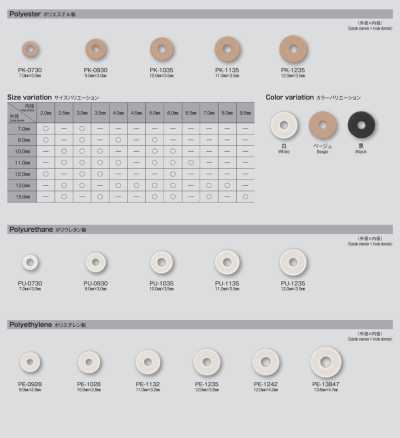
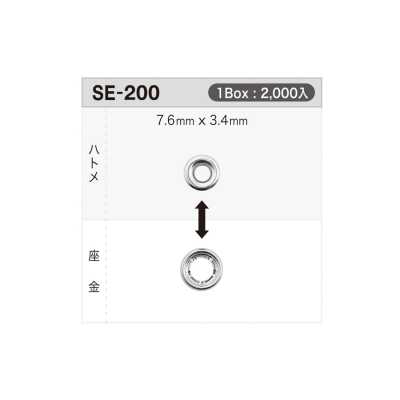
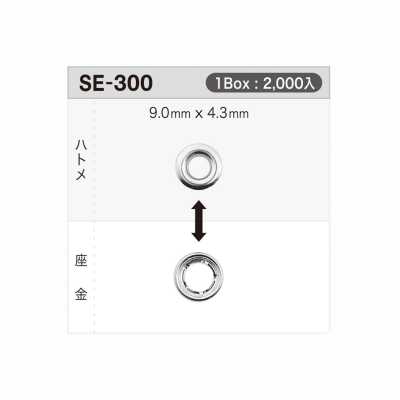
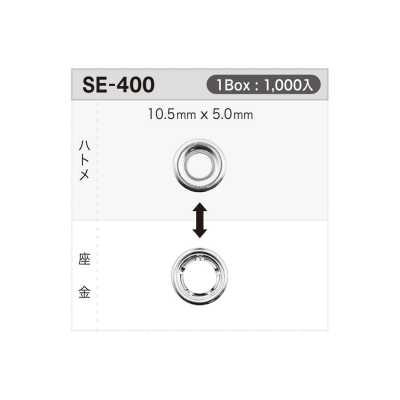
Eyelet Washer
A washer is a ring-shaped backing part used in combination with cylindrical hardware such as eyelets to sandwich textile and reinforce the area around a hole while improving retention.
Contents6 sections
Definition and Structure
A washer is a ring-shaped metal part placed mainly on the back side of an eyelet. By inserting the eyelet tube through the hole in the washer and crimping it, the textile is sandwiched between the eyelet on the front and the washer on the back, distributing the load around the edge of the hole.
In general, eyelets and washers are designed as a matched pair of specifications. They are not used by themselves, and it is important to verify the compatible eyelet, setting tool, and installation method as a set.
- Front side: the eyelet, which covers the edge of the hole and also serves as a design element
- Back side: the washer, which supports and reinforces the textile
- Joint: the crimped section that expands and secures the eyelet tube
How to Read Materials and Sizes
Washers are made from metals such as brass, iron, and stainless steel, and may have finishes such as plating or coating applied to the surface. Material and surface treatment are related not only to appearance, but also to corrosion resistance, compatibility with metal detectors, and considerations for products that touch the skin.
Size is often indicated based on the matching eyelet designation or inner diameter. However, even with the same nominal size, the washer outer diameter, thickness, leg shape, and compatible setting tool may differ, so confirmation against the drawing or actual sample is necessary.
- Inner diameter: a dimension related to compatibility with the cord to be passed through and the eyelet tube
- Outer diameter: a dimension related to the area pressing on the textile and its appearance
- Thickness: a dimension related to ease of crimping and stability of the finished result
Installation Method and Equipment
During installation, a pilot hole is made in the textile, the eyelet is inserted from the front side, and the washer is placed on the back side. Then, pressure is applied with a hand press or press machine fitted with the corresponding setting tool, and the eyelet tube is expanded evenly to crimp it.
If the dimensions or shape of the setting tool do not match, defects such as the washer tilting, the tube cracking, or insufficient crimping can occur. Before full production, perform trial setting with the actual textile and interlining layered together, and check the front and back finish and holding strength.
- Confirm the matching specifications of the eyelet and washer
- Confirm compatibility between the press and setting tool to be used
- Confirm the position and diameter of the pilot hole
- After trial setting, check tensile strength and rotation
Main Uses and Compatibility with Textiles
Eyelets with washers are used for openings for threading cords or cords, ventilation holes, and decorative holes that also provide reinforcement. They may be used in products where force is likely to be applied around the hole, such as outerwear, pants, denim, bags, and workwear.
On lightweight fabrics, highly stretchable knits, and fabrics with a coarse weave structure, the textile may tear or ripple even when a washer is used. If necessary, reinforce the attachment area with fusible interlining, and select a leg length and washer diameter suited to the fabric thickness.
Points to Note and Differences from Similar Terms
A washer is a component of an eyelet and has a different role from the eyelet itself, which is visible on the front side. Likewise, a button seal used to protect textile in press fasteners is a similar reinforcing part, but the fitting it is combined with, its shape, and its purpose are different. In specifications, indicate not only the part name but also the matching counterpart part.
Moisture, sweat, washing, and chemicals may cause metal to rust or discolor. Plated products should also be checked for changes due to friction. For products that require metal detection, confirm whether they are compatible, and if nickel consideration is required, also check the scope of nickel-free specifications.
- Eyelet: the tubular fitting visible on the front side
- Washer: the ring-shaped part on the back side of the eyelet that supports the textile
- Button seal: a part mainly used to protect textile with a different type of fastener
Frequently Asked Questions
Can a washer be used without an eyelet?
A washer is generally used together with an eyelet and is not suitable for reinforcing a hole by itself. It functions by passing the eyelet tube through the washer and crimping it. Please confirm the specifications of the eyelet and washer to be used, as well as compatibility of the setting tool, as a set.
What should I watch out for when attaching an eyelet with a washer to thin fabric?
With thin fabric, the hole may widen during crimping, or the area around the hole may tear during use. Reinforce the back side of the attachment area with fusible interlining or similar material, and avoid overly large washers or long legs. Check the appearance, tensile strength, and fabric rippling through trial setting.
Does nickel-free prevent discoloration and rust?
Nickel-free indicates a specification that mainly considers the use of nickel, and does not mean that all discoloration or rust will be prevented. Durability varies depending on the type of metal, surface treatment, usage environment, washing conditions, and other factors, so evaluation according to product conditions is necessary.
- Search products for "eyelet washer"
- Products with material "Metal"
- Products with material "Brass"
- Products with material "Stainless Steel"
- Products with material "Iron"
- Products for style "For Outerwear/blousons/coats"
- Products for style "For Pants"
- Products for style "Outdoor"
- Products for style "For Uniforms/Workwear"
- Products for style "For Denim"
- Products for style "For Bags"
- Browse Press Fasteners And Eyelets products