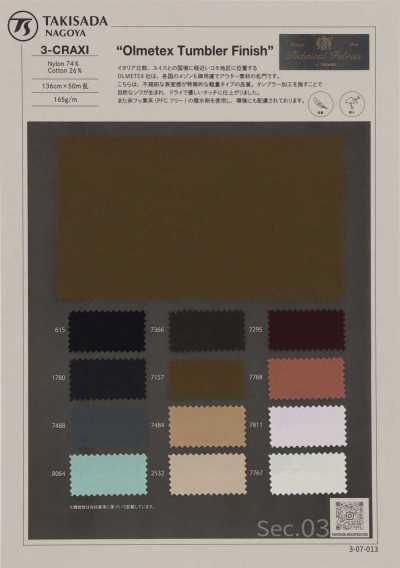
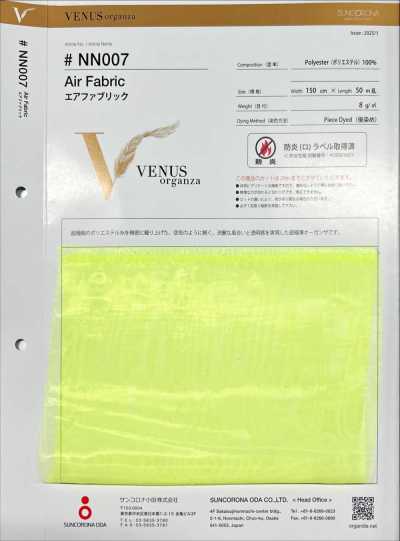
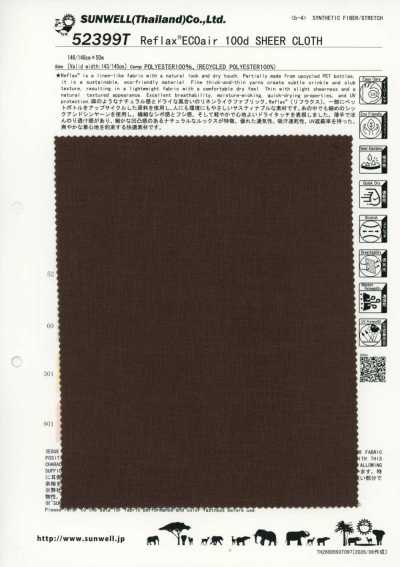
Dry Touch
Dry Touch is a textile hand that feels smooth on the skin, not sticky, and has a dry feel.
Contents5 sections
Definition and Overview
Dry Touch is not the name of a fabric structure or fiber, but an expression for the hand feel of a material when touched. It is used for fabrics that have little moist or greasy feel and instead feel smooth and dry, with moderate firmness or crispness.
It is expressed through methods such as using high-twist yarns, creating fine surface irregularities or texture, and reducing fuzz. It can be seen in fabrics made from synthetic fibers such as polyester and nylon, as well as linen, cotton, and regenerated fibers.
How to Distinguish Hand Feel and Function
Visually, it tends to have a matte, cool-looking appearance, and may have texture, a linen-like look, or fine irregularities. However, Dry Touch is a term for hand feel and does not uniformly indicate appearance, thickness, sheerness, or luster.
Dry Touch is not a label that directly guarantees performance such as absorbing sweat or drying quickly. Water absorbency, moisture absorbency, quick-drying, and breathability are separate properties. In planning, evaluate hand feel confirmation and performance test results separately.
- It can help achieve a smooth feel and good separation from the skin.
- It may be accompanied by the crisp feel of high-twist yarns.
- Due to surface irregularities, the contact area may feel smaller.
- The feel varies greatly depending on the fiber type, structure, and finishing.
Main Applications and Seasons
Taking advantage of its skin-separating hand feel, it is used for spring and summer shirts, blouses, dresses, skirts, pants, and similar items. In knits that combine lightness and elasticity, it is also suitable for cut-and-sew items, sportswear, and innerwear.
However, season and application are not determined by Dry Touch alone. Even in garments that need warmth or emphasize drape, a dry touch may be incorporated depending on the blend and design.
Selection and Handling Notes
Rather than relying on a swatch alone, if possible check the hand feel, sheerness, drape, stretch, and puckering after sewing using a garment length. For thin fabrics with high-twist yarns or surface irregularities, sewing misalignment or seam shrinkage may occur, so adjust the needle, thread, feed amount, and seam conditions to suit the fabric.
Shrinkage and changes in hand feel vary depending on the fiber type, dyeing process, and finishing. Always follow the care label and specified conditions for each fabric when washing or ironing, and before mass production it is important to confirm washing test results, shrinkage rate, skew, and surface changes.
Frequently Asked Questions
Does Dry Touch mean the same as quick-drying absorbency?
No, they do not mean the same thing. Dry Touch mainly indicates a smooth, dry hand feel when touched, while quick-drying absorbency indicates performance that allows moisture to be absorbed and dried quickly. Some fabrics have both properties, but each should be confirmed separately through specifications and test results.
Are Dry Touch fabrics always for summer?
In many cases they are used for spring and summer clothing to take advantage of their cool feel and skin separation, but they are not necessarily limited to summer. Warmth and the wearing season vary depending on fabric weight, thickness, structure, blend ratio, and whether there is a lining, so the decision should be made based on the design of the finished product.