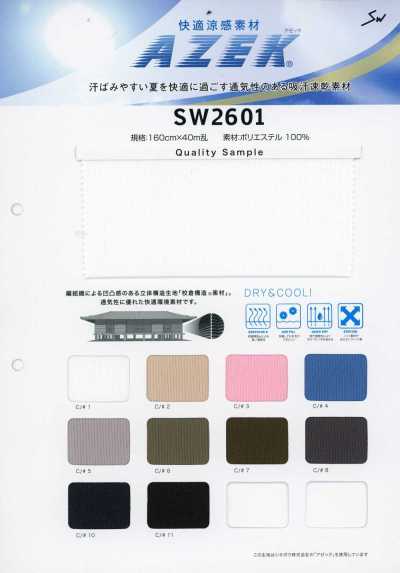
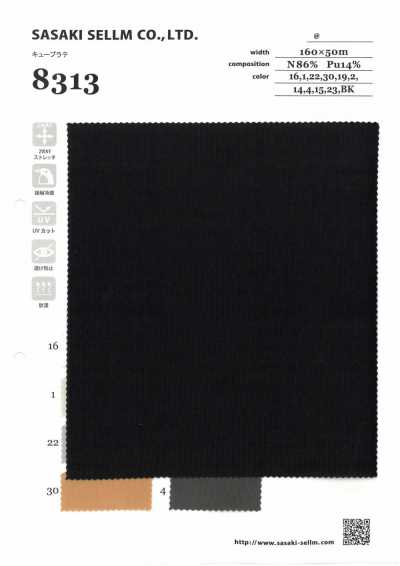
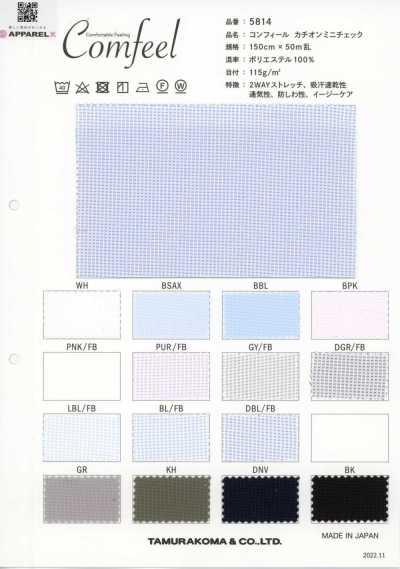
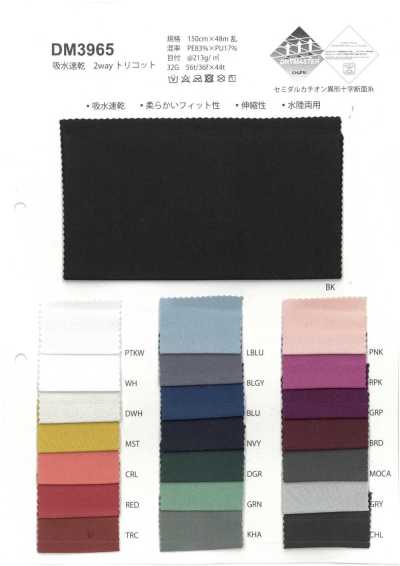
Moisture-wicking And Quick-drying
Moisture-wicking and quick-drying is a function that absorbs sweat and moisture from the surface of the textile, spreads it between the fibers, and makes it easier to evaporate, reducing stickiness inside clothing.
Contents6 sections
Definition and Overview
Moisture absorption and quick-drying is a function that moves and spreads moisture such as sweat generated during wear from the skin side to the outside of the textile, speeding up drying. It is added by combining fiber shape, knitting or weaving structure, textile design, and post-processing.
“Moisture absorption” refers to the property of taking in moisture, and “quick-drying” refers to the property of moisture drying easily after washing or after sweating. The two are related, but performance varies depending on the material and structure.
Features
By spreading sweat instead of keeping it in one place, it secures a larger evaporation area and helps reduce stickiness against the skin and a damp feel. When combined with breathable lightweight fabric or mesh structures, it can more easily create a cool feeling.
It is often seen in textiles made with synthetic fibers such as polyester and nylon, but the function cannot be judged by the material name alone. Drying performance also changes depending on the blend with moisture-absorbing fibers such as cotton, as well as the thickness, density, and structure of the textile.
- Makes it easier to move sweat from the skin side to the outside.
- Spreads moisture within the textile and promotes evaporation.
- It is a function separate from cool to the touch and breathability, but it may be used together with them.
Main Applications
It is used in clothing that considers sweating and washing frequency, such as sportswear, T-shirts, polo shirts, innerwear, underwear, and uniforms. In addition to spring and summer items, it is also used in year-round items where you want to reduce dampness during exercise or when layering.
In knitted fabrics such as pique knit, jersey, tricot, and mesh, the structure may combine breathability and texture from the structure with moisture absorption and quick-drying functions. For shirt fabrics, they are selected for their smooth feel and easy drying after washing.
Selection and Handling Notes
Depending on the application, check moisture absorbency and diffusion, drying performance, breathability, stretchability, sheerness, and fabric weight. For uses involving sweat, it is easier to select if you check stickiness against the skin, rewetting, and drying behavior in conditions close to actual wear.
Moisture absorption and quick-drying is different from water repellency, and it is not a function that repels water. It also serves a different purpose from waterproof and breathable. Washing and the use of fabric softener may change the surface condition and reduce the effectiveness of the finish, so check the washing instructions and handling instructions for each material.
In sewing, be careful of needle holes in thin textiles, waviness in seams, and snagging in mesh. Especially for knits, it is important to choose stitching methods and thread suited to the stretch, and to check the feel and dimensional change after sewing.
Differences from Similar Terms
Moisture-wicking quick-drying is often used with nearly the same meaning as moisture absorption and quick-drying, as a term describing a function that absorbs sweat and dries easily. However, evaluation methods and the scope of claims differ by textile, so check specific performance in test information and specifications.
Cool to the touch is a property that makes something feel cool when touched, breathability is how easily air passes through, and water-repellent finishing is a function that makes water droplets easier to repel. These may be used together with moisture absorption and quick-drying, but they are not the same performance.
Frequently Asked Questions
Is moisture absorption and quick-drying textile a textile that does not absorb sweat at all?
No. Moisture absorption and quick-drying textile is not meant to avoid absorbing sweat; it is a textile designed to move and spread moisture from the skin side so it dries more easily. The amount absorbed, speed of diffusion, and drying time vary depending on the fiber, structure, thickness, and finish.
Can moisture absorption and quick-drying and water-repellent finishing be used together?
Depending on the application, they are used together, but the areas where they work and their purposes differ. Moisture absorption and quick-drying mainly makes it easier for moisture such as sweat to move and evaporate within the textile, while water repellency makes water droplets easier to repel on the surface. Please check the specifications for compatibility conditions.
- Search products for "Moisture-wicking and quick-drying"
- Products for style "Cool-touch And Cooling Materials"
- Products for style "For Innerwear"
- Products for style "For Knits/cut-and-sewn Garments"
- Products for style "For Sports"
- Products for style "For Uniforms/Workwear"
- Products for style "Functional"
- Browse Textile products