Braided Elastic
Braided elastic is a stretchable accessory material made by combining fiber threads around an elastic thread core, finished in a cord-like or narrow-width form.
Contents6 sections
Definition and Overview
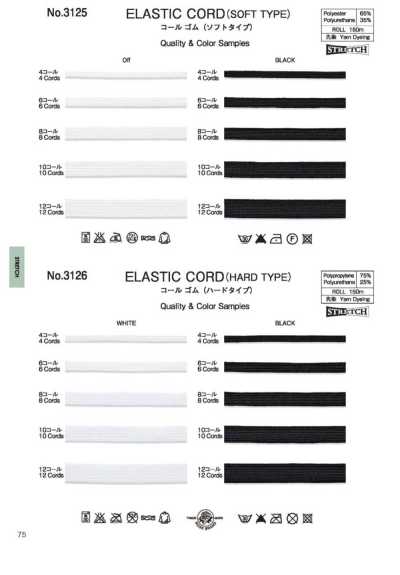
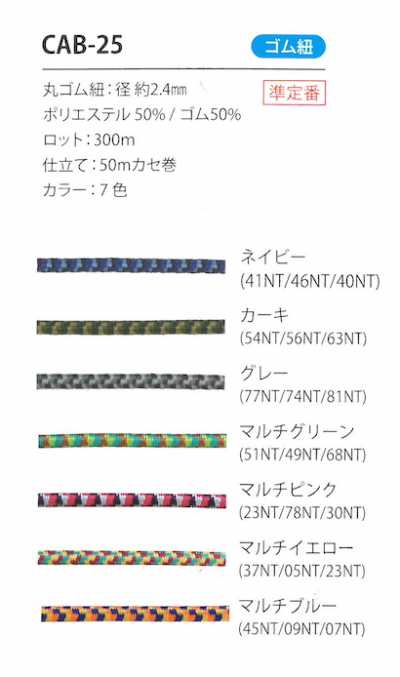
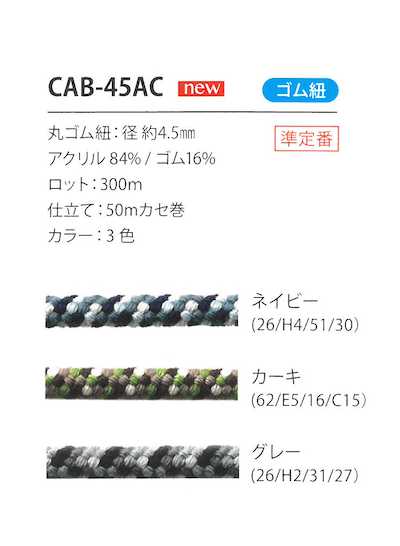
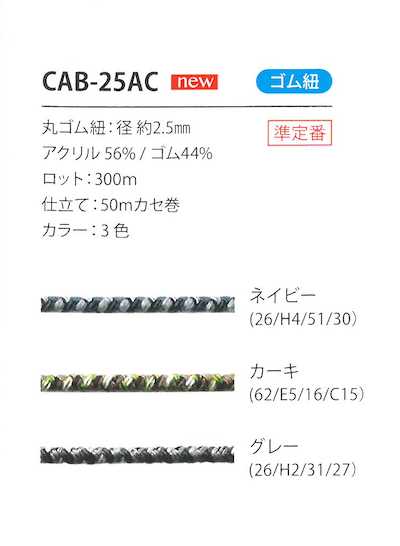
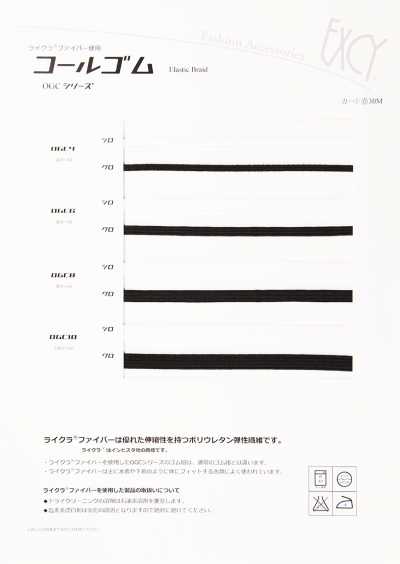
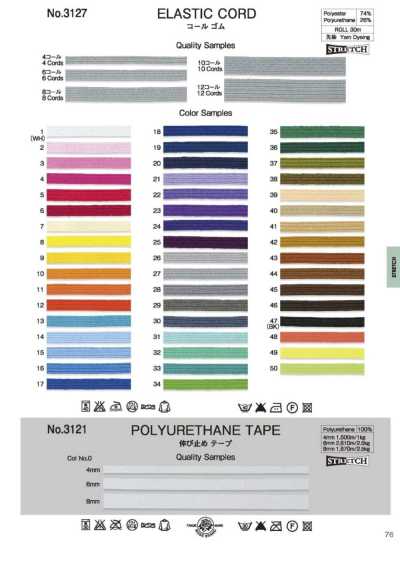
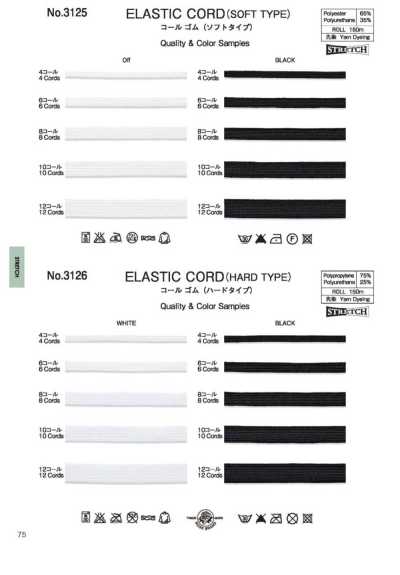
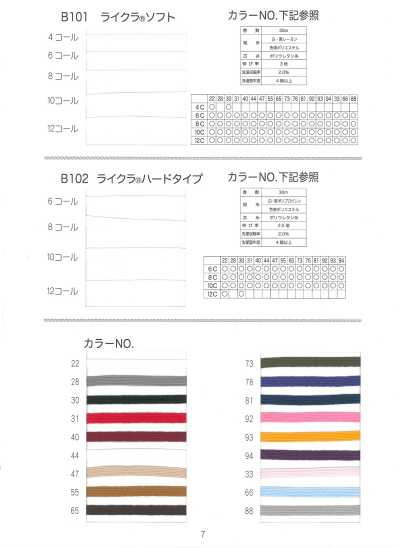
Braided elastic is a stretch material made by combining textile yarns around a rubber yarn or elastic yarn core, creating a cord-like or narrow-width form. The round cross-section type is most common, but flat shapes are also used depending on the application. It is used for gathering garments and for elasticity in drawstring channels.
Materials and Structure
The core material is generally polyurethane-based elastic yarn or rubber yarn, and the surface is covered with yarn such as polyester or nylon. The surface yarn affects skin feel, abrasion resistance, appearance, and dyeability.
The braided structure is characterized by multiple yarns crossing diagonally. It differs from woven elastic, which is made with warp and weft, and knitted elastic, which is made with loops.
How Width and Stretch Are Expressed
Braided elastic is selected by checking not only thickness, width, length, and color, but also the amount of stretch and the recovery performance. Round types are often indicated by diameter, while flat types are often indicated by width. Even with the same stated size, firmness and the feel when stretched vary depending on the braid density and the amount of core material.
Stretch may be shown as an elongation ratio. However, whether the stated value refers to the amount stretched from the original length or to the length after stretching depends on the specification, so when ordering, confirm the measurement conditions and the required finished dimensions.
- Length before insertion into the product
- Required amount of stretch during use
- Recovery force and recovery speed after stretching
- Thickness or width, and the dimensions of the channel or elastic insertion opening
Main Applications
Round braided elastic is suitable for areas where stretch is needed in narrow openings, such as cuffs, hems, hood openings, around masks, and bag openings. It is also used together with cord stoppers to adjust the fit of openings.
Flat braided elastic is used for narrow gathers and around the waist of lightweight garments. However, in areas where high holding power is required, flat elastic webbing or woven elastic with different widths, thicknesses, and structures may also be compared.
Selection and Handling Notes
When selecting, test not only the stretch required for the application but also the recovery after repeated stretching, ease of insertion during sewing, and the feel when in contact with skin. If it is sewn in place, stretching performance may decrease depending on the needle position and sewing method that damage the elastic yarn.
Elastic yarn can deteriorate due to heat, ultraviolet light, sweat and sebum, detergent ingredients, and aging, leading to overstretching or hardening. Washing and drying conditions should be set according to the materials and accessories of the entire product, not just the braided elastic itself, and excessive heat should be avoided.
Frequently Asked Questions
Are braided elastic and round elastic the same?
Round elastic refers to elastic with a round cross-section, while braided elastic refers to the braided structure. Many round elastics are made as braided elastic, but shape and manufacturing method are different viewpoints. In specifications, listing the shape, thickness, and stretch characteristics together helps prevent misunderstandings.
Will braided elastic stretch out after washing?
It does not necessarily stretch out immediately just from washing, but repeated stretching, heat, ultraviolet light, detergent, and sebum gradually reduce the performance of elastic yarn. It is important to conduct washing tests according to the intended use of the product and to confirm suitability for high-heat conditions such as tumble dryers and irons.
How do you choose between braided elastic, woven elastic, and knitted elastic?
When a narrow cord-like material is needed for a channel, braided elastic is a candidate. Woven elastic is considered for areas where relatively firm holding is required, and knitted elastic is considered for areas where softness or thinness is important. Ultimately, compare actual samples based on the required width, stretch, recovery, and sewing method.
- Search products for "Braided elastic"
- Products with material "Polyester"
- Products with material "Nylon"
- Products with material "Polyurethane"
- Products for style "For Innerwear"
- Products for style "For Lingerie"
- Products for style "For Sports"
- Products for style "For Kids"
- Browse Elastic Band products