Bodkin
A bodkin is a sewing tool used to pull elastic webbing, round elastic, or cord through openings such as waistbands and cuffs, while securing the material at the tip and threading it through.

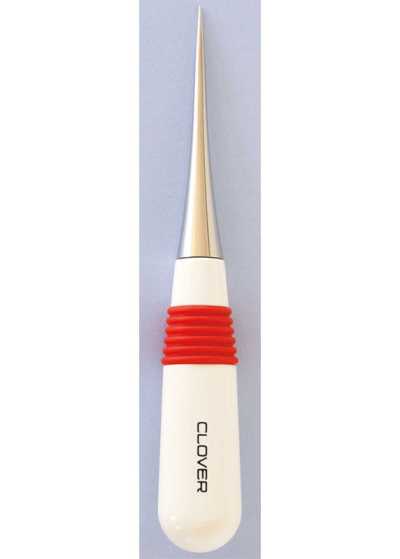
Contents6 sections
Definition and Overview
A bodkin is an aid used to thread elastic or cord through a tubular sewn section. It secures the material to be threaded with a clip, clamping section, or hole at the tip, and is used by holding the other end and advancing it through the opening. In English, it is called a bodkin.
A bodkin does not refer to the elastic itself; it is a tool used in the process of inserting elastic. For that reason, it is distinguished from types such as elastic webbing, round elastic, and corded elastic, as well as from construction methods such as woven elastic, knitted elastic, and braided elastic.
Structure and Compatible Materials
The body is long and slender, and consists of a tip that holds the material being threaded and a rear end for hand operation. The clip type is easy to grip flat elastic, while the shape that is inserted through a hole and fixed is also used for thin cords and round elastic.
A bodkin itself does not have structural classifications for elastic such as woven, knitted, or braided. The elastic to be threaded is made by weaving, knitting, or braiding around elastic yarn, and its thickness, stretch characteristics, and the tendency of the ends to fray differ depending on the structure.
- Elastic webbing: a material that is easy to use in wide openings.
- Round elastic: used for hood openings and thin cord channels.
- Corded elastic: narrow in width and also suitable for specifications using multiple cords side by side.
Main Applications and Working Method
It is used when threading elastic or cord through openings made by sewing, such as the waist of pants or skirts, sleeve openings, hems, hood openings, and pouch openings. It is a tool used in a wide range of processes, from sample sewing before mass production to repairs.
Secure the end of the material firmly to the tip and advance it little by little so it does not twist inside the opening. The opposite end of the material can easily slip out, so it is easier to work if you temporarily secure it in advance or leave enough length.
Selection and Handling Precautions
Select a bodkin according to the width of the opening and the thickness or width of the elastic or cord. If the tip is too large, it can catch on the opening; if it is too small, it becomes difficult to hold the material securely. When prototyping, confirm it in the actual opening, including the seam allowance.
If elastic is stored in a stretched state for a long time, or if it is affected by high temperatures, ultraviolet light, detergent ingredients, or similar factors, its recovery from stretching may weaken. It is important not to pull too hard with the bodkin and damage it, and to choose elastic that matches the washing conditions and product specifications.
After threading, check for twisting of the elastic, overlap at the ends, and the stitching position. If knots or joints are bulky inside the opening, they can cause discomfort or snagging during wear, so consider the sewing method according to the specification.
Differences from Similar Terms
A needle threader is a small tool for threading sewing thread through the eye of a needle, and its purpose differs from that of a bodkin. A bodkin set is a sharp-tipped tool used for aligning seam allowances, turning corners, marking hole positions, and similar tasks, and its main purpose is not to hold and pull in elastic.
Stretch rate is a specification term indicating how much elastic lengthens when pulled. A bodkin is not a term for stretch rate, nor is it a term indicating the width or material of elastic.
Frequently Asked Questions
Can a safety pin be used instead of a bodkin?
For thin elastic or short openings, a safety pin may be used instead. However, a safety pin can come loose or damage the textile. For wide elastic, long openings, or work involving mass production or inspection, using a bodkin suited to the holding power and ease of operation is more stable.
Why does elastic come out partway through when using a bodkin?
The main causes are insufficient fixation at the tip, the bodkin or elastic being too large for the opening, or the tip catching on seam allowances or steps. Hold the elastic end securely, confirm the width of the opening and the seam finish, and then advance little by little without forcing it.