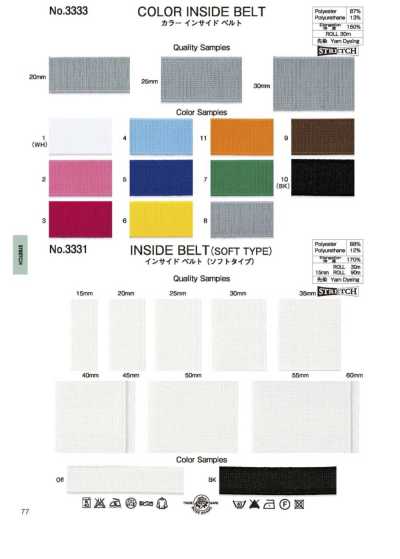
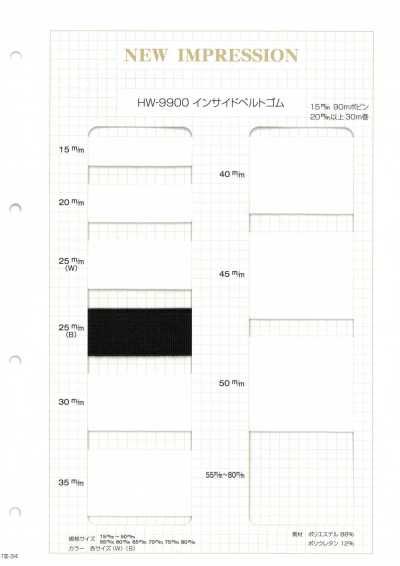
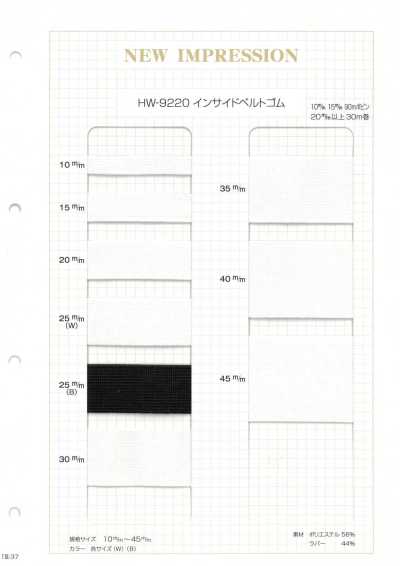
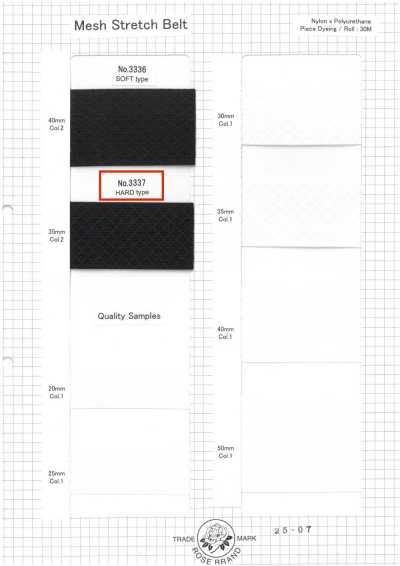
Inside Belt
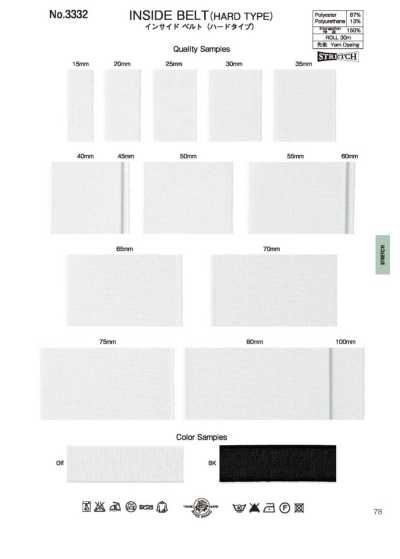
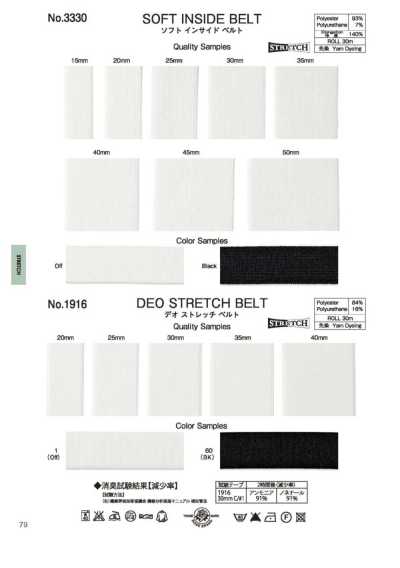
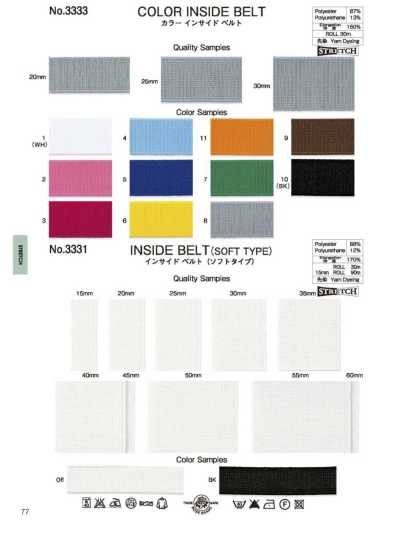
An inside belt is a band-shaped elastic sewn to the inside of the waist of pants or skirts, used as an accessory material to improve fit and reduce shifting during wear.
Contents6 sections
Definition and Overview
An inside belt refers to flat elastic attached mainly to the inside of the waist belt of pants or skirts. It is characterized by giving the waist area moderate hold and followability without greatly changing the appearance of the outer fabric.
Unlike a specification in which elastic is inserted through an opening, it is often sewn directly to the inside of the waist. The finished fit and surface waviness vary depending on the sewing position, the amount of stretch applied during sewing, and how the ends are finished.
Materials and Structure
In general, it is made with stretch polyurethane thread or elastic thread as the core, covered with thread such as polyester or nylon. Because it touches the skin side, surface smoothness, thickness, and firmness also affect the wearing feel.
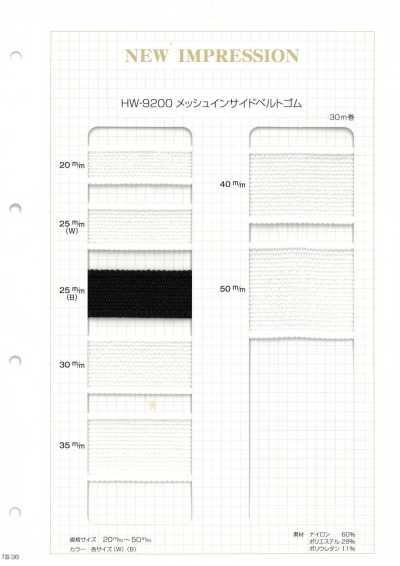
Structures include woven elastic, knitted elastic, and braided elastic. Woven elastic tends to hold its shape relatively well, while knitted elastic tends to be softer and lighter. Braided elastic can also be made in a rounded shape, but a flat shape is commonly used for inside belts.
- Woven elastic: Made with a woven structure, and tends to provide firmness and stability.
- Knitted elastic: Made with a knitted structure, and tends to have a soft, light feel.
- Braided elastic: Elastic made by braiding thread, often used in cord-like or round shapes.
How to View Width and Stretch
Width is selected based on the finished width of the waist belt, seam allowance, and compatibility with the sewing machine. Narrow items are less noticeable, while wider items can distribute force around the waist more easily; however, depending on thickness and firmness, they may feel bulky.
Stretch may be indicated by elongation rate. This is an index that shows how much an elastic item stretches when a fixed length is pulled. However, the actual wearing feel depends not only on elongation rate but also on the force required to stretch it and its ability to return from the stretched state.
Main Applications and Selection
It is used for slacks, uniforms, skirts, and similar items when the goal is to reduce waist gaping and shifting. It is used differently according to the product design and purpose, such as a specification that places it only at the center back to allow movement, or a specification that places it along the inside circumference of the waist.
When selecting it, check together the elastic finished length relative to the product dimensions, required stretch, thickness, skin feel, and sewing method. For products with thin outer fabric, it is important to confirm through prototypes whether the elastic step and stitching will show through to the outside.
- Fit and strength of hold around the waist
- Length to be sewn and the amount of stretch applied during sewing
- Likelihood of showing through, waviness, and sewing puckering in the outer fabric
- Feel against the skin and the stretch needed when putting on and taking off
Handling and Differences from Similar Terms
Over long periods of stretching, heat, ultraviolet light, sweat and sebum, and washing and drying conditions, elastic may lose its recovery or become hardened. In line with the product's expected washing conditions, check post-sewing shrinkage, color transfer, and the condition after repeated stretching.
While flat elastic broadly refers to any flat elastic, inside belt is a term that indicates the purpose and specification of being used on the inside of the waist. Waistband interlining refers mainly to a band-shaped accessory used on the inner waistband of slacks, and some types have functions such as non-slip. The two may also be used together.
Frequently Asked Questions
Are inside belts and flat elastic the same?
Flat elastic is a broad term for elastic with a flat shape, while inside belt is a term that indicates a use and specification mainly for the inside of the waist. Flat elastic is often used for inside belts, but the criteria indicated by the names are different.
Why does the stretch of an inside belt not recover?
Storage or wear while excessively stretched, heat, ultraviolet light, sweat and sebum, and washing and drying conditions can all have an effect. Durability differs by material and structure, so washing tests and repeated-stretch checks close to the actual product conditions are necessary.