Beading Lace
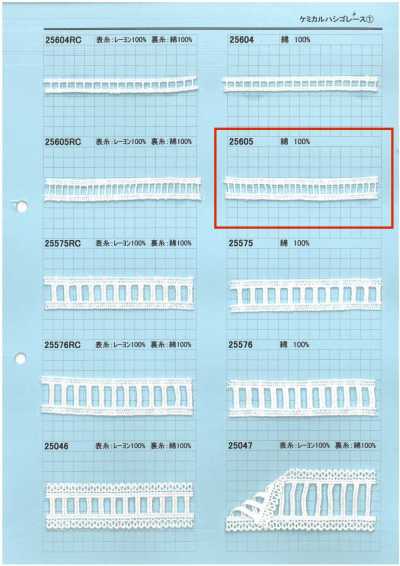
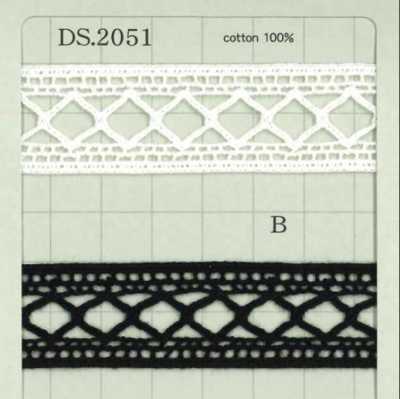
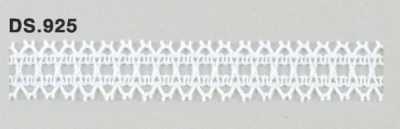
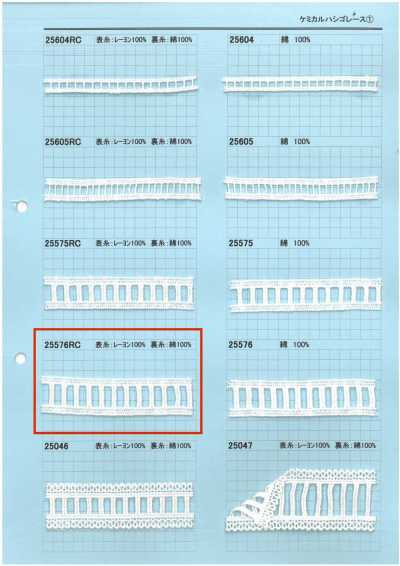
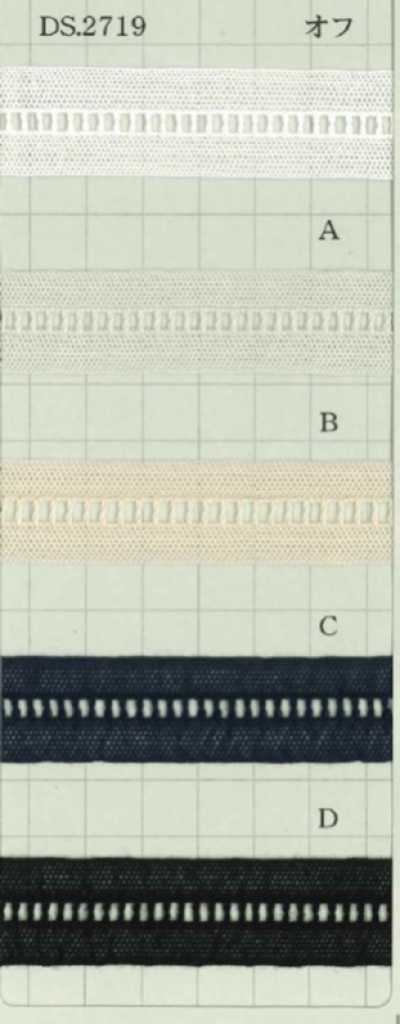
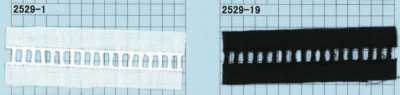
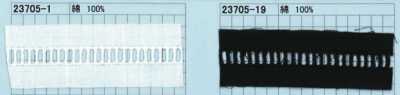
Beading lace is a narrow lace with regular openwork holes and connecting threads between parallel edges, allowing ribbon or tape to be threaded through for decoration.
Contents6 sections
Definition and Overview
Ladder lace is a lace with continuous holes and connecting sections like the rungs of a ladder, set between the ground structures at both edges. Because it is typically used for threading ribbon through the holes, it is called beading lace in English. It is also used on its own as an edging with openwork patterns.
“Beading” originally can refer to a structure for passing through or securing decorative elements. In ladder lace, it mainly means the holes for threading ribbon, and does not refer to lace with beads sewn on.
Construction and Materials
Depending on the product, it may be made by braiding yarns, by knitting, or by forming patterns like embroidery. The spacing of the connecting sections, the size of the holes, and the edge pattern affect the width of ribbon that can be threaded and the finished appearance.
Materials include cotton, polyester, and nylon. Cotton can create a natural look and feel, while synthetic fibers may be chosen for finer yarn usage and easier handling. Product numbers that include stretch yarn may have different stretch characteristics even when the shape is the same.
Appearance and Main Applications
The regular sequence of holes creates a straight, neat impression, and the color and material of the threaded ribbon can add contrast. When no ribbon is threaded, it becomes a modest decoration with a light, sheer look.
It is used for seams, hems, sleeve openings, and necklines in lingerie, blouses, dresses, children’s clothing, and nightwear. A common construction is to layer it over gathered fabric or to thread ribbon through it as an accent.
- Match the inner width of the holes to the width of the ribbon to be threaded.
- For pieces with large edge decoration, confirm the direction that will face the front.
- Set the ribbon tying position to match the specifications, such as the center front, side, or center back.
Selection and Handling Notes
When selecting, check not only the overall width of the lace, but also the inner width of the ribbon holes, the strength of the connecting yarns, the shape of the edge, and the required length. When using it on curves, test sewing to confirm whether it stretches and how easily it bends, which helps reduce waviness and puckering.
Thin connecting yarns and cut areas may fray, distort, or break if pulled strongly. In sewing, watch for snagging by needles or presser feet, and consider finishing the ends by sewing them in, turning them back, or applying anti-fray treatment as required by the specification.
Shrinkage during washing, color fading, and heat resistance may differ between the lace itself and the ribbon threaded through it. Follow the product washing instructions and material characteristics, and for especially delicate lace consider using a laundry bag or a gentle wash. Check ironing on an inconspicuous area first.
Differences from Similar Terms
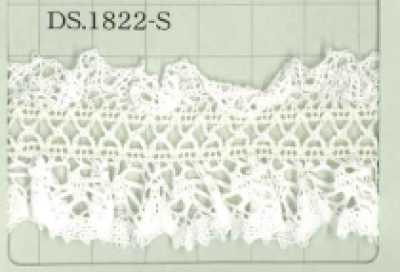
Torchon lace is a type of lace made by braiding yarns, while ladder lace is a name that focuses on a shape with continuous holes that can take ribbon. As a result, some torchon lace may include ladder-like design elements.
Stretch lace is a name that focuses on whether it has elasticity. Some ladder lace is stretchy and some is not. Chemical lace and raschel lace are also classifications based on production method and structure, so their basis is different from shape-based classification for ladder lace.
Frequently Asked Questions
What width of ribbon should be threaded through ladder lace?
Choose a width that is slightly narrower than the inner width of the lace holes and can be threaded without strain. If it is too wide, the connecting yarns may be pulled and distort; if it is too narrow, the ribbon will be less noticeable. It is important to use the actual ribbon and confirm ease of threading and appearance with a sample.
Does ladder lace stretch?
Elasticity depends on the material and structure, and not all ladder lace stretches. Product numbers that use stretch yarn may stretch, but the degree of stretch may also differ between the lengthwise and crosswise directions. Before sewing, check the needed direction for stretch and recovery.
Does the edge of ladder lace fray?
The likelihood of fraying at the cut edge depends on the production method, yarn, and density. If the part containing the connecting yarns is cut, yarn ends may come loose, so use a construction that allows sewing in or folding back. If the edge will be visible, check the suitability of anti-fray treatment on an inconspicuous area.
- Browse Insertion Lace products
- Products with material "Cotton"
- Products with material "Polyester"
- Products with material "Nylon"
- Products for style "For Lingerie"
- Products for style "For Shirts/blouses"
- Products for style "For Skirts And Dresses"
- Products for style "For Formal Wear"
- Products for style "For Nightwear"
- Products for style "For Costumes/dresses"
- Browse Lace products