Velvet Ribbon
Velvet ribbon is a narrow decorative ribbon with a short pile on the surface, characterized by a deep luster and a soft touch.
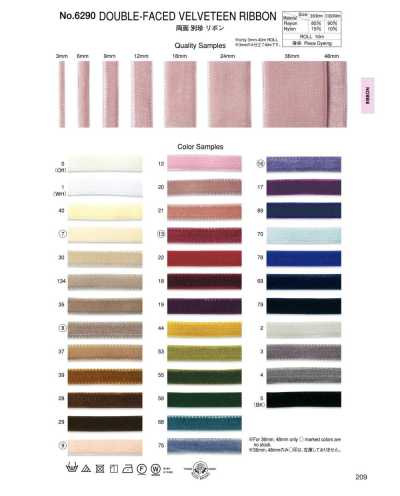
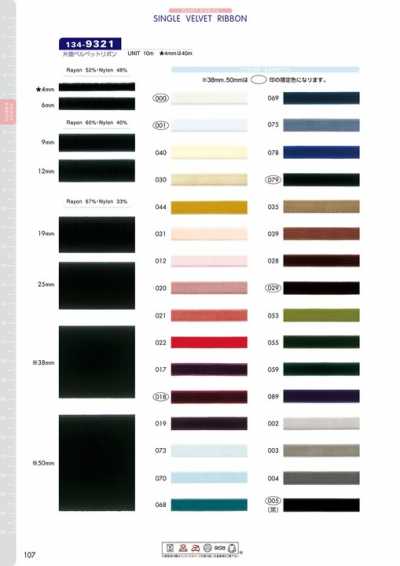
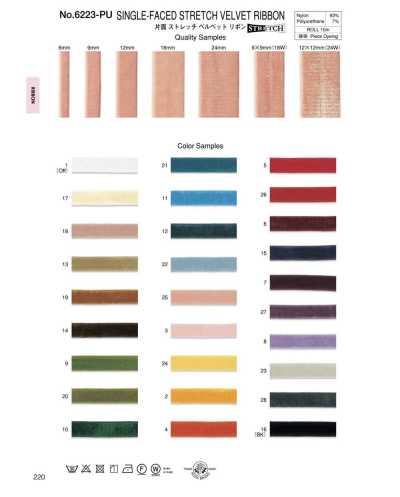
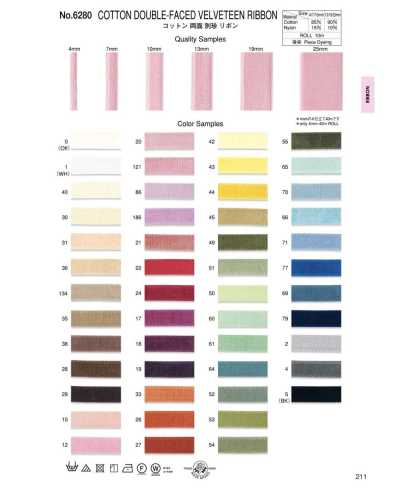
Contents6 sections
Definition and Overview
Velvet ribbon is a narrow ribbon with a velvet-like pile surface on the front side. Because the way the pile lies changes how light reflects, the depth of color can look different depending on the viewing angle and how it is folded. It is used for garment trimming and decorative ties.
“Velvet” originally refers to woven fabric with a pile, but in ribbons, knitted or brushed materials with a similar look and feel may also be called velvet ribbon. When purchasing, it is important to check the composition and manufacturing method individually.
Materials and Structure
Most are structured with pile standing on a base fabric, creating a layer of fuzz on the surface. In addition to pile formed by weaving, some are made by brushing a knitted fabric. Depending on the materials of the base fabric and pile, gloss, softness, strength, and behavior during washing will vary.
Materials used include polyester, rayon, nylon, cotton, and silk. Those made with synthetic fibers tend to produce a more uniform sheen, while those containing natural fibers have a calmer texture suited to the material. The presence or absence of stretch also differs by structure.
How Width Is Shown and Main Applications
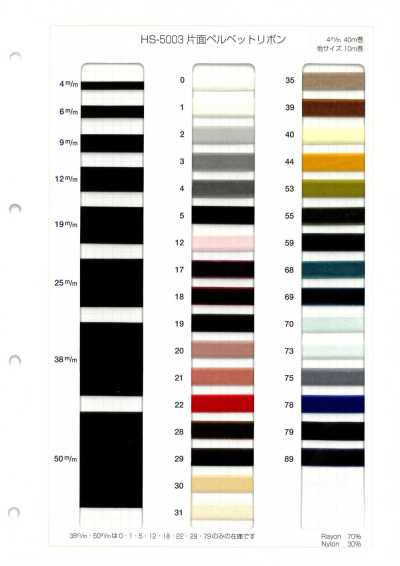
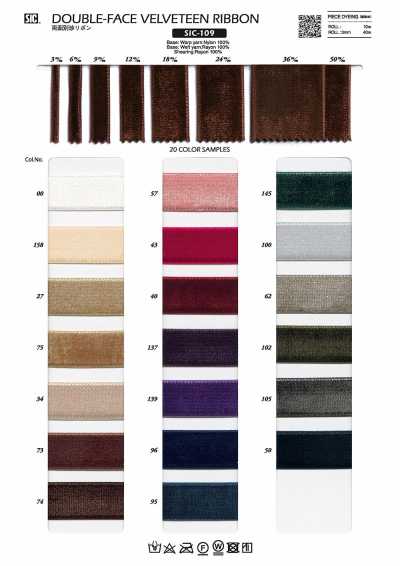
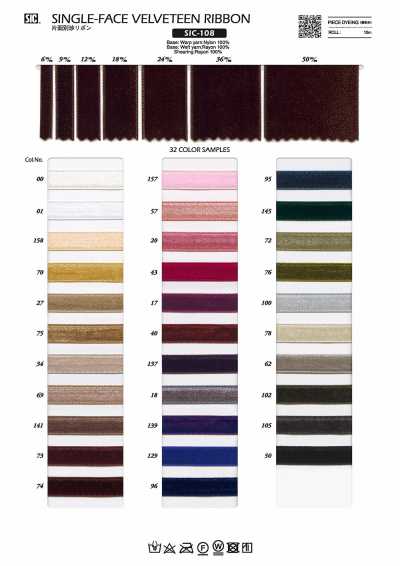
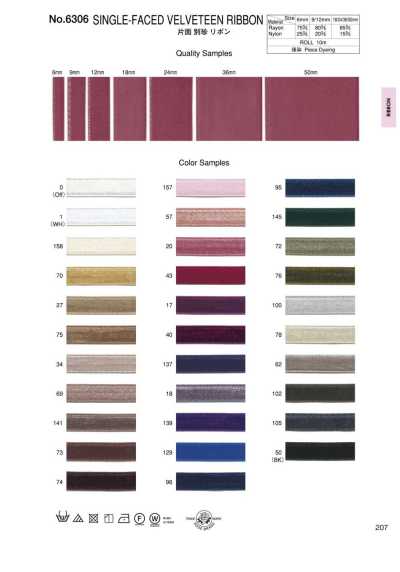
Width is generally shown in millimeters and is measured across both edges while laid flat. However, the apparent width changes depending on the standing direction of the pile and the edge specification. When used for knots or gathers, choose with some allowance beyond the finished width needed.
It is used for decoration at the neckline, placket, and cuffs of dresses and blouses, as tie decorations for accessories, and for trimming hats, shoes, and bags. In formal wear and stage costumes, it may be used as an accent to take advantage of its sheen and dimensional look.
- Narrow widths are suited to delicate tie decorations and accessories.
- Medium widths and above make it easier to create presence in necklines, waist accents, and head accessories.
- For sewing applications, allow for the length needed for hidden seam allowance and end finishing.
How to Choose and Sewing Notes
Check the width, thickness, pile length, stretch, material, and reverse side condition according to the intended use. For tying purposes, flexibility is important; for sewing purposes, seam stability is important. Dark colors tend to show pile disturbance and pressure marks more easily, so check them under conditions close to actual use.
Before cutting, align the pile direction and keep the direction consistent within left and right parts as well as within the product. During sewing, the pile may be flattened by the presser foot or feed mechanism, and pressure marks may appear around the seam. Since the edges may fray depending on the product, consider processing appropriate to the specification, such as folding, edge finishing, or overlap stitching.
Handling and Differences from Similar Terms
How much it stretches or shrinks with washing, changes in pile direction, and the degree of color transfer vary depending on the material and finish. Before mass production, carry out washing and abrasion tests with the main fabric, and determine care labels based on the specification of the entire product rather than the ribbon alone. When storing, do not fold sharply and avoid compressing the pile surface.
Velvet is the name of a material that includes wide-width pile fabrics, while velvet ribbon uses it as a narrow decorative material. Satin ribbon is characterized by the sheen of a smooth woven surface and does not have pile. Grosgrain ribbon is characterized by its ribbed weave, and its surface structure differs from velvet ribbon.
Frequently Asked Questions
Does velvet ribbon stretch?
Whether it stretches depends on the woven or knitted structure and the material. Those with a knitted structure or containing elastic yarn may stretch, but woven constructions generally do not stretch much. When sewing it onto a neckline or waist, check the stretch using the actual material to be used.
Which direction should the pile of velvet ribbon face?
There is no fixed rule, but in garments it is important to keep the pile direction consistent within the product. In general, it is often decided based on how it looks when stroked from top to bottom. Mark the direction before cutting, and cut the left and right parts in the same direction.
Can velvet ribbon be washed?
Whether it can be washed depends on the material, dyeing, and pile-fixing method, so it cannot be judged uniformly. Washing may disturb the pile or cause adhesion marks or shrinkage. Before full production, carry out washing tests combined with the main fabric and reflect the result in the product care label.