Twill Tape
What is twill tape? It is a flat, narrow woven tape made with a twill weave structure, and it is used for reinforcing seam allowances, preventing facings from stretching, decoration, and as a substitute for cord.
Contents6 sections
Definition and Overview
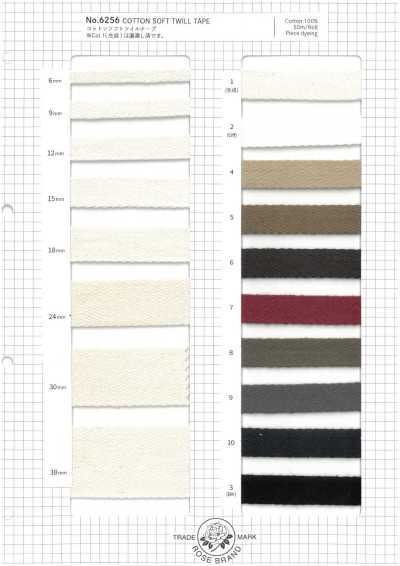
Twill tape is a narrow woven tape with continuous diagonal ridges visible on the surface. As an apparel auxiliary material, it is used for a wide range of applications, including finishing and reinforcing seam allowances, loops, inner hanging cords, and decorative trim.
Because it is generally woven in tape form, it is neither a knitted tape like knit tape nor a braided cord like a round cord. Its features are that it is flat, easy to handle, and easy to sew onto straight sections.
Materials and Structure
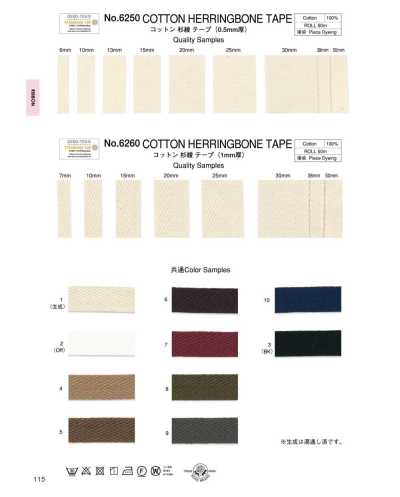
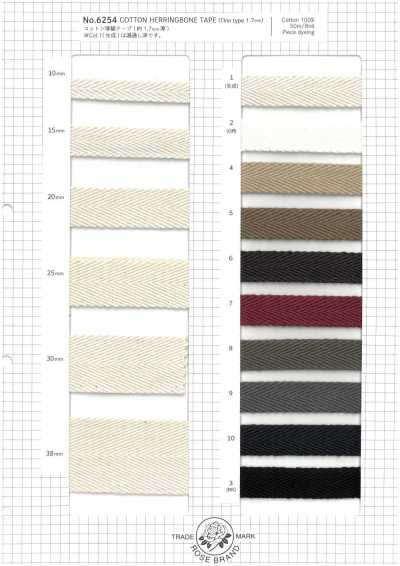
Twill tape is a woven tape based on a twill weave, with the intersections of the warp and weft shifted to create diagonal weave lines. In addition to tapes with diagonal ridges running in one direction, versions with alternating left- and right-facing ridges in a herringbone pattern are also available.
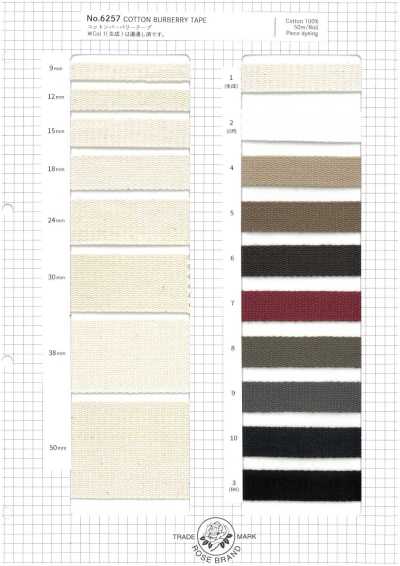
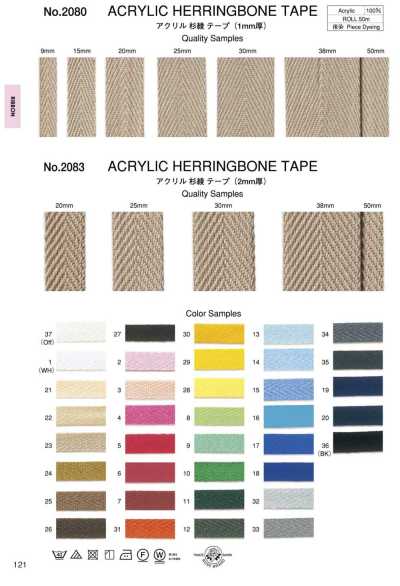
Materials include cotton, polyester, and acrylic. Cotton is characterized by its natural texture and dyeability, polyester by relatively quick drying and strength, and acrylic by a range of color and thickness options suited to the application, but performance should be checked for each composition and specification.
How to Read Widths and Specifications
Twill tape is usually specified by the finished flat width in millimeters. Even at the same width, appearance and ease of sewing vary depending on yarn thickness, weave density, thickness, and edge firmness.
In orders and specifications, specify not only the width but also the material, color, thickness, required length, and area of use. For applications that require strength, such as loops or handles, it is important to sew a sample and check usability, including the area around the stitching.
- Check the width with the tape laid flat.
- For thicker items, check the steps created by layered sewing and the effect on seam allowances.
- When color matching is required, compare it with the textile.
Main Applications and How to Choose
Main applications include stay tape for necklines and shoulder seams, reinforcement of seam allowances, securing facings, reinforcement on the inside of waistbands, hanger loops, bag handles, and decoration for casual wear. Choose the width, thickness, texture, and strength according to the application.
For areas where stretch needs to be controlled, use a tape that is not easily stretched along the grain. However, even twill weave tape may stretch or distort somewhat depending on the material and weave density, so do not sew it on while pulling it strongly.
Differences from Similar Terms and Handling
Herringbone twill tape is a term used for a weave pattern with continuous chevron shapes like cedar leaves. It may be used with a meaning close to twill tape, but the pattern appearance may differ from twill tape with diagonal ridges running in one direction. Check the weave on the actual item when necessary.
Bias tape is made by cutting and folding textile on the bias, and is suitable for wrapping curved edges. Twill tape is a woven tape and is not a material intended to conform to curves as well as bias tape.
Cut ends may fray, so process them as appropriate for the application, such as sewing them into a seam allowance, folding them back, or finishing the edge. Shrinkage, color fading, and color transfer due to washing vary depending on the material and dyeing conditions, so perform a washing test combined with the textile before full production.
Frequently Asked Questions
Are twill tape and herringbone twill tape the same?
They may be used with similar meanings, but twill tape may be used as a general term for tape with diagonal weave lines, while herringbone twill tape may be used specifically for a weave pattern with alternating chevrons. Do not judge by the name alone; check the weave and thickness.
Can twill tape be used to prevent stretching?
It can be used for applications that suppress stretch in straight sections. However, how easily the tape itself stretches depends on the material, weave density, and width. If it is pulled while being sewn on, the textile will ripple, so it is important to confirm the sewing conditions with a prototype.
How can fraying at the edge of twill tape be prevented?
Methods include sewing the edge into a seam allowance, folding it back and stitching it, or finishing the edge with an overlock machine. Some materials can be heat-treated, but since there is a risk of melting or discoloration, check the material label and test on an inconspicuous area first.