T/C
T/C is a blended material combining polyester and cotton, a textile that balances the natural texture of cotton with polyester’s wrinkle resistance and quick-drying properties.
Contents6 sections
Definition and Overview
T/C is a term formed by combining T, the initial of polyester, and C, the initial of cotton. It is used not only for woven fabrics but also for knits, and its properties and appearance vary greatly depending on the blend ratio, yarn type, structure, and dyeing and finishing process.
In general, it refers to the entire material made by blending polyester and cotton, so the notation T/C alone does not tell you the polyester-to-cotton ratio, weave, or thickness. In planning and ordering, the blend ratio, fabric weight, and finishing process are checked together.
Characteristics and Appearance
It is characterized by the softness and relatively matte look derived from cotton, while making it easier to take advantage of polyester’s durability, wrinkle recovery, and quick-drying properties. Compared with materials made only from cotton, it is chosen for applications where easier care after washing is desired.
On the other hand, moisture absorption, hand feel, and breathability are not determined only by the proportion of cotton. A high-density woven fabric tends to have more body, while a brushed product has a warmer feel; thus, the structure and finishing affect the texture. Depending on the polyester ratio and surface condition, static electricity and pilling may be a concern.
Main Applications
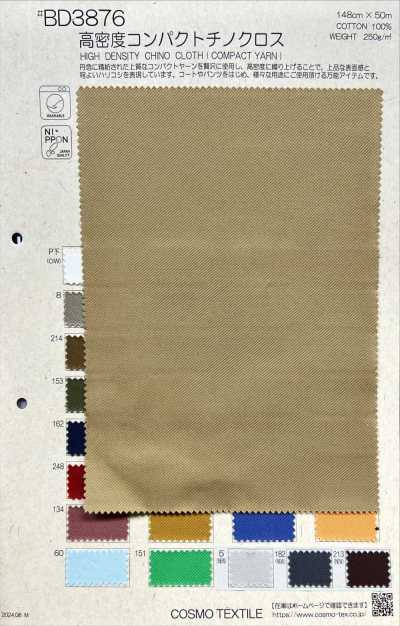
It is used for shirts, blouses, pants, skirts, and dresses, as well as garments such as uniforms and workwear that require frequent washing and good shape retention. It is available in a wide range of structures, including plain weave, twill, oxford, and typewriter cloth.
Because it can be designed from lightweight to heavyweight, it is not limited to any particular season. For spring and summer, lightness and breathability are checked; for autumn and winter, thickness and brushed texture are checked, and the required feel and performance are selected according to the application.
How to Choose and Handling Precautions
When selecting, check not only the blend ratio but also fabric weight, fabric width, density, sheerness, stretch, and shrinkage after washing. For light-colored thin fabrics, sheerness, and for dark colors, color transfer and fading from friction should also be tested and confirmed in advance according to product specifications.
Because it contains cotton, T/C may still shrink or change texture after washing. Before mass production, carry out a fabric washing test and, if necessary, hot water treatment, then reflect the results in the pattern dimensions. Follow the care instructions and avoid excessive high-temperature drying.
In sewing, set the needle, sewing thread, and presser foot pressure to suit the fabric thickness and density. Because polyester and cotton behave differently in terms of heat and shrinkage, determine the process after checking the iron temperature, interlining bonding conditions, and whether sewing shrinkage or puckering occurs on the actual fabric.
Differences from Similar Terms
Polyester refers to a single material, whereas T/C is a blended material made by combining polyester and cotton. Also, blending is a manufacturing term meaning to mix multiple fibers into yarn, and T/C is the name for one representative material composition.
Union fabric means using yarns of different materials for the warp and weft, while mixed knitting means combining yarns of different materials in a knitted fabric. These terms describe how materials are arranged, whereas T/C is used as a blend notation or material name.
Frequently Asked Questions
Is T/C fabric half polyester and half cotton?
Not necessarily. T/C is a term indicating a combination of polyester and cotton, and there are many possible blend ratios. The texture, moisture absorption, quick-drying properties, and wrinkle tendency are influenced not only by the blend ratio but also by the structure and finishing, so these are checked in the care tag and specifications.
Does T/C fabric not shrink?
Because it contains polyester, dimensional change may be easier to control than in fabric made only from cotton, but that does not mean it will not shrink. The shrinkage rate varies depending on the cotton blend ratio, finishing process, structure, and washing and drying conditions. A washing test is performed before productization to confirm the dimensions.
What should be noted when sewing T/C fabric?
Select a needle and sewing thread suited to the fabric thickness and density, and check whether sewing shrinkage or puckering appears. In ironing and fusible interlining processes, test the temperature, pressure, and time on the actual fabric first to avoid shine from heat, differences in shrinkage, and poor adhesion.