Typewriter Cloth
Typewriter cloth is a woven fabric characterized by a paper-like crispness and a smooth, dry hand, made by plain-weaving fine threads at high density.
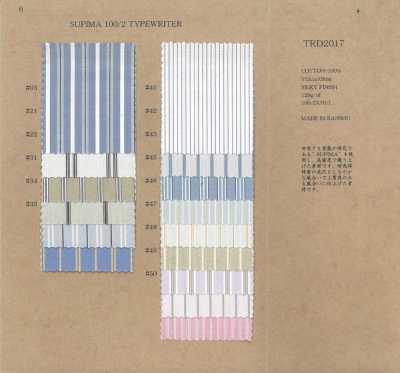
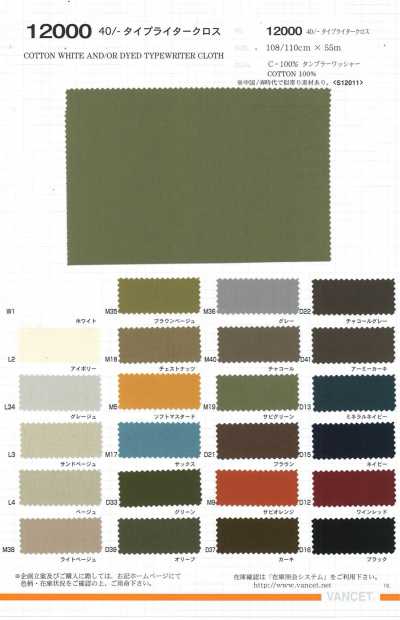
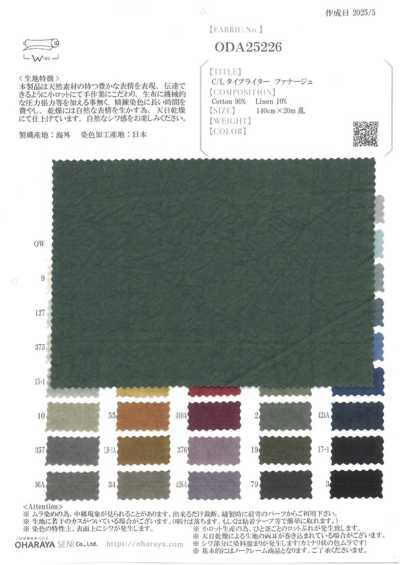
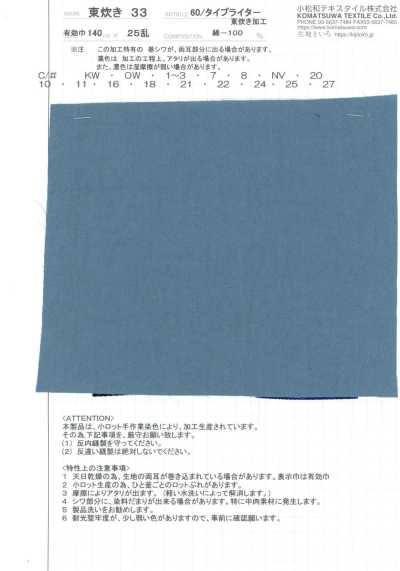
Contents6 sections
Definition and Overview
Typewriter cloth generally refers to a plain weave fabric woven at high density with fine-count yarns in both warp and weft. It is named for its crisp, paper-like texture, similar to the feel of the paper used when striking a typewriter key. Many are made mainly from cotton, while blended and union-fabric versions also exist.
“Typewriter” is not a standard name that strictly defines the material, yarn count, and density in a uniform way. Even under the same name, thickness, stiffness, and luster vary depending on the raw materials, picks, number of threads, and finishing processes.
Characteristics
Because it is woven at high density, the surface is relatively smooth with a tight structure and has moderate body and resilience. Even in lightweight to medium-light fabrics, it holds its shape well and gives a clean, sharp impression after sewing.
When cotton is the main material, it has absorbency and tends to produce a dry, smooth feel that does not cling to the skin. On the other hand, it basically has no stretch, and depending on the density and finish, wrinkles may be noticeable. In light colors, sheerness should also be checked.
Main Applications
It is used for items such as shirts, blouses, dresses, and skirts where the body of the fabric is used to create a neat silhouette. It may also be used for light outerwear, coats, pants, and outer fabrics other than linings for bags and pouches.
Products with a relatively light texture are suitable for spring and summer garments, but depending on the thickness, raw materials, and processing chosen, they can also be used for year-round planning. Gathers and tucks hold their shape well, but for designs that feature soft drape, another textile may be more suitable.
Selection and Handling Notes
When selecting, check not only the material blend ratio but also the fabric weight, thickness, density, sheerness, and post-wash feel in the actual material. Even within typewriter cloth, soft-finished products feel gentler when worn, while products given body through resin finishing are better suited to structured expressions. Depending on the application, also test compatibility with interfacing.
Typewriter cloth containing cotton may shrink, wrinkle, or change in texture after washing or pre-washing. Check the shrinkage rate before mass production and, if necessary, perform straightening or hot-water treatment. Because needle holes may be noticeable in high-density fabrics, choose a finer needle and sewing thread suitable for the textile, and also check for seam puckering.
- Before cutting, check the grainline and any difference in shrinkage within the roll.
- For light colors and thin fabrics, check sheerness and consider lining or specifications.
- Washing conditions differ depending on the blend ratio and post-finishing, so follow the care label.
Differences from Similar Terms
Broadcloth and poplin are also handled as plain-weave shirting fabrics, but typewriter cloth is often used to refer to a fabric woven with fine yarns at high density, characterized by a drier, paper-like crispness. However, the way the term is used varies by maker and in distribution.
Weather cloth has properties close to typewriter cloth as a high-density woven fabric, but it may be used as a fabric name with an emphasis on wind resistance and weather resistance. Do not judge the actual distinction by name alone; check the weave structure, blend ratio, density, finishing details, and performance specifications.
Frequently Asked Questions
Is typewriter cloth suitable for summer?
Lightweight typewriter cloth made mainly from cotton is often used for spring and summer garments because of its smooth feel and moderate body. However, because it is high-density, breathability depends on the weave and finish. Check whether it is suitable for the intended use, including thickness, color, and ease allowance.
Are typewriter cloth and broadcloth the same?
Both are sometimes handled as plain-weave shirting fabrics, but they are not the same. Typewriter cloth is a term that focuses on its high density and paper-like crispness. Broadcloth often refers to a relatively smooth plain weave made with fine yarns, so you need to compare the actual specifications and texture.
Does typewriter cloth shrink in home washing?
In products containing cotton, home washing may cause shrinkage, wrinkling, and changes in surface texture. The degree of shrinkage varies depending on the blend ratio, dyeing and finishing, and washing conditions. Before product development, conduct washing tests and consider water pre-treatment before cutting and pattern design that accounts for shrinkage rates.