Stretch Lining
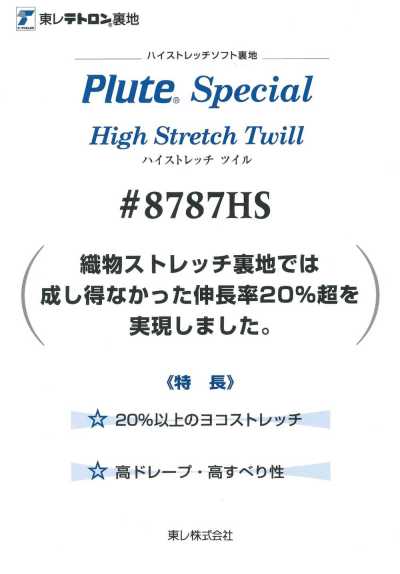
Stretch lining is a lining used to follow the movement of stretch outer fabric and to reduce tightness while improving the garment’s smoothness and ease of putting on and taking off.
Contents6 sections
Definition and Overview
Stretch lining is a lining with a certain degree of stretch and recovery. It is used to follow the movement of the outer fabric without getting in the way, while reducing tightness and improving the fabric’s glide and ease of putting on and taking off the garment. Like ordinary woven lining, it also serves to smooth the inside of the garment and cover seam allowances.
Even if a lining stretches, it does not necessarily stretch equally in every direction. Check whether it has stretch in the warp, weft, or bias direction, and select it to match the stretch of the outer fabric and the grain direction of the pattern.
Used Areas and Function
It is used in jackets, pants, skirts, dresses, and other garments made with stretch materials. In areas with a large range of motion, such as the back, sleeves, knees, and hips, it helps reduce pulling in the outer fabric and loss of comfort caused by the lining tightening.
It can be used as a full lining, or only in the necessary areas. For example, body lining, sleeve lining, and knee lining each require different levels of stretch and glide, so they are selected according to the garment design. The lining’s glide also affects how easily sleeves go on over layers and how much the garment clings to the body.
- Body lining and sleeve lining for jackets and suits
- Waist area and knee lining for pants
- Inside of skirts and dresses
- Moving parts of garments made with stretch outer fabrics
Materials and Types
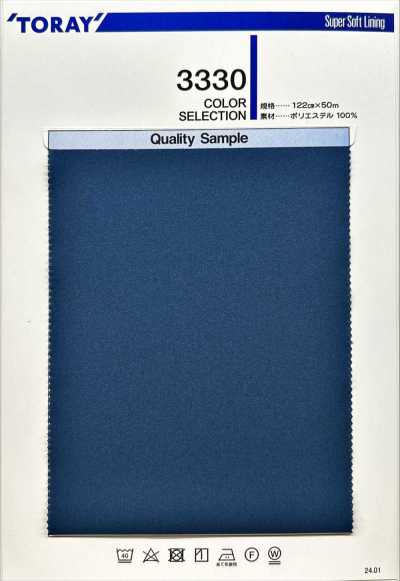
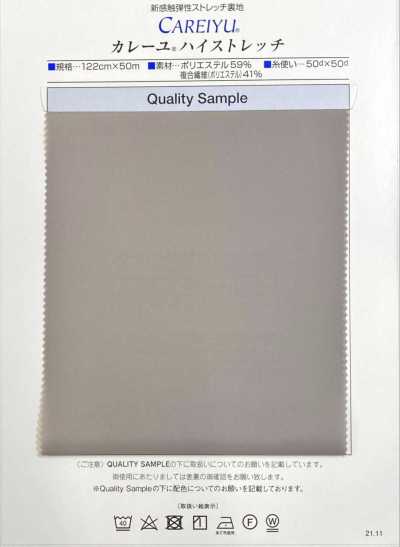
Stretch can be achieved by blending in elastic fibers such as polyurethane, or by giving the fabric stretch through structure or finishing. Base fibers include cupro, polyester, nylon, and others, and properties such as moisture absorption and release, durability, luster, and the feel of glide vary depending on the fiber and structure.
Woven stretch lining has a relatively neat appearance and is easy to tailor, but the direction and amount of stretch are limited. Knit lining is easier to obtain stretch from, but its glide against the outer fabric, thickness, and tendency for edges to curl differ. Stretch lining and knit lining may overlap, but they do not mean the same thing.
Selection and Precautions
When matching with the outer fabric, check not only the direction and amount of stretch, but also whether the lining stretches too much compared with the outer fabric. If there is a large difference in how they stretch and recover, it can lead to bulk when worn, wavy seams, and pulling in the outer fabric. It is important to make a sample in the actual cutting direction and check movement.
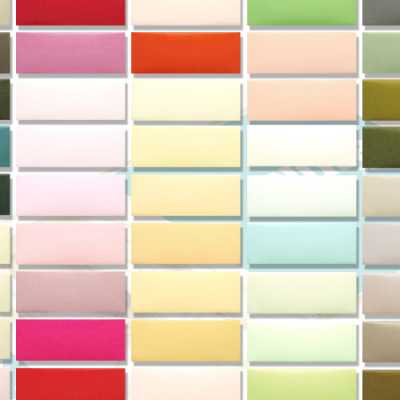
For light-colored, thin, or sheer outer fabrics, check the lining’s color, luster, and opacity. Also, tendency to build static electricity, moisture absorption and release, and dimensional change after washing or dry cleaning are items to confirm according to the application. If the lining glides too well, it may shift position inside the garment, so judge it based on the wearing conditions.
Sewing Considerations
As a basic rule, stretch lining should not be stretched during sewing. To prevent seam puckering and gathering caused by differences in feed, adjust the sewing machine feed, presser foot pressure, thread tension, and needle type to suit the fabric. If necessary, also consider construction methods that stabilize seam allowances.
In the pattern, check the ease allowance for the outer fabric and lining, the amount of wearing ease, and how the hem and cuffs are secured. If the lining is given the same dimensions as the outer fabric, it may become difficult to follow movement in some areas. Before cutting, check the grain direction and the markings on the fabric edge so that the stretch direction is not mistaken.
Frequently Asked Questions
Is stretch lining always necessary for stretch fabric?
Not always. There are also constructions with no lining, or with lining only in moving parts. However, combining a stretch outer fabric with a non-stretch lining can cause tightness during movement and pulling in the outer fabric. Decide based on the wearing area, silhouette, and required range of motion.
What is the difference between stretch lining and knit lining?
Stretch lining is a term that focuses on the function of stretch and may apply to either woven or knit materials. Knit lining refers to lining made from knit fabric. Knit lining tends to stretch easily, but its glide, thickness, and ease of handling at the cut edge differ from woven stretch lining, so separate confirmation is needed.
- Browse Stretch Lining products
- Products with material "Polyester"
- Products with material "Nylon"
- Products with material "Cupro"
- Products with material "Polyurethane"
- Products for style "For Pants"
- Products for style "For Skirts And Dresses"
- Products for style "For Jackets/Suits"
- Products for style "For Formal Wear"
- Browse Lining products