Monofilament And Multifilament
Monofilament and multifilament are terms that distinguish yarn made from a single continuous long fiber from yarn made by bundling multiple long fibers.
Contents5 sections
Definition and Overview
Monofilament is yarn made from a single continuous long fiber. Multifilament is made by bundling multiple fine continuous long fibers into a single yarn. Both terms describe yarn structure and are not material names or fabric construction names.
These categories are mainly used for synthetic fiber yarns, but even with the same material, properties vary depending on the fineness of the single fibers, yarn thickness, twist, and processing. Therefore, it is important not to judge fabric performance based only on whether it is monofilament or multifilament, and to check the specifications and the actual product.
Hand and Appearance Characteristics
Monofilament tends to produce firmness and body more easily, and it is well suited to making use of transparency, luster, and a crisp outline. Depending on the fabric structure and thickness, it may feel crisp or stiff.
Because multifilament is a bundle of fine fibers, it is generally flexible and soft, and tends to feel smooth against the skin. Because spaces form between the fibers, it can provide bulk and drape depending on the thickness and processing conditions.
Main Applications
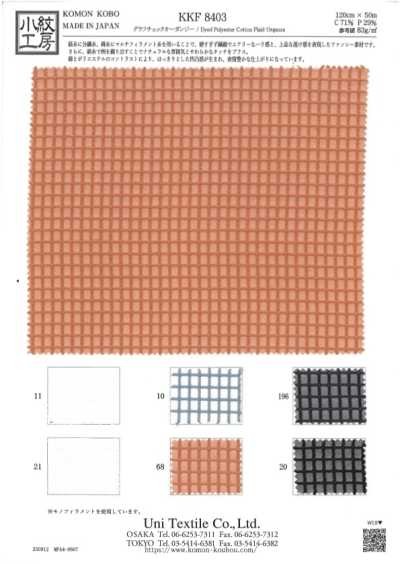
Monofilament is used in mesh, tulle, and organza-like materials that emphasize firmness, sheerness, and shape retention, as well as in garments and accessories where a three-dimensional look is desired. It is also sometimes used as a core yarn to support overall resilience and shape retention in the fabric.
Multifilament is widely used in woven and knitted fabrics such as taffeta, satin, and tricot, where flexibility and luster are valued. Its applications include blouses, linings, sportswear, outerwear, dresses, and many others depending on the material type and processing.
Selection and Handling Notes
When selecting, check the single-fiber fineness, yarn thickness, twist, structure, density, and finishing together. Monofilament is suitable when firmness is required, but for uses where it touches the skin directly, evaluate any scratchiness or stiffness with samples. Multifilament more easily provides softness, but confirm the strength and abrasion resistance required for the application.
Shrinkage and dimensional changes due to washing depend not on whether the yarn is monofilament or multifilament, but on the fiber type, processing such as heat setting, and the woven or knitted structure. Follow the care instructions, and carry out washing tests and sewing tests before mass production.
Fabrics containing fine monofilament may have yarn pullout from cut edges or seams. To prevent needle holes, skipped stitches, and puckering, check the appropriate needle size, needle point shape, sewing thread, and sewing conditions in advance, and avoid excessive thread tension.
Frequently Asked Questions
Which is stronger, monofilament or multifilament?
Strength is not determined by yarn structure alone. It varies depending on the fiber type, thickness, number of single fibers, twist, processing, and structure. Select by testing or confirming the fabric specifications for the tensile strength, abrasion resistance, tear strength, and other properties required for the application.
Is fabric containing monofilament difficult to sew?
Because of properties such as firmness, slipperiness, and a tendency for the yarn to snag, adjustments to sewing conditions may be necessary. In test sewing, check for needle holes, skipped stitches, puckering, and broken seam threads, and choose the needle and sewing thread accordingly.