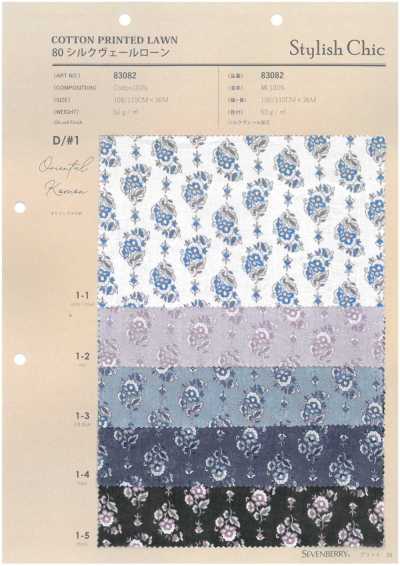
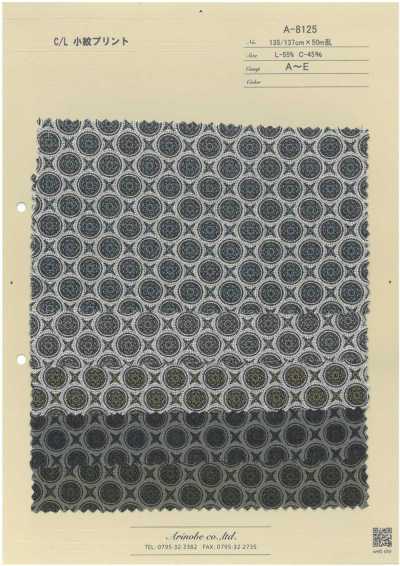
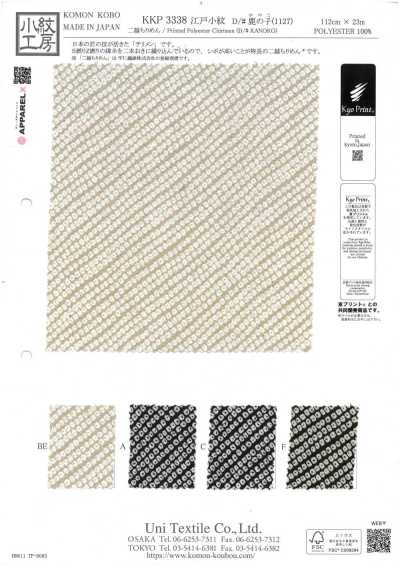
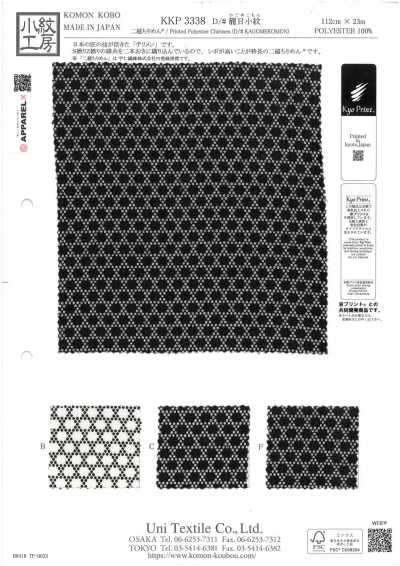
Small Repeating Pattern
Komon is a pattern that repeats relatively small motifs at regular intervals or across the entire surface, and in Japanese clothing it is also used to refer to all-over patterned kimono.
Contents6 sections
Definition and Overview
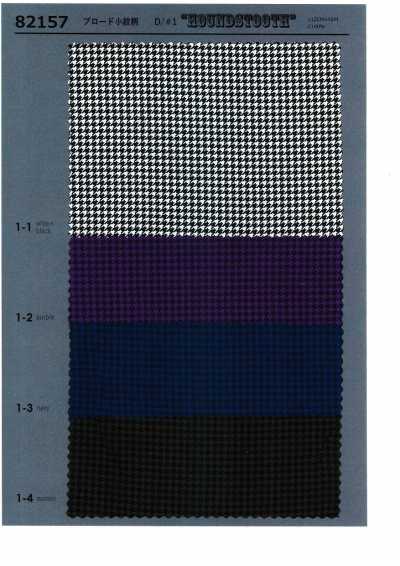
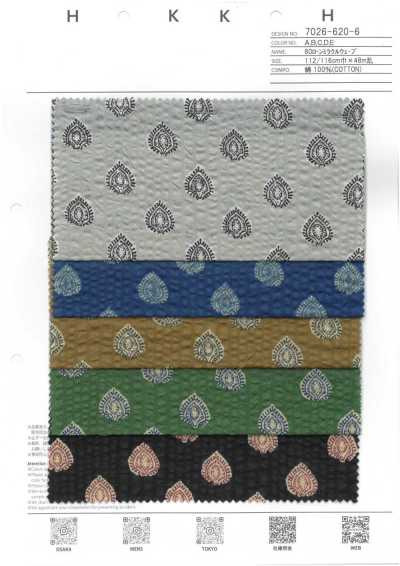
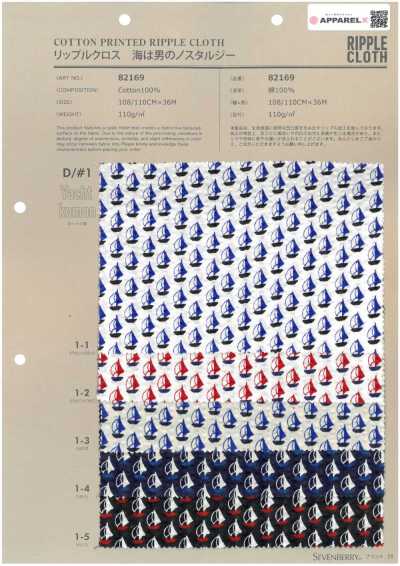
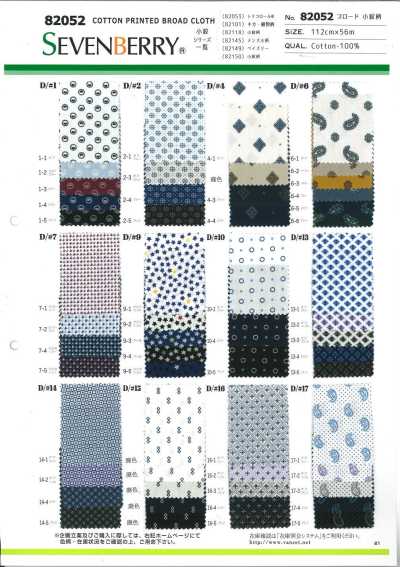
Komon is a pattern made by repeating small motifs such as flowers, plants, geometric shapes, and animals. It is often expressed as an all-over pattern that spreads across the entire textile, ranging from very fine patterns that look almost solid to patterns that can still be recognized from a distance.
Originally, it is known as a classification of patterns in traditional Japanese dress and as a name for kimono, but in apparel fabrics it is used as a term for small repeating patterns. It does not refer to the weave structure or fiber type, but is a way of describing a pattern based on its size and placement.
Pattern Characteristics and Naming
The impression of komon changes depending on the type of motif, pattern size, repeat interval, and color scheme. In addition to neatly aligned patterns, there are patterns scattered while changing direction, and patterns that continue densely like an all-over ground pattern.
In traditional Japanese dress, it may refer to extremely fine stencil-dyed-style patterns such as Edo komon. On the other hand, in apparel fabrics, not only Japanese-style designs but also small floral motifs and fine geometric patterns may be called komon.
- Names by motif: flowers, plants, geometric shapes, animals, and so on
- Differences by placement: aligned patterns, scattered patterns, continuous patterns, and so on
- Differences by expression technique: print, yarn dyed, woven pattern, and so on
Main Applications and Seasonality
It is used for blouses, shirts, dresses, skirts, pants, linings, and fashion accessories. Fine repeating patterns are easy to use on large-area items and become an accent when combined with solid items.
Komon itself is not tied to a specific season. Small floral patterns in light fabrics and bright colors may be used for spring and summer, while patterns with deeper colors and a denser feel may be used for autumn and winter; in practice, judgment is made based on fabric thickness, color, and motif.
Points to Note When Choosing Fabric and Cutting
When selecting fabric, check the pattern size together with the product size, the fabric's sheerness, and drape. Fine patterns tend to blend into seams, while strongly contrasting patterns and regular repeating patterns can make misalignment at sewing positions stand out.
If the pattern has an up-and-down or left-and-right direction, place all pieces in the same orientation. For one-way patterns, therefore, more fabric may be needed than usual. Before cutting, check how the pattern runs relative to the fabric edge and how it will appear on the body, collar, pockets, and other parts.
Even if the pattern is less strict than a check with clear reference lines, aligning the motif positions at the center front, side seams, sleeves, and around pockets will make the finished item look neat. Whether pattern matching is necessary should be decided based on the repeat size and the design priority.
- Check the up-and-down and left-and-right direction of the pattern
- Estimate fabric consumption including the pattern repeat
- Check the pattern position at the center front, collar, and pockets
- Before cutting, check how the pattern will appear on the left and right body panels and sleeves
Differences from Similar Terms
Small floral patterns refer to patterns with small flowers as the motif, whereas komon broadly refers to patterns in which small motifs are repeated, not limited to flowers. Therefore, small floral patterns may be treated as a type of komon, but the two are not synonymous.
Japanese-style pattern is a broad term for Japanese-style motifs and designs in general. Komon is a term related to the fineness and repetition of a pattern, and it is also used for geometric patterns and small Western-style motifs that are not Japanese-style. Print is a processing method for expressing a pattern on fabric, and it is distinguished from komon, which is a pattern classification.
Frequently Asked Questions
What is the difference between komon and a small floral pattern?
A small floral pattern refers to a pattern with small flowers as the motif. Komon is a general term for patterns in which small motifs are repeated, not limited to flowers. Therefore, patterns with repeating small flowers may be treated as a type of komon, but komon also includes geometric patterns and animal motifs.
How much extra fabric is needed for cutting a komon pattern?
The required allowance varies depending on the size of the pattern repeat, the direction of the pattern, the size range, and the locations where pattern matching is done. One-way patterns cannot have pieces placed upside down, so fabric consumption tends to increase. Check the actual pattern repeat and calculate the required amount using marking.